
Tag Archives: online car shopping

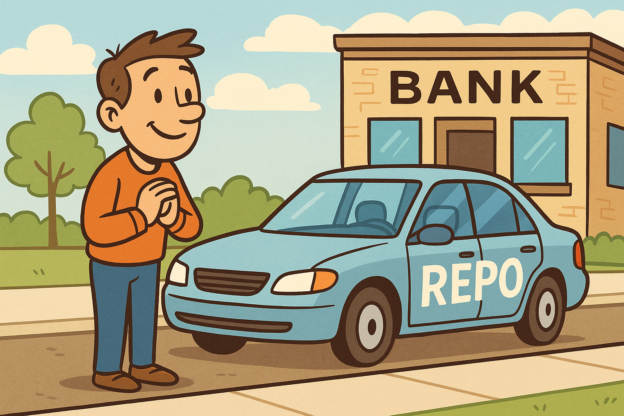
person ready to buy repo car directly from bank

How to Buy Repo Cars Directly From Banks

Most people think the only way to buy a car is from a dealership. But there is another way that many buyers never discover.

Banks and credit unions regularly repossess vehicles when borrowers stop making payments. Instead of keeping these vehicles, financial institutions usually sell them quickly to recover their loan balance.

The surprising part is that many of these repossessed vehicles are available directly to the public. When you buy repo cars for sale directly from banks, you often avoid dealer markups, auction fees, and unnecessary middlemen.

That is where the real savings can happen.

In this guide, you will learn how to buy repo cars directly from banks, where to find them, and how to avoid the mistakes many buyers make.


Why Banks Sell Repossessed Vehicles

Banks do not want to be in the car business.

When a borrower defaults on an auto loan, the lender repossesses the vehicle to recover the remaining balance of the loan. Their goal is simple: sell the car as quickly as possible and recover their money.

Because of this, banks are often motivated sellers.

They usually price repossessed vehicles below normal retail value so they can move inventory quickly.

Unlike dealerships, banks are not trying to maximize profit on each vehicle. They are trying to close out a loan.

This creates an opportunity for buyers who know where to look.


The Problem With Repo Auctions

Many websites claim the best way to buy repossessed cars is through auctions.

But auctions are not ideal for most buyers.

Here are some common issues:

1. Dealer competition

Professional car dealers attend auctions regularly and often outbid private buyers.

2. Auction fees

Many auctions charge buyer fees that can add hundreds or even thousands of dollars to the final price.

3. Limited inspection

Auction vehicles are often sold as-is with little time for inspection.

4. Dealer-only auctions

Many of the best repo auctions are restricted to licensed dealers.

Because of these challenges, auctions can be difficult for everyday buyers.


The Better Way: Buy Repo Cars Directly From Banks

A better option is to buy repossessed vehicles directly from banks and credit unions.

Many financial institutions list their repossessed vehicles on their own websites or through specialized directories.

When you buy directly from the lender, you avoid many of the costs and complications associated with auctions.

Benefits often include:

• No dealer markup
• No auction competition
• Transparent pricing
• Access to financing from the same bank

Many buyers do not realize this option exists, which is why it can be such a valuable opportunity.


Where to Find Bank Repo Cars

The hardest part of buying repossessed vehicles is simply finding them.

Thousands of banks and credit unions across the United States repossess vehicles every year, but their listings are scattered across hundreds of different websites.

This is where a directory like RepoFinder.com becomes extremely useful.

Instead of searching bank websites one by one, RepoFinder organizes banks that sell repo cars and connects you directly to lender inventory across the country.

You can browse repos from:

• Local banks
• Credit unions
• Regional lenders
• National financial institutions

This allows buyers to quickly locate repossessed vehicles that are actually being sold by the lender.

You can also explore repo cars near you to find local inventory faster.


Types of Repo Vehicles You Can Find

Many people assume repossessions only include cheap or heavily used vehicles. That is not true.

Banks repossess vehicles of all types.

Common repo listings include:

• Cars
• Trucks
• SUVs
• RVs
• Boats
• Motorcycles
• ATVs

Sometimes repossessions include nearly new vehicles with relatively low mileage.

In many cases, the previous owner simply experienced financial hardship rather than neglecting the vehicle.

If your goal is affordability, you can also compare cheap repo cars across different lenders.


Steps to Buying a Repo Car From a Bank

Buying a repossessed vehicle is usually straightforward.

Here is the typical process.

Step 1: Find available repossessions

Use a directory like RepoFinder to locate repossessed vehicles from banks and credit unions.

Step 2: Contact the lender

Once you find a vehicle you are interested in, contact the bank or credit union directly.

They can provide details about the vehicle and the purchase process.

Step 3: Inspect the vehicle

If possible, inspect the vehicle in person or have a mechanic check it.

Most repos are sold as-is, so doing your homework is important.

Step 4: Make an offer or purchase

Some lenders accept offers, while others list a fixed price.

If your offer is accepted, you can complete the purchase directly with the bank.


Can You Finance a Repo Car?

Yes.

In fact, many banks prefer to finance repo vehicles themselves.

If you have decent credit, the lender may offer financing options for the vehicle they are selling.

This can make the purchase process even easier.


Are Repo Cars a Good Deal?

Often, yes.

Because banks are motivated to sell quickly, repo vehicles can sometimes be priced below market value.

However, buyers should always research the vehicle and compare prices before purchasing.

Like any used car purchase, doing proper due diligence is important.


Final Thoughts

Buying repossessed vehicles directly from banks is one of the most overlooked ways to save money on a car purchase.

Instead of competing with dealers at auctions or paying dealership markups, buyers can sometimes purchase vehicles straight from the lender.

The key is simply knowing where to look.

Directories like RepoFinder.com make it much easier to locate bank-owned vehicles and connect buyers directly with financial institutions selling repossessions.

If you are ready to start browsing, explore repo cars for sale or check repo cars near you to see what is available in your area.
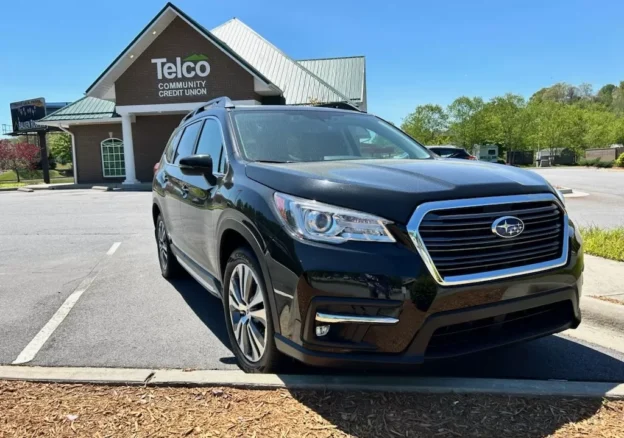
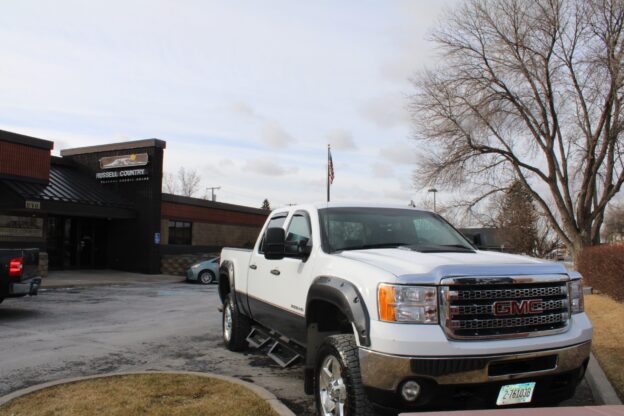
find repo cars at the bank in the parking lot

Where to Find Repo Cars

Where to Find Repo Cars (7 Places Banks Sell Repossessed Vehicles)

In this guide you will learn where to find repo cars and how banks sell them.

If you are trying to find a cheap used car, you may have heard about repossessed vehicles.

These are cars, trucks, RVs, or boats that a bank takes back when the borrower stops making payments.

Most people assume repos only show up at auctions.

That is not always true.

In many cases, banks try to sell repos before they ever reach an auction. That is where some of the best deals can be found.

The problem is simple.

Most banks do not advertise their repossessed vehicles very well. Many buyers never even know these listings exist.

In this guide you will learn where to find repo cars and how banks sell them.


What Is a Repo Car?

A repo car is a vehicle that has been repossessed by a lender.

This usually happens when the owner stops making loan payments.

The bank or credit union takes the vehicle back and sells it to recover the remaining loan balance.

Banks are not car dealers.

They usually want to sell repossessed vehicles quickly and without hassle. Because of that, repo cars are often priced lower than similar vehicles on dealer lots.


Why Repo Cars Can Be Cheaper

Banks are not trying to make a profit selling repos.

They are simply trying to recover the money that was loaned.

Holding repossessed vehicles costs banks money. They must pay for storage, paperwork, and sometimes transport.

Because of this, banks often price repos to sell quickly.

That is why many buyers search for bank repo cars instead of dealership inventory.


7 Places to Find Repo Cars

Here are the most common places repossessed vehicles are sold.


1. Banks and Credit Unions

Many banks sell repossessed vehicles directly to the public.

Some even keep a small list of repos on their website.

Others simply sell repos locally through word of mouth or internal listings.

This is where RepoFinder.com comes in.

RepoFinder connects buyers with banks and credit unions that are selling repossessed vehicles.

Instead of searching dozens of bank websites, buyers can see repo listings in one place.

This allows you to find vehicles before they ever reach auctions or dealerships.

That often means better prices and less competition.


2. Repo Auctions

Auctions are the most well known place to buy repossessed vehicles.

Banks often send unsold repos to auctions where dealers and the public can bid on them.

Some popular auction platforms include:

  • auto auctions

  • dealer auctions

  • online auction platforms

The downside is competition.

Many dealers buy inventory from these auctions, which can drive prices higher.


3. Police and Government Auctions

Police departments and government agencies also sell vehicles through auctions.

These may include:

  • seized vehicles

  • abandoned vehicles

  • repossessed property

Some deals can be found, but inventory changes quickly and listings are often scattered across multiple websites.


4. Car Dealerships

Many used car dealerships actually buy their vehicles from repo auctions.

That means some cars on dealer lots started as repossessed vehicles.

The downside is markup.

Dealers must add profit margins, reconditioning costs, and overhead.

That is why buying repos closer to the source can sometimes lead to better deals.


5. Online Marketplaces

Some repos appear on general car marketplaces like classified sites.

These are usually listed by banks, dealerships, or auction resellers.

However, these listings are mixed with millions of regular used cars.

It can be difficult to tell which vehicles are actually repos.


6. Credit Union Listings

Credit unions are one of the most overlooked sources for repo vehicles.

Many credit unions repossess cars and sell them locally to recover their loan balances.

These listings are often posted on small web pages that are difficult to find through normal searches.

This is another reason buyers use RepoFinder to locate these vehicles.


7. Specialized Repo Listing Websites

Some websites specialize in tracking repossessed vehicles from banks and lenders.

These platforms gather listings from financial institutions and organize them in one place.

One of the most well known examples is RepoFinder.com, which focuses on connecting buyers with repossessed vehicles owned by banks and credit unions.

This helps buyers locate repos before they reach dealer auctions.


Are Repo Cars Safe to Buy?

Yes, but buyers should still do basic research.

Most repossessed vehicles were owned by regular drivers who fell behind on payments.

However, repos are usually sold as-is.

Before buying a repo car, it is smart to:

  • check the vehicle history report

  • inspect the vehicle

  • verify the title status

  • research the market value

Taking these steps helps ensure you are getting a good deal.


Are Repo Cars Always Cheap?

Not always.

But they are often priced lower because banks want to sell them quickly.

Some of the best deals appear when a bank simply wants to clear inventory and recover part of the loan balance.

That is why buyers often monitor repo listings regularly.

New repos appear every week.


Final Thoughts

Repo cars can be one of the best ways to find affordable vehicles.

The key is knowing where to look.

Many buyers only search dealer lots or auction sites.

But banks and credit unions sell repossessed vehicles every day, often before they ever reach those places.

That is why platforms like RepoFinder.com help buyers connect directly with financial institutions that are selling repos.

With a little research and patience, repo vehicles can offer excellent value for buyers looking for their next car, truck, or RV.

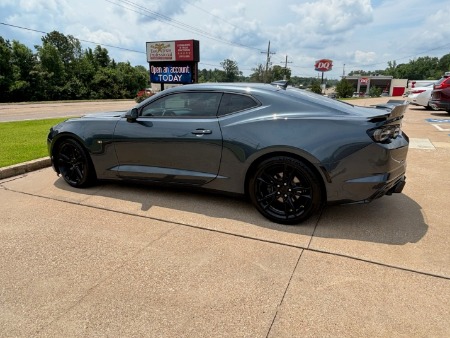
repo cars for sale in California

Bank Repossessed Vehicles Explained | Buy Direct With RepoFinder

TL;DR, The Main Points

  • Banks are emotionless sellers, they do not care about commissions, markups, or negotiation drama
  • A repossessed vehicle is already a loss on a bank’s books, so speed matters more than profit
  • Banks do not upsell, add surprise fees, or play pressure games
  • This creates one of the fairest and cleanest buying environments in the used-vehicle market
  • RepoFinder.com is the best way to find real bank-owned vehicles and contact lenders directly

The Used-Car Market Runs on Emotion

Most people do not realize how emotional the used-car market really is.

Private sellers are emotionally attached to their vehicles.
Dealers are emotionally attached to margins.
Brokers are emotionally attached to commissions.

Everywhere you look, someone has something to defend.

Except banks.

When you buy repo cars for sale directly from a bank or credit union, you are dealing with the only seller in the market that has no personal, emotional, or financial ego tied to the sale.

That single difference changes the entire experience.


What It Means When a Seller Is Emotionless

Calling banks “emotionless sellers” is not an insult. It is an advantage.

Banks do not:

  • Take offers personally
  • Get offended by inspections
  • Argue about sentimental value
  • Push add-ons or upgrades
  • Create fake urgency

They are trying to do one thing only.

Convert a non-performing asset into cash and close the loss.

That clarity removes almost all of the games buyers deal with elsewhere.


Why Repossessed Vehicles Are Already a Loss

By the time a vehicle is repossessed, the bank has already lost money.

That is why pricing is often competitive compared to traditional listings, especially when browsing repo cars near you from local lenders.

The vehicle is no longer a profit opportunity. It is a problem that needs resolution.

That mindset favors buyers.


How Banks Differ From Private Sellers

Private sellers often:

  • Overprice because of attachment
  • Ignore flaws they have learned to live with
  • Take negotiations personally
  • Stall when serious buyers ask questions

Banks do not speak this way.

There is no emotional attachment to defend.


How Banks Differ From Dealers

Dealers operate under constant pressure.

  • Buy low and sell high
  • Protect margins
  • Add fees to stay profitable
  • Upsell to survive

That is why dealer transactions often include extra costs and pressure.

Banks are structured differently.

They are resolving loans, not maximizing retail profit.


Why Banks Do Not Care About Commissions or Fees

This is one of the biggest hidden advantages of buying a bank-owned vehicle.

Banks do not:

  • Pay sales commissions
  • Earn bonuses on higher prices
  • Rely on add-ons

This removes conflicts that exist almost everywhere else in the used-car market.


Policy Replaces Personality

When you buy from a private seller or dealer, you negotiate with a person.

When you buy from a bank, you negotiate with policy.

That is a good thing.

Policy-driven sales mean clear rules, consistent responses, and predictable outcomes.


Why Banks Do Not Care Who Buys the Vehicle

Banks do not care who you are.

They care that:

  • Funds are verified
  • Paperwork is complete
  • The transaction closes

You are not being sold to. You are completing a transaction.


The Hidden Benefit Most Buyers Miss

The biggest advantage of buying from banks is not always price.

It is clarity.

Most used-car frustration comes from noise.

Banks eliminate most of that automatically.


Why Most Buyers Never See Bank Repossessed Vehicles

Access has always been fragmented.

That is why directories that organize banks that sell repo cars are so valuable.

They bring scattered listings into one place.


What RepoFinder Does Differently

RepoFinder exists to solve one problem.

Connecting buyers directly to banks and credit unions selling repossessed vehicles.

You can explore everything from nationwide listings to repo cars for bad credit depending on your situation.


Why Buying Direct Matters

Buying direct means:

  • No middlemen
  • No markups
  • No lead reselling

When you use RepoFinder, you contact the institution that actually owns the vehicle.


Final Takeaway

Banks are the most emotionless sellers in the used-vehicle market.

They care about closing a loss and moving on.

RepoFinder.com makes that rare selling environment accessible by connecting buyers directly to real banks and credit unions.

To start browsing, explore repo cars for sale or check repo cars near you.

a repo car for sale at a credit union

What a Repo Car Really Is

What a Repo Car Really Is (And Why Most “Repo Car” Websites Get It Wrong)

If you search online for a repo car, you’ll see a lot of results.

Auctions.
Salvage cars.
Dealer listings.
“Bank repos” with fees stacked on top.

Here’s the problem:

👉 Most of those aren’t really repo cars anymore.

The word repo gets used loosely online.
Sometimes intentionally.
Sometimes out of confusion.

This article clears that up.

We’ll explain:

  • what a repo car actually is,

  • what it is not,

  • and how to tell the difference before you waste time or money.

No sales pitch.
Just the truth.


What Is a Repo Car? (Plain English)

A repo car is a vehicle that was:

  1. Financed by a bank or credit union

  2. Repossessed after the loan went into default

  3. Still owned by that financial institution

  4. Sold to recover the remaining loan balance

That’s it.

A real repo car is:

  • lender-owned

  • usually clean title

  • priced to liquidate, not maximize profit

Banks are not car dealers.
They don’t want inventory.
They want the loan off their books.

That incentive matters.


Why “Repo Car” Gets Misused Online

The term repo car attracts buyers.

People assume:

  • lower prices

  • cleaner titles

  • fewer games

So a lot of websites use the word even when the vehicle no longer fits the definition.

Let’s look at the most common mix-ups.


Mistake #1: Auction Cars Labeled as Repo Cars

Many vehicles start as repos.

But once a bank sends a vehicle to an auction, it stops being a repo car in the practical sense.

At that point:

  • ownership has changed hands or is in transition

  • auction incentives replace bank incentives

  • fees enter the picture

Large platforms like Copart or brokers like AutoBidMaster sell massive volumes of vehicles.

Some originated as repos.

But buyers are no longer dealing with the lender.

They’re dealing with:

  • auctions

  • brokers

  • bidding systems

  • buyer premiums

That’s a very different transaction.


Mistake #2: Salvage and Insurance Cars Called “Repos”

This one causes the most confusion.

Insurance total-loss vehicles are not repo cars.

They are:

  • accident vehicles

  • flood vehicles

  • hail vehicles

  • theft recoveries

These often carry:

  • salvage titles

  • rebuilt titles

  • or title branding

They can be fine for rebuilders.

But they are not repossessed loan collateral.

Using the word repo here is usually SEO, not accuracy.


Mistake #3: Dealer Cars Marketed as “Bank Repos”

Another common tactic.

A dealer buys a vehicle at auction.
Then relists it as a “bank repo.”

Technically, it once was.

But now:

  • the dealer owns it

  • markup has been added

  • profit is the goal

The bank is gone from the deal.

That distinction matters.


How Real Repossessed Cars Are Actually Sold

When a bank or credit union sells a repo directly, the process looks different.

Usually:

  • no bidding war

  • no buyer premium

  • no middleman fees

You contact the lender.
>You negotiate.
>You inspect.
>You buy.

It’s slower.
Less flashy.
But far more transparent.

And the pricing reflects liquidation, not speculation.


Why True Repo Cars Are Hard to Find Online

This is the core issue.

Banks:

  • don’t market well

  • don’t optimize SEO

  • don’t centralize listings

Each institution handles repos differently.

Some post on their own website.
>Some use PDFs.
>Some rely on internal lists.

There is no single national system.

That’s why buyers end up on auctions instead.

Not because auctions are better — but because they’re louder.


How to Tell If a Website Is Selling Real Repossessed Cars

Use this checklist.

If you answer no to more than one, it’s probably not a true repo sale.

Ask these questions:

  • Do you contact a bank or credit union directly?

  • Is there no bidding involved?

  • Are there no buyer premiums or auction fees?

  • Does the lender still hold the title?

  • Is the vehicle priced to sell, not to extract maximum profit?

Real repo cars feel boring.

That’s a good sign.


Why Title Status Matters

Most bank repos have clean titles.

Why?

Because:

  • they were everyday loan vehicles

  • insured and registered normally

  • repossession doesn’t damage a title

Salvage happens after loss events.

Repos happen after payment defaults.

Different problems.
Different risks.


So Where Should You Look for a Repossessed Car?

If you want:

  • real repos

  • lender-direct pricing

  • fewer games

You need to start at the source.

That means banks and credit unions.

The challenge is finding them all.

That’s where directories exist — not to sell cars, but to point buyers to the lenders themselves.

No auctions.
>No inventory flipping.
>No commissions.

Just access.


The Bottom Line

A repo car is not:

A real repo car is:

Once you understand that distinction, the noise disappears.

And buying gets simpler.


TL;DR

  • “Repo car” is widely misused online

  • Auctions and salvage cars dominate search results

  • True repossessed cars are sold directly by lenders

  • Clean titles and liquidation pricing matter

  • Knowing the difference saves money and time

Car for sale at a local credit union auction

Car Auctions Near Me

Car Auctions Near Me: Why Local Bank & Credit Union Auctions Are the Smart Way to Buy

If you’ve searched car auctions near me, you’re probably tired of dealer prices.

You’re not alone.

More buyers are skipping dealerships and looking for local car auctions instead.
But most people don’t know which auctions are worth their time.

Here’s the truth:

👉 The best car auctions near you are often run by banks and credit unions.

They don’t advertise much.
They don’t hype vehicles.
And they don’t play dealer games.

They just want to sell repossessed cars and move on.

This guide explains why local bank and credit union car auctions are one of the smartest ways to buy a used car.


What “Car Auctions Near Me” Really Means

When people search car auctions near me, they usually want:

What they don’t want is:

  • Salvage cars

  • Dealer-only auctions

  • Hidden fees

  • Mystery damage

Bank and credit union auctions check the right boxes.


What Is a Bank or Credit Union Car Auction?

When someone stops paying on a car loan, the lender repossesses the vehicle.

Once that happens, the bank has one goal:

Recover the loan balance.

They are not trying to maximize profit.
They are not flipping cars.
They are not emotionally invested.

That’s why pricing is often lower and more realistic.

Banks and credit unions sell these vehicles through:

  • Local car auctions

  • Online repo listings

  • Sealed bids

  • Direct bank sales

This is why searching locally matters.


Why Local Bank Car Auctions Beat Dealer Auctions

Dealer auctions are built for volume.

Bank auctions are built for liquidation.

Here’s the difference:

Dealer Auctions

  • Dealer-only access

  • Higher competition

  • Buyer fees

  • Transport costs

  • Often wholesale or salvage

Bank & Credit Union Auctions

  • Many are open to the public

  • Lower starting prices

  • No commissions

  • Local pickup

  • Clean titles are common

If you’re buying one car for personal use, banks win.


Top Benefits of Local Bank & Credit Union Car Auctions

1. Lower Prices Without the Games

Banks price cars based on:

  • Loan balance

  • Vehicle condition

  • Book value

  • Time in inventory

They don’t price cars based on emotion.

That often means thousands less than dealer retail.


2. Vehicles Are Truly Local

Local auctions mean:

  • Local driving conditions

  • Local service history

  • Easier inspections

  • No long-distance transport damage

You’re not buying blind.


3. Clean Titles Are the Norm

Most bank-repo cars were:

  • Daily drivers

  • Properly insured

  • Normally financed

That means clean titles are common.

This is very different from salvage auctions.


4. Less Competition

Large dealers focus on big auctions.

They don’t chase single vehicles from local banks.

That means less bidding pressure for regular buyers.


5. No Dealer Fees or Add-Ons

No forced warranties.
No “reconditioning packages.”
No finance office tricks.

Just a car and a price.


Are Bank Car Auctions Open to the Public?

Yes, many are.

This is one of the biggest myths.

Some banks sell through public auctions.
Others list vehicles directly on their websites.
Some accept sealed bids from anyone.

The challenge isn’t access.

The challenge is finding them.


Why These Auctions Are Hard to Find

Banks are not marketers.

They don’t care about SEO.
They don’t run ads.
They don’t optimize Google listings.

Their repo cars are often hidden on:

  • Individual bank websites

  • Credit union pages

  • Old PDFs

  • Broken links

That’s why most people never find them.


How RepoFinder Makes It Easy

RepoFinder solves this problem.

RepoFinder connects buyers directly to:

  • Local banks

  • Credit unions

  • Their actual repo listings

No fees.
No commissions.
No middlemen.

Just real lenders selling real vehicles.


What Cars You’ll Find at Local Bank Auctions

Most local bank auctions include:

  • Sedans

  • SUVs

  • Pickup trucks

  • Vans

Most vehicles are:

  • 1–8 years old

  • Normal mileage

  • Clean title

  • Sold as-is

They aren’t perfect.

They’re honest.


How the Buying Process Works

Most bank auctions follow this simple process:

  1. Vehicle is repossessed

  2. Condition is documented

  3. Price or bid terms are set

  4. Listing is published

  5. Buyer inspects

  6. Sale completes

  7. Title transfers

No drama.


Can You Inspect the Car First?

Often, yes.

Many banks allow:

  • In-person inspections

  • Limited test drives

  • Third-party inspections

Local matters here.

Inspection is much easier when the car is nearby.


Common Buyer Mistakes

Mistake #1: Assuming “Auction” Means Salvage

Bank auctions are different.

Mistake #2: Skipping the VIN Report

Always check Carfax or AutoCheck.

Mistake #3: Forgetting Taxes and Registration

Banks sell the car.
You handle the rest.

Mistake #4: Waiting Too Long

Good repo cars sell fast.


Are There Risks?

Yes, but they’re manageable.

Possible Downsides

  • Sold as-is

  • No warranties

  • Limited returns

How to Reduce Risk

  • Inspect carefully

  • Research market value

  • Ask questions

The risk is often lower than buying from a used car lot.


Why “Car Auctions Near Me” Is the Right Search

The keyword isn’t wrong.

The results usually are.

Most sites that rank are:

  • Dealer auctions

  • Salvage platforms

  • Middlemen

The real deals are local.

And they come from banks.


FAQ: Car Auctions Near Me

Are bank car auctions legit?

Yes. Banks are regulated lenders selling repossessed vehicles.

Do bank auctions sell clean title cars?

Most do. Salvage titles are less common.

Can anyone buy from a bank car auction?

Many are open to the public. It depends on the lender.

Are prices really lower?

Often, yes, because banks want loan recovery, not profit.

Do I need cash?

Some require certified funds. Others allow normal payment methods.

Is RepoFinder an auction site?

No. RepoFinder connects buyers directly to banks and credit unions.


Final Takeaway

If you’re serious about saving money, local bank and credit union car auctions are one of the smartest options available.

They offer:

  • Lower prices

  • Clean titles

  • Local vehicles

  • Less competition

  • No dealer games

And when you know where to look, they’re easy to find.

That’s the difference between searching car auctions near me and actually buying smart.

a man buying a car with a repo at a bank

Buying a Car With a Repo on Your Credit

Buying a Car With a Repo on Your Credit: Your Second Chance at a Better Deal

Good news: A repossession is not the end of your driving or credit story.
It can actually be the moment you finally get a better deal on a car.

This guide is for anyone buying a car with a repo on your credit and wondering:

  • “Can I really get approved again?”

  • “Am I stuck with crazy interest rates forever?”

  • “Is there a way to get a good car and a fair payment this time?”

Yes.
Yes.
And yes.

With the right approach — lower-cost vehicles, small banks and credit unions, and bank repo listings from RepoFinder.com — a much better deal is waiting for you.


Quick Snapshot: Your Road Back After a Repo

If you remember nothing else, remember this:

  1. A repo is a reset, not a life sentence.

  2. Small banks and credit unions are often happy to give second chances.

  3. Buying a reasonably priced bank repo instead of an overpriced dealer car gives you:

    • Lower monthly payments

    • Better odds of approval

    • Less stress and more hope


1. A Repo Hurts, But It Doesn’t Define You

A repossession can feel like:

  • Embarrassment

  • Failure

  • A big red stamp on your credit file

But here’s a different way to see it:

  • You learned how painful a too-high payment can be.

  • You saw how fast a “nice” car can become a burden.

  • You now know what you don’t want: another bad deal.

That experience gives you something powerful:
Wisdom.

And wisdom is exactly what you need when you’re buying a car with a repo on your credit.


2. Can You Really Buy a Car With a Repo on Your Credit?

Short answer: Yes.
Often much sooner than you think.

Most lenders — especially local credit unions and small community banks — will consider your application when:

  • Your income is stable

  • The car you’re buying is fairly priced

  • The loan amount is reasonable

  • You’ve shown some effort to clean things up

You don’t need a perfect past.
You just need a smart plan now.


3. Why Your Last Deal Went Wrong (And How to Fix It This Time)

Most repos come from one big problem:

The payment was too high for real life.

Common issues with the old loan:

  • Overpriced dealership car

  • Long loan term (72–84 months)

  • High APR

  • Tons of fees and add-ons

  • Buying “too much” car for your budget

This time, your goal is the opposite:

  • Lower purchase price

  • Reasonable monthly payment

  • Shorter loan term when possible

  • Fair interest rate from a local lender

  • A car that fits your reality, not your image

That “better deal that awaits you” starts with buying a cheaper, fairer car from the right place.


4. Why Bank Repos Are Perfect for a Fresh Start

When you’re rebuilding after a repo, you don’t need fancy.
You need affordable, reliable, and honest.

That’s exactly what bank repos can offer.

4.1 What Is a Bank Repo?

A bank repo is a vehicle that a bank or credit union has repossessed from a previous owner who didn’t pay. The bank doesn’t want to store it or retail it. They just want to sell it and move on.

4.2 Why Bank Repos Work So Well for You

Benefits of buying a bank repo (especially through RepoFinder.com):

  • Lower prices

    • Banks aren’t trying to make a big profit on the car.

    • They’re motivated to sell quickly.

  • Clean titles

    • Most repos are normal daily driver cars with clean titles.

  • No dealer markup games

    • No “doc fees” and “market adjustments” stacked on top.

  • Better approval odds

    • A lower-priced vehicle means a smaller loan.

    • Smaller loans are easier for banks and credit unions to approve — especially for people with a past repo.

In other words:

Your repo experience makes you the perfect type of buyer for a bank repo.
You understand the value of a fair price and a fair payment.


5. The Secret Weapon: Small Banks and Credit Unions

If you’re buying a car with a repo on your credit, who you finance with matters as much as what you buy.

5.1 Why Credit Unions and Small Banks Give More Second Chances

  • They’re community-focused, not giant national corporations.

  • They actually listen to your story.

  • They often have “second-chance” auto loan programs.

  • They want long-term members, not quick fees.

They look at:

  • Your income

  • Your stability

  • Your current bills

  • The type and price of the car

Not just the repo.

5.2 How They Often Beat Dealership Financing

Compared to “bad credit” lots and some big dealerships, credit unions usually offer:

  • Lower APR

  • Fewer junk fees

  • More honest terms

  • Better customer service

When you combine a fairly priced repo vehicle from RepoFinder.com with flexible financing from a local credit union, you get:

A realistic payment.
A fair rate.
And a real second chance.


6. What Lenders Look At After a Repo

Most people fear the word “repo” on their report. But lenders care about more than that one event.

Here’s what matters most when you’re buying a car with a repo on your credit:

6.1 Key Things Lenders Check

  1. Income Stability

    • Regular job or consistent self-employment

    • Paystubs or bank statements

  2. Current Bills

    • Are you paying rent, utilities, and other loans on time now?

  3. Loan Size

    • The smaller the loan, the more likely they say yes.

  4. Down Payment

    • Even $500–$1,000 helps a lot.

  5. Time Since Repo

    • Under 6 months: tougher, but sometimes possible

    • 6–12 months: many lenders will listen

    • 12+ months: a lot of credit unions are open to giving you another shot

6.2 How You Can Help Your Own Case

  • Choose a lower-priced vehicle.

  • Show you’ve cleaned up other late payments.

  • Explain your situation briefly and honestly if they ask.

You’re not begging.
You’re partnering with the lender to build something better than before.


7. Step-by-Step: How to Get Ready to Buy Again

Here’s a simple, structured plan you can follow.

Step 1: Check Your Credit Report

Look for:

  • Wrong balances

  • Wrong dates

  • Duplicate accounts

  • Accounts that should show as “paid” or “settled”

Fixing errors can give your score a quick boost and clean up confusion.


Step 2: Join a Local Credit Union

You usually only need:

  • A small opening deposit

  • Proof of identity

  • Possibly living, working, going to school, or worshiping in their area

Membership first.
Auto loan second.


Step 3: Decide Your Safe Payment

Use this simple guide:

  • Try to keep your car payment at or below 10–15% of your take-home pay.

If you bring home $3,000 a month, that means targeting roughly:

  • $300–$450/month or less

Remember:
This time, the goal is comfort and breathing room, not stretching.


Step 4: Shop RepoFinder for Vehicles in Your Price Range

On RepoFinder.com you can:

  • Browse repo vehicles from banks and credit unions

  • Look for clean titles

  • Focus on reliable, lower-cost vehicles that keep your payment down

Pick a few options that:

  • Fit your budget

  • Fit your lifestyle

  • Are priced fairly


Step 5: Talk to Your Credit Union or Local Bank

Ask them:

  • “I’m buying a car with a repo on my credit. Do you offer second-chance auto loans?”

  • “If I keep the loan under $X, does that help my chances?”

  • “Can I finance a vehicle I found on RepoFinder.com?”

  • “What down payment amount helps the most?”

You’re showing them you’re serious, realistic, and responsible.


8. The Power of Choosing a Cheaper Car (And a Better Deal)

Here’s the mindset shift that changes everything:

Cheaper isn’t worse. Cheaper is safer.

By choosing a bank repo that already costs less, you:

  • Lower your monthly payment

  • Reduce how much interest you pay

  • Make approval more likely

  • Give yourself room to breathe

And because many bank repos sell below book value, you often start the loan with more equity than if you bought the same car from a dealership.

That’s the good deal waiting for you:

  • Fair car

  • Fair price

  • Fair loan


9. A Hopeful Example: From Repo to Relief

Let’s imagine someone named Alex.

  • Alex had a $580/month payment on a loaded SUV.

  • Work slowed down, and the payment became impossible.

  • The bank repossessed the SUV.

After the repo, Alex:

  1. Checked his credit report and fixed a couple of small errors.

  2. Joined a local credit union.

  3. Decided he only wanted a payment of around $250–$300/month.

  4. Searched RepoFinder.com and found a clean-title sedan from a small bank for $8,200.

He took the listing to his credit union. They liked:

  • The low price

  • The reasonable loan amount

  • That Alex had thought through his budget

They approved him for a second-chance auto loan.

Now Alex:

  • Drives a reliable car

  • Pays around $260/month

  • Has less stress

  • Is rebuilding his credit with on-time payments

Same person.
Different plan.
Better deal.

That’s exactly the kind of story that can be yours.


10. Questions to Ask Before You Sign Anything

Before you finalize any loan, ask:

  1. “What is my interest rate (APR)?”

  2. “What will my monthly payment be?”

  3. “How many months is this loan for?”

  4. “Are there any fees I should know about?”

  5. “Is there a penalty for paying the loan off early?”

If something feels confusing or rushed, slow down.
A good lender will answer your questions clearly.


11. Mistakes to Avoid After a Repo

To protect your fresh start, try to avoid:

  • Rushing into another high-payment loan

  • Financing through a “buy here, pay here” lot that pushes huge interest rates

  • Ignoring the numbers because the car is “nice”

  • Letting pride pick the car instead of your budget

You’ve already been through the hard part.
Now it’s time to do what’s best for future you.


12. How Your New Car Can Help Rebuild Your Credit

Once you get approved and drive away, your car becomes a credit rebuilding tool.

To make the most of it:

  • Turn on autopay so you never miss a payment.

  • Pay a bit extra when you can.

  • Keep your credit card balances low.

  • In 12–18 months, ask about refinancing to a better rate if your credit has improved.

Every on-time payment is a small “vote” in your favor.
Over time, those votes add up.


13. Your Repo Was a Chapter, Not the Ending

Buying a car with a repo on your credit doesn’t mean you’re stuck with bad deals forever. In many ways, you’re now in a better position than before because:

  • You understand the danger of high payments.

  • You value fair prices and honest terms.

  • You know what stress feels like — and you’re choosing peace instead.

There really is a better deal waiting for you when you:

  • Shop bank repos and credit union listings on RepoFinder.com

  • Work directly with small banks and credit unions

  • Choose a lower-cost, reliable vehicle

You’re not just getting another car.
You’re getting a second chance done the right way.

clean title repo for sale at a bank instead of an insurance loss car auction

Bank Repos vs. Insurance-Loss Cars

Not All Repos Are the Same: Bank Repos vs. Insurance-Loss Cars

Many car buyers shop for repos to find deals. But most shoppers do not know something important. Not all repos are the same.
Some repos are clean-title vehicles taken by a bank because of missed payments.
Others are insurance-loss vehicles with hidden accident or flood history.
They may also be repossessed, but they are nothing like true bank repos.

This guide explains the difference in simple terms. It also explains why RepoFinder only links to true bank repos, not mixed salvage inventory.


Why People Shop for Repos in the First Place

Most shoppers want:

  • Lower prices

  • Honest listings

  • Clean titles

  • Normal wear

  • Easy buying steps

Bank repos often check all these boxes. But salvage auctions may not. They blend many types of cars together. This creates confusion for buyers.


Understanding True Bank Repos

A true bank repo is simple to understand.
The borrower stops paying.
The bank takes the vehicle back.
The vehicle is then sold.

Key traits of true bank repos

  • Clean titles in most cases

  • Normal wear from daily use

  • No insurance payout history

  • No flood branding

  • No structural rebuild

  • Owned by a bank or credit union

  • Often well maintained

  • Usually cheaper than dealer lots

Banks want the loss off their books quickly. That creates buyer value.


What Insurance-Loss “Repos” Actually Are

Insurance-loss cars are different.
They enter auctions after major events like:

  • Accidents

  • Floods

  • Total loss claims

  • Engine failures

  • Fire damage

  • Theft recovery

Sometimes the owner stops paying after the damage.
The lender repossesses what is left.
It still enters the system as a “repo,” but in truth it is a damaged insurance-loss unit.

Key traits of insurance-loss repos

  • May show a clean title now

  • Often become branded after registration

  • Often repaired by unknown shops

  • May include flood cars

  • May include structural damage

  • Often have hidden mechanical issues

  • Often sold “as-is” with no return

  • Often mixed with salvage auction inventory

These cars are nothing like pure bank repos.


Why Some Damaged Cars Still Show “Clean Title”

Many shoppers get confused here.
The title stays clean in some states until the car is:

  • Sold again

  • Registered in a new state

  • Returned to the DMV system

Then the system updates the title.
This is when buyers get shocked.

Example scenario

A car was totaled for flood damage.
It moves across state lines.
It arrives at an auction with a “clean title.”
A buyer wins the auction.
They try to register it.
Suddenly the title becomes branded.

This feels like a bait-and-switch.
It happens more than people know.


Why Insurance-Loss Repos Are Risky

Insurance-loss repos may look cheap, but the risk is high.
Buyers may face:

  • Huge repair bills

  • Engine issues

  • Electrical failures

  • Mold from flood damage

  • Frame rust

  • Safety problems

  • Poor rebuild work

  • Lower resale value

  • Difficulty getting full insurance

Many buyers think they found a deal.
Instead, they bought someone else’s headache.


Why True Bank Repos Are Safer

True bank repos come from payment issues, not damage issues.
This creates safer buying conditions.

Safer traits of true bank repos

  • No insurance total loss

  • No flood branding

  • No hidden rebuild

  • Fewer surprises

  • More transparent histories

  • Fair market prices

  • Motivated sellers

  • Cleaner VIN data

Banks also store and secure vehicles once recovered.
This preserves condition better than salvage lots.


A Simple Way to Remember the Difference

Here is the clearest way to understand it:

Bank Repo = Missed Payments

The vehicle was fine. The finances were not.

Insurance-Loss Repo = Damage

The vehicle had a major event.
The finances collapsed later.

Only one of these is safe for most shoppers.
The difference is huge.


Why Buyers Get Confused Online

Online marketplaces blend many inventory types.
Buyers see the word “repo” everywhere.
But in many listings, the term does not mean what people think.

Common shopper questions

“If it says clean title, is it clean?”
Not always. Some states delay the branding.

“Why does a repo have flood damage?”
Because it was a flood car before the repo.

“Can a wrecked car still be repossessed?”
Yes. Owners often stop paying after the damage.

“Can salvage auctions sell repos?”
Yes. But the repos there may be insurance losses.

These questions confuse many shoppers.
That is why the distinction matters.


How RepoFinder Cuts Through the Confusion

RepoFinder links directly to banks and credit unions.
>There are no salvage auctions mixed in.
>There are no insurance total-loss cars blended in.
>There are no wholesalers hiding damage.

RepoFinder focuses on:

  • True financial repos

  • Clean titles

  • Bank-owned inventory only

  • Direct listings with no middlemen

  • Clear VIN histories

  • Safer vehicles

  • More trustworthy deals

Shoppers use RepoFinder when they want real repos, not salvage leftovers.


What Buyers Can Expect at Banks and Credit Unions

Banks and credit unions usually offer:

  • Fair pricing

  • Real photos

  • Real descriptions

  • No dealer pressure

  • Simple selling terms

  • Transparent paperwork

Most banks want the vehicle sold quickly.
This avoids storing costs.
It also reduces financial risk.
These motives benefit the buyer.


What Buyers Can Expect at Salvage Auctions

Salvage auctions offer a different experience:

  • Damaged vehicles

  • Mixed inventory

  • Strict “as-is” policies

  • Major competition from professional dealers

  • Risky title status

  • Unknown repair quality

  • No test drives

  • High fees to bid and when you buy

Some buyers enjoy the challenge.
But most buyers want a safer option.
That safer option is usually the bank repo.


Questions Car Shoppers Commonly Ask

“How can I tell if a repo is a true bank repo?”

Check the seller.
If it is a bank or credit union, it is a true bank repo.
RepoFinder makes this easy because every listing is direct.

“Are bank repos always clean title?”

Most are clean, but check the VIN to be sure.
Banks rarely sell salvage units, but it can happen.

“Why do some repos look too cheap?”

Banks want quick sales.
They do not follow dealer pricing models.

“Can I inspect a bank repo?”

Yes. Most banks allow viewing.
Some allow third-party inspections.

“Do bank repos come with warranties?”

Usually no.
But they start with cleaner histories than salvage units.

“Why not just buy at Copart or IAA?”

Those sites include many damaged vehicles.
They also mix insurance loss repos with regular insurance losses. They all end up with a branded title in the end.
Shoppers do not always know which is which until it’s too late.

“Why is RepoFinder safer?”

It filters out salvage auctions entirely.
You only get links to real banks and credit unions.

Feature True Bank Repo Insurance-Loss Repo
Reason taken Missed payments Accident, flood, fire, theft, or major failure
Title status Usually clean Often becomes branded later
Hidden damage Low High
Insurance history Usually clean Often totaled
Buyer risk Low High
Best for Normal shoppers Professional rebuilders
Where found Banks & credit unions Salvage auctions

Final Thoughts

Most shoppers want safe and affordable cars.
True bank repos offer that path.
Insurance-loss repos offer cheap prices but high risk.
The difference is not small.
It affects title status, safety, and long-term value.

RepoFinder exists to remove the confusion.
It sends buyers directly to banks and credit unions.
>No salvage auctions.
>No insurance-loss traps.
>No title surprises.

If you want cleaner deals and clearer histories, true bank repos are the best choice.
And RepoFinder is the easiest way to find them.


repo vehicle with a lift kit for sale at by a credit union in OK

How a Lift Kit Upgrade Boosts Ground Clearance and Tire Fitment at 4 Wheel Parts

How a Lift Kit Upgrade Boosts Ground Clearance and Tire Fitment at 4 Wheel Parts

If you’re serious about off-roading or just want your truck or Jeep to stand taller on the street, a
lift kit upgrade is the way to go. It’s more than just an aesthetic choice, it’s a performance
enhancement that improves ground clearance, suspension travel, and overall capability. At 4
Wheel Parts, you’ll find the perfect setup to match your rig, whether you’re looking for extra
height, improved articulation, or space for larger tires.

A lift kit gives your vehicle the clearance it needs to tackle rocks, ruts, and mud without scraping
the undercarriage. It also opens the door to better tire fitment, letting you upgrade to larger,
more aggressive off-road tires without rubbing or fender interference. Combined with high-
quality shocks for trucks, a lift kit transforms how your vehicle performs on and off the
road, offering smoother rides, better handling, and superior control across all terrains.

Get the Stance and Stability You’re After

One of the most noticeable benefits of installing a lift kit is the improved stance and stability it
gives your vehicle. That higher profile isn’t just for looks, it provides functional advantages, too.
>Extra clearance means you can clear obstacles more easily, and the improved approach and
departure angles make steep climbs and descents safer and more controlled.

A lifted vehicle also allows for more suspension travel, which keeps your tires in contact with the
ground even when tackling uneven surfaces. This added articulation translates to better traction
and confidence when off-roading. For drivers who crave a commanding road presence, the
visual impact of a lift kit is undeniable, it gives your truck or Jeep a bold, aggressive look that
sets it apart from the rest.

To get the most out of your lift, it’s important to pair it with a set of properly tuned shocks.
Upgraded shocks not only maintain ride comfort but also ensure that your suspension system
works harmoniously with the lift. This combination delivers a smoother experience over rough
terrain and better overall control at highway speeds.

And when you’re ready to add even more off-road bite, 4 Wheel Parts’ selection of jeep lift kits
makes it easy to tailor your setup for maximum performance. Whether you’re aiming for a subtle
boost or full trail dominance, you can find lift options that match your driving style and terrain
needs.

Spacer vs. Suspension Lift

When upgrading your vehicle’s height, it’s essential to understand the difference between
spacer lifts and suspension lifts. Each offers unique benefits depending on your goals and
budget.

Spacer Lift Kits: Also known as leveling kits, these are the simplest and most cost-effective
way to gain a few extra inches of height. They use spacers placed on top of your existing
suspension components, offering enough clearance for slightly larger tires and a more
aggressive stance. Spacer lifts are great for those who want to eliminate the factory rake and
improve aesthetics without heavily modifying their suspension.

Suspension Lift Kits: For serious off-roaders, suspension lifts are the ultimate upgrade. They
replace or modify components like springs, control arms, and shocks, allowing for greater
suspension travel and improved handling on rugged terrain. While more complex to install, they
deliver superior ride quality and durability, especially when paired with high-performance
shocks and springs.

Once you’ve lifted your rig, the next step is maximizing that new clearance with the right tires. A
set of 33 inch off road tires is a popular choice among Jeep and truck owners who want the
perfect blend of off-road capability and on-road comfort. These tires provide the traction and
ground contact needed for trail challenges while still maintaining solid road manners for
everyday driving.

Conclusion

Upgrading to a lift kit is about more than raising your ride, it’s about elevating performance,
capability, and confidence. Whether you’re tackling tough trails, hauling heavy loads, or simply
enhancing your truck’s stance, a lift kit can completely transform your driving experience.
From affordable spacer kits to full suspension systems, 4 Wheel Parts has the components,
tools, and expertise to help you build the setup that fits your goals. Pair your lift with quality
shocks and rugged 33-inch tires, and you’ll not only stand taller, you’ll handle better, explore
farther, and enjoy every mile of the journey.

credit union selling clean title repo instead of a salvage repo

The Truth About Bank Repos vs. Salvage “Repos”

clean repo vs salvage repo

Not All “Repos” Are the Same – The Truth About Bank Repos vs. Salvage “Repos”

Most shoppers see the word repo and think it means a great deal. But here’s the truth: not all repos are the same.

Some “repo” listings are real, clean title vehicles owned and sold directly by banks or credit unions.
Others use the word “repo” as clickbait to hide wrecked or totaled vehicles coming from insurance pools or salvage auctions.

If you’re shopping for a used car, understanding the difference could save you thousands, and protect you from a bad surprise at registration time.

Let’s break it down.


1. The Source: Real Bank Repos vs. Salvage Yard “Repos”

Every car has a story, and where it comes from tells you everything about its condition.

True bank repos, like the ones listed on RepoFinder.com, come straight from the lender who financed them.
When a borrower stops making payments, the bank reclaims the car. They don’t want to own cars, they just need to recover the loan balance.

So, they sell the repossessed vehicle directly to the public. Simple. Honest. Transparent.

Salvage seller “repos” are totally different. These cars weren’t repossessed because of missed payments, they were totaled by insurance companies. After an accident, flood, or theft claim, the vehicle is marked as a total loss. Then, insurance auctions or third-party resellers list those cars online, often calling them “repos” to attract clicks.

That single word swap confuses thousands of buyers every year.


2. The Title Status: Clean Titles vs. “Clean Until Registered”

Here’s where most people get burned.

When you buy from a bank or credit union through RepoFinder, you’re usually getting a clean title.
That means the car has never been totaled, rebuilt, or branded. When you register it, it stays clean.

Banks rarely deal with damaged or flood vehicles. They just want to move unpaid inventory.

But many salvage sellers show listings with “clean” titles that aren’t really clean at all.
Why? Because the DMV hasn’t updated the paperwork yet.

Once you try to register that “clean title” car, the truth comes out, it’s suddenly branded salvage or rebuilt.
By then, it’s too late. The value drops by 30–50%, and you’re stuck with a car that’s difficult to finance or insure.

What looked like a deal quickly turns into a headache.


3. The Condition: Road-Ready vs. Repair Projects

When you browse bank repos on RepoFinder, you’ll notice something right away, most look like normal used cars.
That’s because they are normal used cars. They were everyday drivers before being repossessed for missed payments.

They may need a basic cleaning or a few small repairs, but they’re usually drivable and safe.

Now, compare that to salvage repos. Many of those vehicles are wrecked, stripped, flooded, or burned. Some are missing major parts. Others don’t run at all.

You’re not buying transportation, you’re buying a rebuild project.
And unless you’re a body shop or a professional rebuilder, those “cheap” cars can end up costing more than a clean repo from a bank.


4. The Buying Process: Direct to Bank vs. Fee-Filled Auctions

Buying a real repo is straightforward.
On RepoFinder, you connect directly with banks and credit unions that sell repos to the public.

There’s no middleman, no dealer markup, and no hidden fees.
You contact the lender, arrange a viewing, and make an offer.

Compare that to buying from a salvage auction.
You’ll often pay “buyer’s premiums,” “gate fees,” “document fees,” and “storage fees.”
Some sites even require a dealer license or paid membership just to bid.

And once you win, you still have to arrange towing, repair, and re-inspection before it’s street legal.

RepoFinder’s process feels more like buying from a private party, but safer, because banks handle the title transfer and bill of sale professionally and at no cost.


5. Financing and Insurance: Easy Approval vs. Roadblocks

Here’s another big difference that buyers overlook.

When you buy a clean title repo from a bank, that same bank may offer special repo financing.
These programs are designed to move vehicles quickly, with interest rates as low as 1–3%.
You could save hundreds a month compared to dealer financing.

Clean title vehicles are also easy to insure. You can get full coverage just like any other used car.

But salvage “repos”?
Most lenders won’t touch them, they’re cash only.
Even if you pay cash, insurance companies often refuse full coverage. You’ll get liability only, which leaves you unprotected if the car is damaged again.

A clean title repo doesn’t just save money upfront, it saves you stress for years down the road.


6. Long-Term Value: An Asset vs. a Liability

A clean title repo is still a real asset.
You can sell it later, trade it in, or refinance it.
It keeps its value because it’s legally recognized as a standard used vehicle.

A salvage vehicle, on the other hand, is a permanent liability.
Once a title is branded salvage or rebuilt, it can never go back to clean.

Even if you spend thousands restoring it, its resale value stays low. Dealers rarely accept them as trade-ins, and many buyers won’t touch them.

That’s the long-term price of buying the wrong kind of “repo.”


7. Transparency and Trust: RepoFinder vs. the Rest

RepoFinder doesn’t sell cars. It simply connects buyers to verified banks and credit unions across all 50 states.
You browse listings by state, click a lender, and contact them directly.

No games. No third-party middlemen pretending to be banks.

Each listing represents a real financial institution trying to clear real repos from its books.
You deal with the lender directly, not an auction house or a reseller hiding behind the word “repo.”

That’s why buyers trust RepoFinder, it’s transparent, simple, and completely free to use.


8. Why Salvage Sellers Misuse the Word “Repo”

It’s all about marketing.
The word repo sounds safer and cleaner than salvage.

When people hear “repo,” they think “someone couldn’t make payments,” not “someone crashed this into a ditch.”
So salvage sellers borrow the term to make their listings sound more appealing.

But they’re counting on buyers not knowing the difference.
They blur the line between financial repossession and physical damage to attract traffic.

RepoFinder draws that line clearly.
A real repo means it came from a financial institution, not a salvage yard.


9. Common Myths About Repos and Salvage Cars

#1 Myth: “A repo car is probably trashed.”
➡️ Truth: Most repos are in good shape, they were parked at home, not wrecked.

#2 Myth: “A salvage car with a clean title is still a good deal.”
➡️ Truth: It may look clean online, but registration reveals the truth.

#3 Myth: “Banks don’t sell directly to the public.”
➡️ Truth: Thousands do, and RepoFinder lists them all in one place.

#4 Myth: “Auction sites are cheaper.”
➡️ Truth: Add up the hidden fees, repairs, and title issues, and bank repos almost always win.


10. The Smart Shopper’s Advantage

When you buy a real repo from a bank or credit union, you’re stepping into a transaction built on fairness.
There’s no upsell, no pressure, and no hidden agenda.

Banks want their money back, not a commission. That’s why prices are often lower than dealer lots, sometimes far lower.

Salvage sellers, on the other hand, profit from damaged inventory. Their goal isn’t to help you drive, it’s to move junk fast.

If you’re a regular buyer looking for dependable transportation, RepoFinder gives you a smarter, safer way to shop.

It’s the only platform that keeps “repo” honest.


11. Quick Comparison: Bank Repo vs. Salvage Seller “Repo”

Feature Bank Repo (RepoFinder.com) Salvage Seller “Repo”
Source Bank or Credit Union Insurance Auction / Tow Yard
Title Clean and Transferable Clean Until Registration → Salvage
Condition Drivable, Well-Maintained Wrecked or Flooded
Fees None Multiple Hidden Fees
Financing Often Available Usually Cash Only
Insurance Full Coverage OK Limited or Liability Only
Resale Value Strong Permanently Reduced
Transparency Direct-to-Lender Middleman or Auction
Best Site RepoFinder.com Misleading “Repo” Auctions

12. The Bottom Line

A real repo is a financial event, not a physical wreck.
Banks and credit unions repossess vehicles for missed payments, not because of damage.

Salvage sellers misuse the word “repo” to attract attention. They count on confusion to move totaled vehicles.

But now you know the truth.

If you want a real clean title deal, with no middlemen, no fees, and no surprises, go straight to the source.

👉 Visit RepoFinder.com.
It’s the nation’s largest free directory of banks and credit unions selling repos directly to the public.

Real repos. Clean titles. Honest deals.

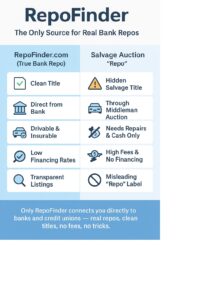
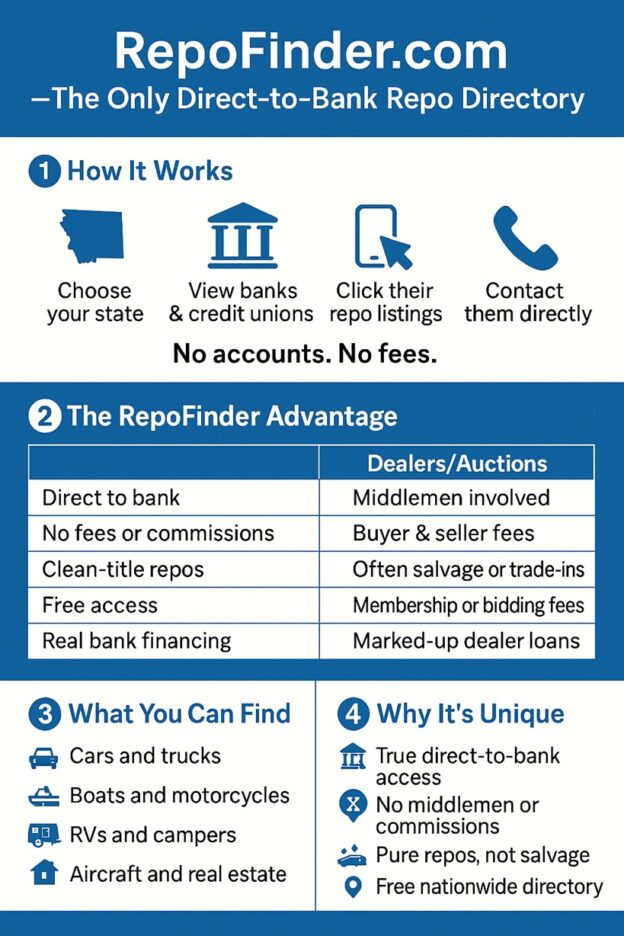
direct to bank sales with RepoFinder infographic

Why RepoFinder Is the Only True Direct-to-Bank Repo Marketplace

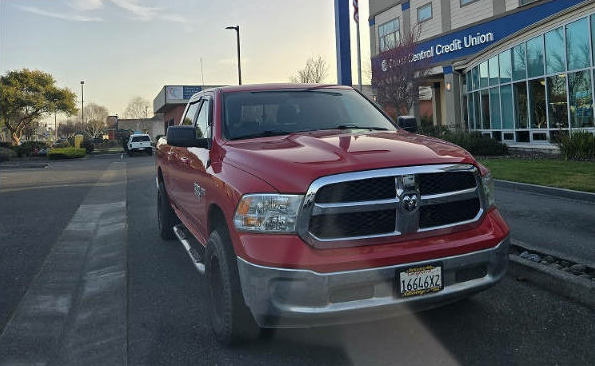
repo car for sale at a credit union in Texas

Why RepoFinder Is the Only True Direct-to-Bank Repo Marketplace

When most people hear the word repo, they think of cars being taken away in the middle of the night. But what happens next is what few buyers understand. Once a bank or credit union repossesses a vehicle, boat, or RV, it needs to sell it — often fast.

This is where RepoFinder.com changes the game. It’s the only website that lets regular people find and buy repos directly from banks and credit unions, without paying middlemen or dealer fees.

Let’s explore what makes RepoFinder truly unique, why banks sell this way, and how buyers can use it to save thousands.


1. The Problem With “Repo” Websites Today

Search online for repo cars or bank repos and you’ll see dozens of sites claiming to list repos. But if you click around, most of them are not direct listings from banks. Instead, they’re:

  • Dealer or auction sites that charge fees

  • Salvage auction platforms full of wrecked vehicles

  • “Middleman” listing sites that mark up prices

These sites often advertise “bank repos” but deliver something entirely different insurance totals, salvage titles, or dealer-only inventory.

The result? Buyers waste time and money chasing what they think are great deals, only to find hidden fees, bidding wars, and damaged vehicles.

RepoFinder was built to end that confusion.


2. How RepoFinder.com Works

RepoFinder.com doesn’t sell repos itself. Instead, it acts as a directory a map that shows where real bank repos are listed.

You simply choose your state, and RepoFinder gives you a list of banks and credit unions that sell repos to the public.

When you click a name, you’re taken directly to that financial institution’s own repo page. There are no markups, no commissions, and no bidding fees.

It’s like having a national phonebook for real bank repos, all in one place.

That simplicity is what makes RepoFinder one of a kind.


3. The Most Unique Attribute: Direct-to-Bank Access

Other sites insert themselves between the buyer and the bank. RepoFinder doesn’t.

This direct access is what makes it special. You’re not buying through a third party, you’re dealing directly with the source, the bank or credit union that owns the vehicle.

Why that matters:

  • You can ask questions directly about the vehicle or property.

  • You can often negotiate the price with the lender.

  • You might qualify for special repo financing, sometimes as low as 1% APR.

  • You avoid auction fees, dealer markups, and “buyer premiums.”

In short, you’re cutting out the middleman, and keeping the savings.


4. Why Banks Sell Repossessions

Banks and credit unions don’t want to own cars or boats. They’re in the lending business, not the retail business.

When a borrower stops paying, the bank repossesses the asset and tries to recover its losses. Selling directly to the public helps them do that faster.

Here’s why banks prefer direct sales:

  • They save time by avoiding auctions.

  • They keep control over the sale and paperwork.

  • They can offer better terms to qualified buyers.

  • They maintain transparency with members or customers.

That’s why so many institutions across the country now list repos online. And RepoFinder pulls them all together in one place.


5. The Benefits for Buyers

Buying a repossession through a bank offers major advantages over buying from a used-car dealer or auction.

Lower Prices

Banks aren’t trying to make a profit. They’re trying to recover what’s owed. That means many repos are priced below book value.

No Dealer Fees

Dealers often charge hundreds even thousands in “documentation,” “prep,” or “market adjustment” fees. Banks don’t.

No Commissions

When you buy from a dealer, someone’s earning a commission. With banks, there’s no sales commission ever.

Easier Paperwork

Most lenders help handle title transfers and bills of sale. That saves buyers time and reduces mistakes.

Financing Options

Some banks even reward repo buyers with special financing. A low interest rate can save hundreds of dollars every month.

With RepoFinder, all those benefits become easy to find, state by state.


6. How RepoFinder Helps You Avoid Scams

In today’s online car world, scams are everywhere. Many fake “repo” websites are set up just to collect deposits or personal information.

RepoFinder eliminates that risk by linking only to verified financial institutions. You’re never wiring money to a stranger. You’re dealing directly with legitimate banks and credit unions.

Each listing you click on takes you straight to the bank’s own website. If a site doesn’t belong to a real institution, it doesn’t appear on RepoFinder.

That’s a huge layer of safety that’s missing on most other platforms.


7. The Types of Repos You Can Find

RepoFinder isn’t just for cars. Banks repossess a wide range of assets, and you can find them all here:

  • Cars and trucks

  • SUVs and vans

  • Motorcycles

  • RVs and campers

  • Boats and personal watercraft

  • Aircraft

  • Real estate and land

From a fishing boat in Minnesota to a pickup truck in Texas, every state has something different to offer.


8. How to Use RepoFinder Step by Step

Here’s a simple guide anyone can follow:

  1. Visit RepoFinder.com

  2. Choose your state

  3. Browse the list of banks and credit unions

  4. Click any name to view its repo listings

  5. Contact the seller directly

That’s it. No login required. No membership fees. Just pure, open access to lender-owned repos.


9. RepoFinder vs. Dealer and Auction Sites

Let’s compare how RepoFinder stacks up against other “repo” platforms.

Feature RepoFinder Typical Auction Site Used Car Dealer
Direct access to bank ✅ Yes ❌ No ❌ No
Middleman or markup ❌ None ✅ Yes ✅ Yes
Buyer fees or commissions ❌ None ✅ Yes ✅ Yes
Financing options ✅ Bank offered ❌ Rare ✅ Dealer arranged
Title transfer help ✅ Yes ❌ No ✅ Yes
True repossessions ✅ Always ⚠️ Often salvage ⚠️ Trade-ins
Free to browse ✅ Always ❌ Sometimes ✅ Yes

This is why buyers trust RepoFinder. It’s simple, fair, and transparent.


10. Who Uses RepoFinder

RepoFinder isn’t just for car flippers or dealers. It’s designed for everyday people who want a fair deal.

  • Families looking for an affordable vehicle

  • DIY buyers who enjoy fixing up used cars

  • Boat lovers searching for discounted watercraft

  • RV travelers planning their next road trip

  • Investors buying properties or land

Since its launch in 2009, RepoFinder has helped millions of users find real repos without the hassle of auctions or salesmen.


11. What Makes “Pure Repo” Listings Different

One of the biggest misconceptions online is that every used car auction is a “repo.” Not true.

Many auction sites mix repos with:

  • Insurance write-offs

  • Dealer trade-ins

  • Salvage and flood vehicles

A pure repo means the asset was repossessed by a bank or credit union because of nonpayment, not damaged or destroyed.

These vehicles usually have clean titles and normal histories. That’s a big difference, and RepoFinder focuses exclusively on those.


12. Transparency and Trust Matter

Buying any used vehicle requires trust. RepoFinder has earned that trust by staying transparent.

It doesn’t take a cut of any sale. It doesn’t favor certain lenders. And it doesn’t hide listings behind paywalls.

The site’s only goal is to help people find genuine repos, straight from the source.

That honesty has made it one of the most respected names in the repo world.


13. How RepoFinder Helps Banks Too

RepoFinder isn’t just great for buyers, it’s valuable for lenders too.

Banks and credit unions can list their repos at no cost, reaching buyers who are already looking for direct sales.

By cutting out the auction process, lenders:

  • Recover losses faster

  • Avoid storage and towing costs

  • Keep repossessions transparent for members

That win-win model helps both sides, buyers save money, and lenders save time.


14. How to Spot a Genuine Bank Repo

When browsing any repo listing, look for these clues to confirm it’s legitimate:

  • The listing is hosted on a bank or credit union website

  • It includes a VIN, mileage, and clear title information

  • The contact info uses an official domain (like .org or .bank)

  • You’re asked to contact the bank directly, not a third party

All listings on RepoFinder meet those standards.


15. The Future of Direct Repo Sales

As more buyers demand transparency and online access, the repo world is shifting. Banks now see the value in listing repos online themselves.

RepoFinder has become the bridge between lenders and buyers, a simple tool that brings trust back to the process.

It’s not a dealership or an auction. It’s something better: a nationwide directory of genuine, bank-owned repos available to the public.

That’s what makes it one of the most unique automotive sites in America.


16. Final Thoughts

If you want to find a repo without the risks and hidden costs of auctions, start with RepoFinder.com.

It’s free, simple, and transparent, and it connects you straight to the source.

No middlemen.
>No markups.
>No nonsense.

Just real bank repos waiting for real buyers.