
Tag Archives: repo vehicles

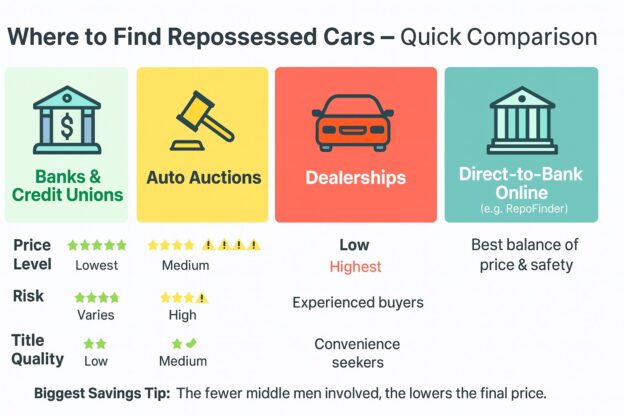
Comparison of where to find repossessed cars auctions banks dealers online repos US

Where to Find Repossessed Cars, Auctions, Banks, Dealers, Online, Repos US

This entry was posted in Blog and tagged , , , on by .

TL;DR – Where to Find Repossessed Cars in the US

  • Repossessed cars are sold through banks, auctions, dealers, and online platforms

  • Banks and credit unions usually offer the lowest prices because they sell to recover loans, not to profit

  • Auctions can be risky due to fees, bidding wars, and mixed title quality

  • Dealers offer convenience but usually charge the highest prices

  • The biggest savings come from buying directly from lenders

  • Platforms like RepoFinder.com help buyers locate clean-title repos sold directly by banks, avoiding dealer markups and auction fees

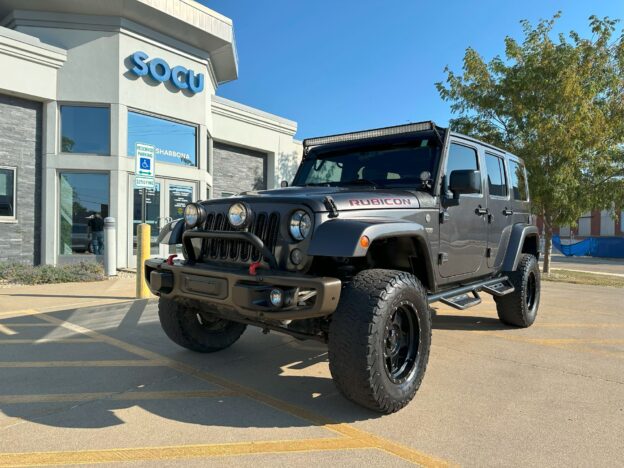
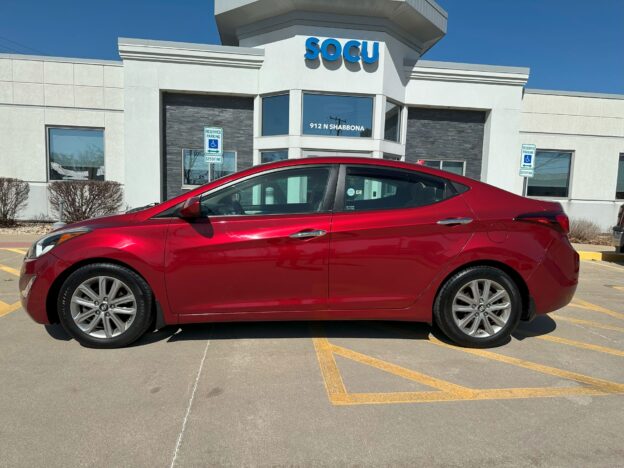
repo car for sale at a credit union

Where to Find Repossessed Cars, Auctions, Banks, Dealers, Online, Repos US

If you’re searching for where to find repossessed cars auctions banks dealers online repos US, you’re likely trying to answer one simple question:

Where can I buy a repossessed car without overpaying or taking on unnecessary risk?

Repossessed cars are sold across the United States every day, often at prices below traditional used-car listings. But not all repo sources are equal. Some favor experienced buyers. Others quietly add fees. Some sell clean, drivable vehicles. Others sell damaged or salvage cars.

This guide breaks down where repossessed cars actually come from, how auctions, banks, dealers, and online platforms compare, and what buyers should know before choosing a source.


What Is a Repossessed Car?

A repossessed car is a vehicle taken back by a lender after missed loan payments. The lender may be a bank, credit union, or auto finance company. Once repossessed, the lender’s goal is not to make a retail profit – it’s to recover the remaining loan balance efficiently.

Because lenders are not car dealers, repossessed vehicles are often priced to sell rather than priced for maximum margin.


Where to Find Repossessed Cars Auctions Banks Dealers Online Repos US

In the US, repossessed cars are typically sold through four main channels:

  1. Banks and credit unions

  2. Auto auctions

  3. Dealerships

  4. Online repo listing platforms

Each option comes with trade-offs in price, risk, and transparency.


Bank and Credit Union Repossessed Cars

Why Banks Sell Repossessed Cars

Banks and credit unions are not in the business of holding vehicles. Cars depreciate, require storage, and create liability. As a result, lenders typically want repossessed vehicles sold quickly and cleanly.

This is why many bank repos are:

  • Priced below market value

  • Sold as-is

  • Offered without dealer markups


Where to Find Bank Repo Cars

Bank repos are often harder to find than auction cars because banks don’t advertise aggressively. Common sources include:

  • Individual bank and credit union websites

  • Local branch listings

  • Regional asset-sale pages

  • Online directories that point buyers directly to lenders

Some online platforms specialize in organizing these listings in one place, making it easier to locate repos being sold directly by financial institutions rather than resellers.


Pros and Cons of Buying from Banks

Pros

  • No dealer markup

  • No auction bidding pressure

  • Usually clean title repos

  • Clear ownership history

Cons

  • Limited inventory at any given time

  • Vehicles sold as-is

  • Inspection availability varies

For buyers focused on value rather than convenience, bank repos are often among the best-priced options.


Repossessed Car Auctions in the US

Auctions are one of the most visible answers to where to find repossessed cars auctions banks dealers online repos US, but they also carry the highest learning curve.


Public vs Dealer-Only Auctions

  • Public auctions allow anyone to bid

  • Dealer-only auctions require a dealer license

Most large wholesale auctions are not open to the public, even though many websites blur that distinction.


Types of Repos Sold at Auctions

  • Bank and finance company repos

  • Government and fleet vehicles

  • Insurance and salvage vehicles

It’s important to understand that not all auction repos are clean-title vehicles. Many auctions mix repos with damaged or salvage cars, which can confuse first-time buyers.


Risks of Buying at Auction

  • No test drives

  • Limited inspection windows

  • Buyer premiums and fees

  • Competitive bidding against professional dealers that drives prices up

  • Salvage auctions primarily sell insurance write-off vehicles that may show a “clean title” until you go to register it and find out the title is now marked as branded.

Auctions can work sometimes for experienced buyers but often surprise newcomers with added costs and risk.


Buying Repossessed Cars from Dealers

Most dealerships do not repossess vehicles themselves. Instead, they acquire repos through auctions or directly from lenders, then resell them as used cars with an added commission and fees.


Why Dealer Repo Cars Cost More

Dealer pricing includes:

  • Transport

  • Reconditioning

  • Marketing

  • Profit margin

While dealers offer convenience and financing, repo cars sold through dealerships are typically the most expensive way to buy a repossessed vehicle.


When Dealers Make Sense

  • You need in-house financing

  • You want a warranty

  • You prefer a traditional buying experience

You’re paying for ease, not wholesale pricing.


Where to Find Repossessed Cars Online in the US

Online searches for repossessed cars have increased dramatically, but online listings vary widely in quality.


Types of Online Repo Platforms

  1. Auction-based sites

  2. Dealer inventory sites labeled “repo”

  3. Direct-to-bank listing platforms

The key difference is who actually owns the vehicle.

Some platforms simply redirect buyers to auctions or dealers. Others list vehicles being sold directly by banks and credit unions, which typically results in lower pricing and cleaner titles.


What to Watch Out for Online

Red flags include:

Legitimate repo listings should clearly identify the seller and the title status.


Best Way to Buy Repossessed Cars Without Overpaying

Buyers looking to save money generally do best when they:

  • Avoid dealer markups

  • Avoid auction bidding wars

  • Buy directly from lenders whenever possible

This is where direct-to-bank platforms quietly stand out. By connecting buyers straight to banks and credit unions – instead of acting as resellers – they reduce layers of added cost.

RepoFinder.com is one example of this approach. Rather than selling vehicles itself, it functions as a directory that helps buyers locate repossessed vehicles owned by financial institutions. Because the sale remains between the buyer and the bank, prices tend to reflect liquidation value rather than retail markup, and titles are typically clean.


Comparing Repossession Buying Options

Source Typical Price Risk Level Title Quality
Banks & Credit Unions Low Medium Usually clean
Auctions Variable High Mixed
Dealers High Low Clean
Direct-to-Bank Online Low Medium Usually clean

The biggest savings usually come from removing unnecessary middlemen.

One reason buyers struggle to find real deals is that many “repo car” listings are actually dealer inventory or auction vehicles relabeled as repossessions. True repossessed cars are owned by banks and credit unions, and these vehicles are usually sold with clean titles because lenders avoid insuring damaged or salvage assets. Understanding who owns the vehicle matters more than where it’s listed. The closer you buy to the lender, the fewer markups and fees you’ll encounter.


Step-by-Step: Buying a Repossessed Car Safely

  1. Choose your buying source

  2. Research fair market value

  3. Confirm seller identity

  4. Verify title status

  5. Inspect when possible

  6. Complete payment and transfer

Repos can offer excellent value, but only when buyers slow down and verify details.


Common Mistakes Buyers Make

  • Assuming all repos are cheap

  • Confusing salvage auctions with bank repos

  • Ignoring fees

  • Failing to verify title status

Most bad repo experiences come from misunderstanding the source, not the vehicle.


FAQ: Where to Find Repossessed Cars Auctions Banks Dealers Online Repos US

Where to find repossessed cars auctions banks dealers online repos US?
Repossessed cars can be found through banks and credit unions, public auctions, dealerships, and online platforms that list repos directly from lenders. Each option differs in cost and risk.

Are bank repos cheaper than auction cars?
Often, yes. Auctions include competition and fees, while banks focus on liquidation.

Do repossessed cars usually have clean titles?
Most bank and credit union repos do, but buyers should always confirm.


Final Thoughts

When researching where to find repossessed cars auctions banks dealers online repos US, the smartest buyers focus less on hype and more on who is selling the vehicle.

Auctions reward experience. Dealers charge for convenience. Banks prioritize clean exits.

Buying directly from financial institutions – whether through local banks or tools that make those listings easier to find – often strikes the best balance between savings and safety.

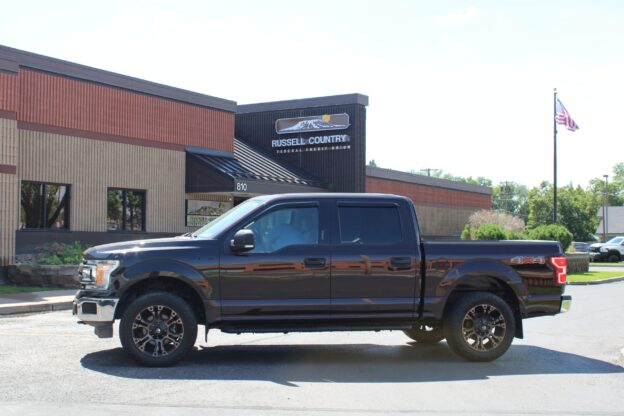
repo car for sale at a credit union in Texas where people are Bidding on Repo Cars

Step-by-Step Guide to Bidding on Repo Cars at Auctions

Step-by-step guide to bidding on repo cars at auctions

Bidding on repo cars from a bank can feel confusing.
Many people think they must use big “repo auctions” online.
That is not actually true.

There is a better way.
You can buy true repossessed cars directly from banks and credit unions.
You can do this without middlemen, games, or hidden fees.

This guide walks you through that process step by step.
You will also see how RepoFinder helps you find these cars fast.


What is a true bank repo car?

A repossessed car is a vehicle a bank took back for non-payment.
The borrower missed too many payments on the loan.

The bank does not want the car long term.
It only wants to recover as much of the loan as it can.

A true bank repo car is:

  • Taken back by a bank or credit union

  • Usually a clean title vehicle

  • Sold to reduce the bank’s loss, not to make a profit

Banks are not car dealers.
They do not need extra profit from the sale.
In fact, they expect to lose money on most repossessions.

If they send a car to a dealer auction, they may get only a fraction of value.
So they often prefer to sell it themselves to the public.


Why you must not confuse repo cars with salvage cars

Many shoppers search for “repo auctions” online.
They often land on salvage auctions instead.

This is a huge problem.

Salvage auctions usually sell:

  • Insurance total loss vehicles

  • Flood, fire, or severe collision damage cars

  • Cars that now carry a branded title, not a clean title

These are not the same as true bank repos.

Why salvage or branded title cars are risky

  • They may have hidden structural damage.

  • Future repairs can be very expensive.

  • Safety can be reduced in a future crash.

  • Many buyers and lenders avoid them.

This also hurts resale value.
Branded title cars often sell for much less later.

When you buy from a bank’s repo list, you are usually getting a clean title car.
You avoid many of the dangers that come with salvage or rebuilt vehicles.


Why banks sell repo cars cheaply

Banks and credit unions are in the money business.
They are not in the car selling business.

When a car is repossessed, the bank:

  1. Already lost time and money on missed payments.

  2. Must pay storage, insurance, and handling costs.

  3. Wants the car gone from its books as soon as possible.

Every week that car sits, the bank loses more money.

So the bank’s main goals are simple:

  • Sell the car quickly

  • Recover as much of the loan as possible

  • Move on to regular banking business

The bank is not trying to “squeeze” you like a dealer might.
It just wants a reasonable offer and a clean, fast sale.


How banks usually take bids on repo cars

Most banks use a simple bid process for repo cars.

Common methods include:

  • Highest bid wins:
    They collect offers until a deadline.
    Then they accept the best reasonable offer.

  • “Buy it now” price:
    They list a firm asking price.
    You can offer to pay that price and end the process.

Sometimes they use both.
They may list an asking price but still accept bids below that.

Remember, the bank is not required to accept every offer.
It will compare each bid with the car’s value and the loan balance.


Why RepoFinder is useful in this process

True bank repo cars can be hard to find alone.
Each bank or credit union often lists its own vehicles.
Links can be buried deep on their websites.

RepoFinder has done the hard work for you since 2009.

RepoFinder:

  • Lists banks and credit unions across the country

  • Links you directly to their repo pages

  • Focuses on true repossessions, not salvage auctions

  • Is free to use for shoppers

You are not bidding on RepoFinder itself.
You use RepoFinder to find the bank or credit union that owns the car.
Then you deal with that lender directly.


Step-by-step guide to bidding on bank repo cars

Step 1: Use RepoFinder to locate bank repo cars

Start at RepoFinder.com.

  • Choose your state or nearby states.

  • Browse the list of banks and credit unions.

  • Click through to their repo or “for sale” pages.

You will see various vehicles.
These may include cars, trucks, SUVs, RVs, and more.

Focus only on vehicles listed as repossessed or “bank owned.”


Step 2: Check the basic details and title status

Click on a vehicle that interests you.

Look for:

  • Year, make, and model

  • Mileage

  • Basic options and trim

  • Asking price or starting bid

  • Title status information

If the listing does not clearly state title status, ask the bank.
You want to confirm that it is a clean title, not salvage or rebuilt.

If the title is anything other than clean, think very carefully.
Most buyers should avoid these cars for safety and resale reasons.


Step 3: Run a vehicle history report

Before you bid, get the VIN from the listing.

Use the VIN to run a vehicle history report.
This can reveal:

  • Past accidents

  • Title changes or branding

  • Odometer issues

  • Previous owners and locations

If you see major accidents or flood damage, move on.
There are many other bank repos that may be cleaner.


Step 4: Inspect the car in person when possible

Whenever you can, see the vehicle in person.

Ask the bank:

  • Where the car is stored

  • When you can view it

  • Whether you can bring a mechanic

If they allow it, bring a trusted mechanic or knowledgeable friend.

Check:

  • Body and paint condition

  • Frame and undercarriage rust or damage

  • Tires and brakes

  • Engine noise, leaks, and smoke

  • Transmission shifting and test drive feel

If a test drive is not allowed, at least start the engine.
Listen for odd knocks, rattles, or warning lights.

Take photos and notes.
Compare the car’s condition with its price and book value.


Step 5: Talk to the bank about how bidding works

Next, speak with the bank’s contact person.

Ask clear questions like:

  • “How do you accept offers or bids?”

  • “Is there a minimum bid or reserve price?”

  • “Is there a deadline for offers?”

  • “Do you have a ‘buy it now’ price?”

  • “How will you notify me if my bid wins?”

Get these details before you submit your offer.
This prevents confusion later.

Remember, banks often collect multiple bids.
They usually accept the highest reasonable offer that meets their internal target.


Step 6: Ask about special bank repo financing

Here is a big advantage many people miss.

Because the bank already owns the car, it may offer special financing.
Sometimes, this can be as low as one percent interest for a well-qualified buyer.

Why would the bank do that?

  • You are helping remove a bad loan from their books.

  • They can turn a non-paying loan into a new, current loan.

  • They keep you as a happy new customer.

Ask questions like:

  • “Do you offer special financing if I’m bidding on repo cars?”

  • “What is the lowest interest rate available?”

  • “What are the terms and required down payment?”

Do not assume the bank rate is high.
In many repo cases, the rate is better than typical dealer financing.


Step 7: Decide your maximum bid or offer

Based on your research, set a maximum price in your mind.

Consider:

  • Book value for a clean title, similar mileage car

  • Any repairs needed now or very soon

  • Taxes, registration, and insurance

  • Your personal budget

Never bid more than your maximum.
It is easy to get caught up in winning.
Remember, you want a good deal, not just a win.


Step 8: Submit your bid or buy-it-now offer

Now you are ready to bid.

Follow the bank’s instructions exactly.
They may ask you to:

  • Fill out a bid form

  • Email your offer

  • Deliver a sealed bid to a branch

  • Place a bid through an online form

Include:

  • Your full name and contact information

  • The vehicle details and VIN

  • Your offer amount

  • Any conditions, like required inspection or financing approval

If the bank has a “buy it now” price you like, you can offer that amount.
This can beat other bidders instantly.


Step 9: Wait for the bank’s decision

After bids close, the bank will review the offers.

This process may take a few days.
They will choose the best offer based on price and the buyer’s strength.

If you win, they will contact you with next steps.
If you do not win, stay polite and thank them.
You can always bid on another vehicle later.


Step 10: Complete financing and paperwork

If your bid is accepted, move quickly.

You will usually need to:

  • Sign a purchase agreement or bill of sale

  • Finalize your loan with the bank or your own lender

  • Provide proof of insurance

  • Pay any required fees and taxes

The bank will then sign over the title to you.
Make sure the title status matches what you were promised.

Keep copies of all documents for your records.


Step 11: Take delivery and enjoy your new car

Finally, schedule pickup of the vehicle.

Inspect it again when you arrive.
Confirm that nothing has changed since your earlier visit.

  • Once you are satisfied, drive it home.
  • You now own a repo car bought directly from a bank.
  • You’ve avoided dealer games.
  • You also avoided risky salvage auctions.
  • You’ve likely saved a lot of money in the process.

Common questions about bidding on bank repo cars

Are repo cars always in bad shape?

No.
Some are rough, but many were daily drivers.
They often ended up as repos due to money problems, not abuse.

Always inspect each car on its own.


Can I get a warranty with a repo car?

Usually, repo cars are sold as-is.
That means no warranty from the bank.

You can ask about buying an extended warranty from a third party.


Do I need cash to buy a bank repo car?

Not always.
Many banks and credit unions offer financing on their own repos.
This may include special low rates, sometimes around one percent.


Is it safe to bid on repo cars online?

It can be safe if you know the bank is real.

Use RepoFinder to reach actual banks and credit unions.
Avoid random sites that mix in salvage auction cars.


Why are bank repo cars harder to find than salvage auction cars?

Banks do not spend much on marketing.
They post repos on their own websites, but usually not on giant ad platforms.

RepoFinder brings these scattered links together in one place.


Final tips when bidding on repo cars

  • Only buy clean title vehicles when possible.

  • Never confuse bank repos with salvage auction cars.

  • Use RepoFinder to find real banks and credit unions.

  • Inspect each car and run a history report.

  • Ask about special repo financing.

  • Set a firm maximum bid and stick to it.

With a little patience, you can get a safe, clean title car at a strong price.
You also help a bank cut its losses and move forward.

That is a win for both sides.

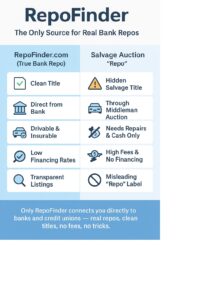
credit union selling clean title repo instead of a salvage repo

The Truth About Bank Repos vs. Salvage “Repos”

clean repo vs salvage repo

Not All “Repos” Are the Same – The Truth About Bank Repos vs. Salvage “Repos”

Most shoppers see the word repo and think it means a great deal. But here’s the truth: not all repos are the same.

Some “repo” listings are real, clean title vehicles owned and sold directly by banks or credit unions.
Others use the word “repo” as clickbait to hide wrecked or totaled vehicles coming from insurance pools or salvage auctions.

If you’re shopping for a used car, understanding the difference could save you thousands, and protect you from a bad surprise at registration time.

Let’s break it down.


1. The Source: Real Bank Repos vs. Salvage Yard “Repos”

Every car has a story, and where it comes from tells you everything about its condition.

True bank repos, like the ones listed on RepoFinder.com, come straight from the lender who financed them.
When a borrower stops making payments, the bank reclaims the car. They don’t want to own cars, they just need to recover the loan balance.

So, they sell the repossessed vehicle directly to the public. Simple. Honest. Transparent.

Salvage seller “repos” are totally different. These cars weren’t repossessed because of missed payments, they were totaled by insurance companies. After an accident, flood, or theft claim, the vehicle is marked as a total loss. Then, insurance auctions or third-party resellers list those cars online, often calling them “repos” to attract clicks.

That single word swap confuses thousands of buyers every year.


2. The Title Status: Clean Titles vs. “Clean Until Registered”

Here’s where most people get burned.

When you buy from a bank or credit union through RepoFinder, you’re usually getting a clean title.
That means the car has never been totaled, rebuilt, or branded. When you register it, it stays clean.

Banks rarely deal with damaged or flood vehicles. They just want to move unpaid inventory.

But many salvage sellers show listings with “clean” titles that aren’t really clean at all.
Why? Because the DMV hasn’t updated the paperwork yet.

Once you try to register that “clean title” car, the truth comes out, it’s suddenly branded salvage or rebuilt.
By then, it’s too late. The value drops by 30–50%, and you’re stuck with a car that’s difficult to finance or insure.

What looked like a deal quickly turns into a headache.


3. The Condition: Road-Ready vs. Repair Projects

When you browse bank repos on RepoFinder, you’ll notice something right away, most look like normal used cars.
That’s because they are normal used cars. They were everyday drivers before being repossessed for missed payments.

They may need a basic cleaning or a few small repairs, but they’re usually drivable and safe.

Now, compare that to salvage repos. Many of those vehicles are wrecked, stripped, flooded, or burned. Some are missing major parts. Others don’t run at all.

You’re not buying transportation, you’re buying a rebuild project.
And unless you’re a body shop or a professional rebuilder, those “cheap” cars can end up costing more than a clean repo from a bank.


4. The Buying Process: Direct to Bank vs. Fee-Filled Auctions

Buying a real repo is straightforward.
On RepoFinder, you connect directly with banks and credit unions that sell repos to the public.

There’s no middleman, no dealer markup, and no hidden fees.
You contact the lender, arrange a viewing, and make an offer.

Compare that to buying from a salvage auction.
You’ll often pay “buyer’s premiums,” “gate fees,” “document fees,” and “storage fees.”
Some sites even require a dealer license or paid membership just to bid.

And once you win, you still have to arrange towing, repair, and re-inspection before it’s street legal.

RepoFinder’s process feels more like buying from a private party, but safer, because banks handle the title transfer and bill of sale professionally and at no cost.


5. Financing and Insurance: Easy Approval vs. Roadblocks

Here’s another big difference that buyers overlook.

When you buy a clean title repo from a bank, that same bank may offer special repo financing.
These programs are designed to move vehicles quickly, with interest rates as low as 1–3%.
You could save hundreds a month compared to dealer financing.

Clean title vehicles are also easy to insure. You can get full coverage just like any other used car.

But salvage “repos”?
Most lenders won’t touch them, they’re cash only.
Even if you pay cash, insurance companies often refuse full coverage. You’ll get liability only, which leaves you unprotected if the car is damaged again.

A clean title repo doesn’t just save money upfront, it saves you stress for years down the road.


6. Long-Term Value: An Asset vs. a Liability

A clean title repo is still a real asset.
You can sell it later, trade it in, or refinance it.
It keeps its value because it’s legally recognized as a standard used vehicle.

A salvage vehicle, on the other hand, is a permanent liability.
Once a title is branded salvage or rebuilt, it can never go back to clean.

Even if you spend thousands restoring it, its resale value stays low. Dealers rarely accept them as trade-ins, and many buyers won’t touch them.

That’s the long-term price of buying the wrong kind of “repo.”


7. Transparency and Trust: RepoFinder vs. the Rest

RepoFinder doesn’t sell cars. It simply connects buyers to verified banks and credit unions across all 50 states.
You browse listings by state, click a lender, and contact them directly.

No games. No third-party middlemen pretending to be banks.

Each listing represents a real financial institution trying to clear real repos from its books.
You deal with the lender directly, not an auction house or a reseller hiding behind the word “repo.”

That’s why buyers trust RepoFinder, it’s transparent, simple, and completely free to use.


8. Why Salvage Sellers Misuse the Word “Repo”

It’s all about marketing.
The word repo sounds safer and cleaner than salvage.

When people hear “repo,” they think “someone couldn’t make payments,” not “someone crashed this into a ditch.”
So salvage sellers borrow the term to make their listings sound more appealing.

But they’re counting on buyers not knowing the difference.
They blur the line between financial repossession and physical damage to attract traffic.

RepoFinder draws that line clearly.
A real repo means it came from a financial institution, not a salvage yard.


9. Common Myths About Repos and Salvage Cars

#1 Myth: “A repo car is probably trashed.”
➡️ Truth: Most repos are in good shape, they were parked at home, not wrecked.

#2 Myth: “A salvage car with a clean title is still a good deal.”
➡️ Truth: It may look clean online, but registration reveals the truth.

#3 Myth: “Banks don’t sell directly to the public.”
➡️ Truth: Thousands do, and RepoFinder lists them all in one place.

#4 Myth: “Auction sites are cheaper.”
➡️ Truth: Add up the hidden fees, repairs, and title issues, and bank repos almost always win.


10. The Smart Shopper’s Advantage

When you buy a real repo from a bank or credit union, you’re stepping into a transaction built on fairness.
There’s no upsell, no pressure, and no hidden agenda.

Banks want their money back, not a commission. That’s why prices are often lower than dealer lots, sometimes far lower.

Salvage sellers, on the other hand, profit from damaged inventory. Their goal isn’t to help you drive, it’s to move junk fast.

If you’re a regular buyer looking for dependable transportation, RepoFinder gives you a smarter, safer way to shop.

It’s the only platform that keeps “repo” honest.


11. Quick Comparison: Bank Repo vs. Salvage Seller “Repo”

Feature Bank Repo (RepoFinder.com) Salvage Seller “Repo”
Source Bank or Credit Union Insurance Auction / Tow Yard
Title Clean and Transferable Clean Until Registration → Salvage
Condition Drivable, Well-Maintained Wrecked or Flooded
Fees None Multiple Hidden Fees
Financing Often Available Usually Cash Only
Insurance Full Coverage OK Limited or Liability Only
Resale Value Strong Permanently Reduced
Transparency Direct-to-Lender Middleman or Auction
Best Site RepoFinder.com Misleading “Repo” Auctions

12. The Bottom Line

A real repo is a financial event, not a physical wreck.
Banks and credit unions repossess vehicles for missed payments, not because of damage.

Salvage sellers misuse the word “repo” to attract attention. They count on confusion to move totaled vehicles.

But now you know the truth.

If you want a real clean title deal, with no middlemen, no fees, and no surprises, go straight to the source.

👉 Visit RepoFinder.com.
It’s the nation’s largest free directory of banks and credit unions selling repos directly to the public.

Real repos. Clean titles. Honest deals.

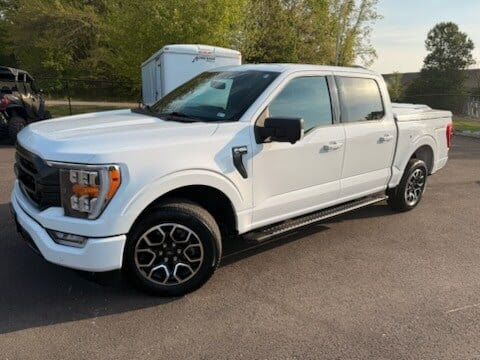
repo vehicle deal with vehicle for sale in front of a local credit union

Where Is the Best Place to Get a Deal on a Repo Vehicle?

Where Is the Best Place to Get a Deal on a Repo Vehicle?

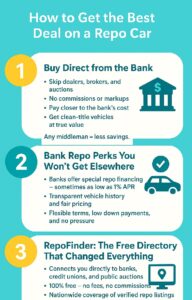
infographic on how to get the best deal on a repo

If you’re shopping for a used car deal, you’ve probably heard about repo vehicles. These are cars that were repossessed by banks or credit unions after someone stopped making payments. Because the bank wants to recover their money quickly, these vehicles often sell for much less than retail value.

But the big question is:
Where can you actually get the best deal on a repo vehicle?

After years of watching how the industry works, one truth stands out:

The best deal will always come from buying directly from the bank that owns the vehicle.

Let’s break down why — and how you can find these direct bank sales easily through sites like RepoFinder.com.


1. The Best Deal Always Comes from Buying Directly from the Bank

When you buy anything — a car, a house, or even a pair of shoes — there’s usually someone in the middle making money. That person or company is called a middleman. They buy low and sell high to make a profit.

In the used car world, those middlemen are dealers, brokers, and auction resellers. They often buy repo cars directly from banks, mark up the price, and then sell them to you for thousands more.

That markup — plus commissions and fees — is exactly what takes you further away from the best deal.

How the Markup Happens

Let’s say a bank repossesses a 2020 Honda Accord.

  • The bank might list it for $10,000 to recover their loss.

  • A dealer buys it, cleans it up, and lists it for $14,000.

  • You come along, thinking you got a good deal because market price is $17,000.

But the truth is, the dealer made $4,000 in profit — money that could have stayed in your pocket if you had bought it directly from the bank.

That’s why the best deal always starts with cutting out the middleman.


2. The Hidden Cost of Middlemen: Fees, Commissions, and Fine Print

Middlemen rarely advertise how much they make from each deal. Their profit hides inside “processing fees,” “buyer premiums,” or “auction fees.”

For example:

  • Some auction websites charge a 10% buyer’s fee.

  • Dealers may add reconditioning fees or documentation fees.

  • Brokers often take flat commissions on each sale.

These charges can easily add $500 to $2,000 to what you pay.

And it’s not just the price. Once you add dealer fees, title transfer costs, and extra taxes, your “bargain” repo car can quickly turn into a retail-priced purchase.

Buying directly from the bank eliminates all of that.
There’s no dealer, no markup, no commission — and no games.

You pay what the bank is asking, usually below wholesale value.


3. Buying Direct from the Bank Comes with Hidden Perks

Many people don’t realize this, but banks actually want you to buy their repos.
Every repo car sitting on their lot represents a loss. The faster they sell it, the faster they recover that loss.

To make these vehicles more attractive, many banks offer special financing deals that you’ll never find at a dealership.

Examples of Bank Repo Perks

  • Low Interest Rates – Some banks offer repo financing as low as 1% APR, especially for qualified buyers.

  • Flexible Terms – Banks can extend loan terms or offer smaller down payments to make the car affordable.

  • Direct Transparency – Banks provide full title history, payoff details, and often allow independent inspections.

  • No Pressure Sales – Bank sales reps don’t work on commission. Their goal isn’t to “sell you something,” it’s to clear inventory.

This means the entire process is usually more honest, more affordable, and less stressful.

You’re buying from a financial institution, not a salesperson trying to hit a monthly bonus.


4. How RepoFinder Changed the Repo Buying Game

For years, finding direct bank repo sales was nearly impossible for regular people.
Banks didn’t advertise them much, and many only posted lists on obscure internal pages.

Then came RepoFinder.com — a site that completely disrupted the repo car industry.

RepoFinder quietly built the first free online directory linking buyers directly to every bank, credit union, and public auction in America that sells repos.

What Makes RepoFinder Different

  • No Fees or Membership Costs – It’s completely free to use.

  • Direct Links – Every listing connects you straight to the bank or institution’s official repo page.

  • Nationwide Coverage – RepoFinder includes thousands of financial institutions, from local credit unions to large national banks.

  • No Middlemen – There are no dealers or brokers involved.

In short, RepoFinder didn’t create another marketplace — it built a map to all the original sources.

You’re not buying “through” RepoFinder. You’re using it to go straight to the source — the banks themselves.

That’s what makes it so powerful.


5. The Smoke and Mirrors of the Salvage Industry

Now, here’s where things get tricky.

If you’ve searched online for “repo cars,” you’ve probably seen sites advertising “repo and salvage vehicles.”
But most of these sites aren’t selling true repos at all.

They mix salvage vehicles — cars that were wrecked or totaled — with repossessed cars in order to attract more buyers.

This creates confusion. And for many shoppers, it leads to disappointment.

Salvage ≠ Repo

A repo vehicle was repossessed because the owner didn’t make payments. It’s usually still in good mechanical condition and has a clean title.

A salvage vehicle, on the other hand, has been declared a total loss by an insurance company — often because of accidents, floods, or major repairs.

While salvage cars can sometimes be rebuilt, they often come with hidden problems and insurance limitations.

Some sites use the word “repo” loosely just to draw in buyers. Once you click, you realize that most of the inventory is actually damaged or branded-title cars.

That’s the classic bait-and-switch tactic.


6. Why Big Salvage Sellers Blur the Line

Salvage auctions make huge profits from fees.
Every time someone bids, wins, or even registers, they pay something.

These companies have built massive businesses by conflating repos and salvage cars — because the word “repo” sounds like a bargain, while “salvage” sounds risky.

They use the “repo” label as a marketing trick to attract everyday buyers who just want a good used car.

But the truth is, very few of their listings are real repos from banks.

That’s why educated buyers know:

If it doesn’t come directly from a bank, it’s probably not a true repo deal.


7. The Difference Between Real Repo Deals and Auction Resales

Let’s compare a real bank repo sale versus a salvage auction sale:

Feature Bank Repo Salvage Auction
Vehicle Title Usually clean Often branded or rebuilt
Condition Normal wear May have major damage
Fees None or minimal High buyer and storage fees
Financing Often available Usually cash only
Transparency Full ownership history Limited disclosure
Middlemen None Many layers
Buyer Risk Low High

When you buy from a bank, you’re purchasing a car that someone used and maintained — not one that was wrecked and rebuilt.

It’s simply a better value and a safer investment.


8. How RepoFinder Keeps It Simple and Honest

RepoFinder doesn’t sell cars.
It doesn’t take a commission.
It doesn’t collect fees.

It’s just a directory that points you straight to the banks.

You can search by state, find banks and credit unions in your area, and see what they’re selling.

Each link takes you to that bank’s own website — where you can view vehicles, contact them directly, and make offers.

That’s the key difference: transparency.

RepoFinder doesn’t stand between you and the bank. It connects you.


9. The Process: How to Buy a Repo Car from a Bank

If you’ve never bought directly from a bank before, don’t worry — it’s simple.

Here’s how it works:

  1. Visit RepoFinder.com.
    Choose your state and browse the list of banks and credit unions.

  2. Click on the bank’s repo page.
    You’ll see a list of vehicles, sometimes with photos and descriptions.

  3. Contact the bank directly.
    You can email or call to ask about inspection, financing, and bidding.

  4. Inspect the vehicle.
    Many banks allow third-party inspections or test drives.

  5. Make your offer.
    Banks may accept bids or list fixed prices.

  6. Arrange financing or payment.
    Some banks offer special repo loans with rates as low as 1%.

  7. Close the deal and take the keys.

That’s it. No sales pitch. No buyer’s fee. Just a direct, honest transaction.


10. Why the “Quiet” Buyers Get the Best Deals

Here’s a secret: the best repo deals aren’t advertised everywhere.

Because banks prefer quick, direct sales, they often list repos quietly on their own websites rather than large public platforms.

That’s why so many great deals go unnoticed.

Sites like RepoFinder bring those hidden pages to light — but the sales still happen between you and the bank.

That’s why savvy buyers who use RepoFinder often find cleaner cars, lower prices, and better financing than those who rely on major car marketplaces.


11. Transparency Is the Real Value

When it comes to repo cars, transparency is everything.

Banks have no reason to hide a vehicle’s history. They’ll usually show:

Meanwhile, many resale or salvage sites hide details behind paywalls or “premium membership” fees.

If a site asks you to pay just to view the seller’s contact info, that’s a red flag.

With RepoFinder, everything is open and public.


12. The Future of Repo Buying: Direct, Digital, and Fair

The used car world is changing fast.
Buyers are smarter. They research everything. They want direct access and fair pricing.

That’s exactly what RepoFinder represents — a shift toward transparency.

Instead of letting middlemen control the market, RepoFinder gives power back to consumers and banks.

It’s a win-win:

  • Banks move inventory faster.

  • Buyers get better cars for less money.

And the best part?
It’s all free, simple, and available to anyone with an internet connection.


13. Tips for Getting the Absolute Best Deal on a Repo Car

If you’re ready to start searching, keep these tips in mind:

  • Start with RepoFinder. It’s the easiest way to find legitimate repo listings.

  • Avoid “repo and salvage” combo sites. Most are salvage auctions with inflated fees.

  • Check title status carefully. Make sure the car has a clean title.

  • Ask about bank financing. You could qualify for rates as low as 1%.

  • Inspect before you buy. Even repos can have wear, so check thoroughly.

  • Act quickly. Bank repo deals often sell fast.

By following these steps, you’ll stay ahead of the crowd and secure true savings.


14. Why Dealers Don’t Want You to Know This

It’s no secret that used car dealers make big profits from bank repos.
They depend on buyers not knowing where the cars originally came from.

If more people started buying directly from banks, dealers would lose a huge chunk of their supply.

That’s why you don’t see many ads saying,

“Buy direct from the bank and skip us!”

But now you know the truth.
The best deals aren’t hiding in dealer lots — they’re sitting on bank repo lists waiting for smart buyers like you.


15. The Bottom Line: The Best Deal Is Always a Bank Direct Deal

Let’s sum it up clearly:

If you truly want the best deal on a repo vehicle, don’t overthink it.
Start where the real sellers are — at the banks themselves.

And the easiest way to find them all in one place is RepoFinder.com.


Florida Credit Union Repos for sale in Florida

Where to Buy Florida Credit Union Repos

Where to Buy Florida Credit Union Repos

Looking for a great deal on a car, truck, or property? You’re in the right place. This guide will show you where to buy Florida Credit Union repos, and how to save big by purchasing directly from banks and credit unions. Whether you’re new to repos or just want to skip the middleman, we’ve got you covered.

A Quick Look at Florida Credit Union

Florida Credit Union (FCU) was established in 1954 to serve educators in Alachua County. Over the years, it has grown and now serves members across many parts of Florida. You’ll find Florida Credit Union branches in cities like Gainesville, Ocala, Lake City, and The Villages. With a strong presence across North and Central Florida, FCU offers everything from savings accounts to home loans—and yes, repossessed vehicles and properties for sale.

You can view their current listings here: Florida Credit Union

What Are Repos and Why Are They For Sale?

When someone can’t make payments on a loan for a car, truck, RV, or home, the lender can take it back. This process is called repossession. After that, the bank or credit union will often sell the item to recover the money it’s owed.

Banks like Florida Credit Union don’t want to keep these repossessed items. Instead, they want to sell them quickly, which means they’re often listed below market value. This gives buyers a chance to get great deals—without paying commissions or dealer fees.

Why Buy Florida Credit Union Repos?

There are many benefits to buying a repossessed item directly from a credit union like FCU:

  1. No dealer markups – You’re buying straight from the lender.
  2. No commissions – It’s more like a private party sale.
  3. Quick process – Credit unions want to sell quickly.
  4. Financing options – Many offer low-rate financing to buyers.

How Does the Repo Process Work?

Here’s how the process works step-by-step:

  1. A borrower stops making loan payments.
  2. The credit union repossesses the car, truck, boat, RV, or home.
  3. The item is cleaned, inspected, and listed for sale.
  4. Interested buyers can view the listings and place an offer.

This means you’re getting an item that has likely been reviewed and prepared for resale—plus, you avoid auctions.

Where to Buy Florida Credit Union Repos Online

You can always check the Florida Credit Union listings, but for the best results, start your search at RepoFinder.com. RepoFinder is the only website that lets you browse bank and credit union repos directly from the source.

Unlike auction sites or car dealers, RepoFinder doesn’t charge fees or act as a middleman. It connects you directly to the seller—the credit union or bank. This means more savings and no pressure.

➡️ Check out this helpful blog from RepoFinder: Buying and Financing a Repossessed Vehicle at a Bank

Types of Repossessed Property You Can Buy

Florida Credit Union and other banks sell many types of repossessed property:

  • Cars and trucks
  • SUVs and vans
  • Motorcycles and ATVs
  • Boats and RVs
  • Real estate (homes, land, condos)

Because the credit union is trying to recover money, you can often get these for below retail price. It’s a smart way to buy.

5 Tips for Buying Florida Credit Union Repos

Let’s go over some easy tips to help you buy your first repo with confidence:

1. Start at RepoFinder.com

It’s the best place to find credit union and bank repo listings all in one place.

2. Research the Vehicle

Look up the car’s value using Kelley Blue Book. Check its vehicle history with a VIN report.

3. Ask Questions

Before you buy, ask about the condition.

4. Get Pre-Approved

See if Florida Credit Union will finance your repo purchase. Many credit unions offer this to buyers.

5. Act Quickly

Repos can sell fast. If you find a good deal, don’t wait too long.

How RepoFinder Makes Buying Repos Easy

RepoFinder stands out from dealer auctions and used car websites. Here’s why:

  • No salespeople or pressure.
  • No middleman or hidden fees.
  • It’s like buying from a friend—not a business.
  • It’s the only site that connects you to banks and credit unions directly.

Final Thoughts on Where to Buy Florida Credit Union Repos

Buying a repossessed car or property might sound complicated, but in reality it’s not. It’s easier and cheaper than going through a dealer because you avoid all the high pressure sales and back and forth. Florida Credit Union repos are well worth looking into if you want to save money, avoid fees, and buy directly from the lender.

Remember, use RepoFinder.com as your first step. It’s the only website that brings all bank and credit union repo listings together in one easy-to-use place.


Financing a Repossessed Vehicle at a bank

Buying and Financing a Repossessed Vehicle at a Bank

Financing a repo for sale at a local bank or credit union

Buying and Financing a Repossessed Vehicle at a Bank

Buying a car doesn’t have to be expensive or complicated. One smart way to save money is by buying a repossessed vehicle directly from a bank or credit union. Yes! You heard that right. Banks and credit unions sell and finance repossessed vehicles directly to the public. Often times right out of the bank parking lot. Even better, some banks will offer special financing options just to move their inventory faster.

In this guide, I’ll coach you through everything step by step. You’ll learn how to:

  • Find repossessed cars through local banks using websites like RepoFinder.com.

  • Inspect and research the vehicle so you know what you’re getting.

  • Ask the bank about special financing options for a repossessed vehicle.

Let’s get started!


What Is a Repossessed Vehicle?

A repossessed vehicle, or “repo,” is a car that was taken back by a lender. This usually happens when the person who bought it couldn’t make their loan payments. The bank or credit union then sells the vehicle to recover their money.

Repos are usually:

  • Sold “as-is,” meaning no repairs or upgrades before you buy.

  • Priced lower than dealership cars.

  • Available directly from banks or credit unions.


a repo motorcycle parked in a bank lobby for sale

Why Buy and Finance a Repossessed Vehicle?

Great question. Here are some solid reasons to consider a repo:

✅ Lower Prices

Repos are often cheaper than similar cars at dealerships. Banks just want to get their money back fast.

✅ Less Competition

Not as many people know they can buy repos directly from banks. That means more options for you.

✅ Financing Flexibility

Some banks offer special financing for repossessed vehicles. They’d rather work with you than let the car sit in a lot.


Step 1: Find Repossessed Vehicles Through Banks

Okay, let’s talk about how to actually find these hidden deals.

🔍 Use RepoFinder.com to Visit Local Bank and Credit Union Websites

The easiest place to start is RepoFinder.com. It lists repos from banks and credit unions all over the country.

Here’s how it works:

  1. Go to the website.

  2. Choose your state or click “National Listings.”

  3. Browse repos by vehicle type: cars, trucks, RVs, boats, and more.

  4. Click on a repo to view details and seller contact info.

Best part? There are no fees, no middlemen, and no commissions when you buy from the bank.


Step 2: Inspect and Research the Vehicle

Now that you’ve found a car, it’s time to make sure it’s a good one.

🛠️ Step 1: Get a Vehicle History Report

Before anything else, check the car’s history. Use websites like:

Look out for:

  • Accidents

  • Flood damage

  • Odometer rollbacks

  • Title issues

A clean title is best! Ask the bank if they already have a vehicle history report. Many of them will.

👀 Step 2: Do a Visual Inspection

If the car is nearby, visit the lot and take a look.

Things to check:

What to Check What to Look For
Tires Even wear, no bald spots
Body Rust, dents, and paint damage
Windows/Lights Cracks, chips, working condition
Interior Clean seats, working electronics
Engine Compartment Leaks, smells, loose parts

Pro tip: Take pictures or a video to review later.

🔧 Step 3: Ask for a Pre-Purchase Inspection

If the bank allows it, bring a mechanic to inspect the car. Or ask if you can take it to a shop.

A mechanic can spot:

  • Transmission problems

  • Brake issues

  • Leaks

  • Engine wear

This step could save you thousands down the road.

🧠 Step 4: Compare Prices Online

Use websites like:

Compare the repo’s price to similar models. Make sure you’re getting a fair deal.


Step 3: Ask the Bank About Special Financing

Okay, so you’ve found a good repo and done your research. Now comes the best part: financing a repossessed vehicle—directly from the bank.

💰 Why Banks Offer Better Deals

Banks and credit unions want to move repossessed cars quickly. The longer a repo sits, the more it costs them.

To speed things up, they may:

  • Offer lower interest rates

  • Provide in-house financing options

  • Skip credit checks or be flexible with your score

  • Accept smaller down payments

That’s why buying from a bank can be a win-win.

📞 Questions to Ask the Bank

Before signing anything, ask the bank these key questions:

Question Why It Matters
Do you offer financing for repossessed vehicles? You want to work directly with the lender.
Is the interest rate lower than typical auto loans? Lower rates = lower payments.
Are there any special terms for buying repos? Some deals are short-term, interest-free, or skip payments for 60 days.
Can I apply even if my credit isn’t perfect? Many banks are more flexible with repo buyers.
What documents do I need? Be ready with ID, proof of income, and insurance info.

Don’t be afraid to ask questions. Banks are often happy to explain everything.

📝 Be Prepared to Apply

If the bank offers financing for a repossessed vehicle, you’ll usually need:

  • Valid ID

  • Proof of income (like pay stubs)

  • Proof of insurance

  • Down payment (sometimes)

Tip: Some banks may ask you to become a member first, especially credit unions. It’s usually easy and free. After that you’re able to buy and finance repossessed vehicles without any problem.


 repo vehicle for sale at a local credit union

Real-Life Example: Buying and Financing a Repo from a Credit Union

Let’s say you find a 2020 Ford Escape listed by a credit union on RepoFinder.com.

Here’s how the process might go:

  1. You call the credit union and ask if it’s still available.

  2. They confirm and give you details.

  3. You check the car’s history online.

  4. You ask a mechanic to look at it.

  5. You apply for financing a repossessed vehicle through the credit union.

  6. You’re approved at 4.5% interest (lower than your bank’s 7.5% offer).

  7. You sign paperwork and drive off with a great deal!

Total savings? Could be thousands over the life of the loan.


Final Tips Before You Buying of Financing a Repo

Let’s wrap things up with a few extra pointers.

✅ DO:

  • Use RepoFinder.com to make searching banks selling repos easier.

  • Research the vehicle’s value and history.

  • Ask the bank about special financing for repos.

  • Compare loan offers before you decide.

❌ DON’T:

  • Assume all repos are in bad shape—some are nearly new.

  • Skip the inspection, even if the price looks good.

  • Be afraid to negotiate—some banks are open to offers.

  • Forget to check loan terms like interest rate and length.


Conclusion: Make a Smart Move

Buying and financing a repossessed vehicle through a bank or credit union can be a smart move. You’ll often find lower prices, more flexible financing, and less competition compared to regular dealerships.

Just remember:

  • Start your search at RepoFinder.com.

  • Inspect and research each vehicle.

  • Ask the bank how they can help with financing.

You’ve got this. And I’m cheering you on every step of the way.


a repossessed truck sold at a bank

Texas Bank Repos for sale in Texas

Where to Buy Texas Bank Repos

If you’re looking to score a great deal on a vehicle or property, buying Texas Bank repos could be your golden ticket. Many people don’t realize that banks like Texas Bank sell repossessed cars, trucks, boats, motorcycles, RVs, and even real estate at discounted prices. The best part? You skip the middleman and avoid extra fees. This guide will help you understand where to find these deals, how the process works, and why RepoFinder.com is the best place to start your search.


A Brief History of Texas Bank

Texas Bank is a community-focused financial institution proudly serving Texas residents. Established in 1973, Texas Bank has spent decades helping Texans manage their finances. Headquartered in Brownwood, Texas, the bank has branches in cities such as Early, Comanche, and Stephenville.

Texas Bank offers a range of services, including personal loans, mortgages, and vehicle financing. When borrowers can’t make payments on their loans, the bank may repossess the property and resell it to recover losses. This creates an opportunity for savvy buyers to purchase these repossessions at significantly lower prices.


Where to Find Texas Bank Repos

You can find Texas Bank’s repossessed vehicles and properties on their Repossessed Vehicles Page. However, if you want a broader search, RepoFinder.com is the ultimate tool for locating repos from banks and credit unions across the country. RepoFinder is unique because it connects you directly to banks and credit unions, cutting out dealerships and unnecessary fees.


Why Do Banks Sell Repossessed Vehicles and Property?

When someone stops making payments on a loan, the bank takes back the collateral — whether it’s a car, truck, boat, or house. Banks aren’t in the business of selling vehicles or property, so they aim to sell these items quickly, often at discounted prices.

Here are a few reasons why banks sell repos:

  1. Recovering Loan Losses – Banks want to recoup their losses as soon as possible.
  2. Avoiding Storage Costs – Storing vehicles or properties costs money, so banks prefer to sell them quickly.
  3. No Need for Profit – Unlike dealerships, banks only aim to recover the remaining loan balance, which means better deals for buyers.

How to Buy a Texas Bank Repo

Buying a repo from Texas Bank is pretty straightforward. Here are the steps:

1. Browse Listings

Start by visiting Texas Bank’s repo listings or explore a broader selection on RepoFinder.com.

2. Do Your Research

Look up the vehicle’s history using its VIN. Check for any past accidents, repairs, or recalls.

3. Get Pre-Approved for Financing

Some banks offer financing on their repos. Reach out to Texas Bank to explore loan options if needed.

4. Inspect the Vehicle or Property

Repossessed vehicles are usually sold as-is, meaning no repairs or warranties. If possible, have a mechanic inspect the vehicle before buying.

5. Place Your Bid or Offer

Some repos are sold at auction, while others accept direct offers. Follow the bank’s process for submitting your bid.

6. Close the Deal

If your bid is accepted, you’ll complete the necessary paperwork, arrange payment, and take possession of your new ride or property.


Types of Repossessed Property Texas Bank Sells

Texas Bank offers various repossessed assets, including:

  • Cars and Trucks – From compact cars to heavy-duty pickups.
  • Boats and RVs – Perfect for weekend getaways.
  • Motorcycles and ATVs – Great for adventure lovers.
  • Real Estate – Homes, land, and commercial properties.

Why Buying Texas Bank Repos Saves You Money

Purchasing a repo directly from Texas Bank has many benefits:

  • Lower Prices – Banks price repossessions to sell fast, meaning below market value.
  • No Dealer Markup – You buy directly from the bank, avoiding extra fees.
  • Room to Negotiate – Some banks accept offers, giving you a chance to bargain.
  • No Commission Fees – Unlike dealerships, banks don’t charge sales commissions.

Why Start Your Search on RepoFinder?

If you’re serious about finding bank and credit union repos, RepoFinder.com is the best place to start. It’s the only website that connects buyers directly with banks and credit unions.

What Makes RepoFinder Different?

  • No Middlemen – Skip the dealership and save on fees.
  • Direct Access – Contact banks directly, like Texas Bank, to negotiate deals.
  • Nationwide Listings – Find repos from banks across the country.
  • Free Access – No membership required to browse listings.

By using RepoFinder, you’ll cut out the middleman and save money. Plus, you’ll get access to repos that aren’t advertised anywhere else.


Conclusion

If you’re in the market for a repossessed car, truck, boat, RV, or home, buying from Texas Bank is a smart move. Since banks aren’t trying to make a profit, they sell repossessed vehicles and properties at lower prices than dealerships. To make your search easier, start with RepoFinder.com. It’s the only website that connects you directly to banks and credit unions, so you can avoid middleman fees and find the best deals.

Don’t miss out on these incredible savings — start your repo search today!


bank repo aircraft for sale

Guidebook to Buying Bank Repo Airplanes

repo helicopter for sale

Buying a bank repo aircraft is a smart way to save money on a quality plane. Banks repossess aircraft when borrowers default on loans. Unlike private sellers, banks are not looking to make a profit. Instead, they want to recover their losses quickly. This means you can find great deals on bank repossessed airplanes for sale.

Why Buy a Bank Repo Aircraft?

  1. Significant Savings – Banks sell repossessed airplanes below market value.
  2. Motivated Sellers – Banks want to recover costs fast, making them open to negotiation.
  3. Wide Selection – You can find everything from small private planes to corporate jets.
  4. Reliable Listings – RepoFinder.com links to nationwide bank and government auctions, ensuring accurate and up-to-date listings.

repo airplane for sale

How to Find Bank Repo Airplanes for Sale

The best place to start is RepoFinder.com. Their directory includes aircraft from banks, credit unions, and government auctions. Follow these steps:

  1. **Visit **RepoFinder.com
  2. Browse Listings – Filter results by aircraft type, location, and price.
  3. Contact the Seller – Banks or auction houses list details on how to bid or make an offer.

What to Look for in Bank Repo Aircraft

Before buying, inspect the aircraft carefully. Here are key things to check:

  • Logbooks & Maintenance Records – Ensure the aircraft has complete and accurate documentation.
  • Airframe & Engine Condition – Look for corrosion, wear, or damage.
  • Avionics & Equipment – Verify functionality and compliance with regulations.
  • FAA Registration & Title – Confirm there are no liens or legal issues.

How to Negotiate the Best Price

  1. Research Market Value – Compare similar aircraft prices.
  2. Consider the Aircraft’s Condition – Factor in repair costs.
  3. Make a Fair Offer – Banks prefer quick sales but will negotiate.
  4. Be Ready to Act – Great deals go fast.

Finalizing the Purchase

Once your offer is accepted, follow these steps:

  1. Arrange a Pre-Purchase Inspection – Hire a professional mechanic.
  2. Secure Financing (if needed) – Some banks offer financing on repossessed airplanes.
  3. Complete Paperwork – Transfer title, register with the FAA, and obtain insurance.
  4. Take Delivery – Pick up or arrange transport for your new aircraft.

repossessed aircraft for sale

Why RepoFinder.com Should Be Your First Stop for Bank Repo Airplanes

While there are many places to buy used aircraft, RepoFinder.com is the best starting point. They link to bank and government auctions nationwide, giving you access to every bank-owned aircraft in the U.S. Whether you are a seasoned buyer or a first-time bargain shopper, RepoFinder makes the process easy and efficient.

Start Your Search Today!

Ready to find a bank repo aircraft? Visit RepoFinder.com to browse bank repossessed airplanes for sale and get the best deal possible!

MC Federal Credit Union repos for sale in Pennsylvania

Where to Buy MC Federal Credit Union Repos

Looking for a great deal on a car, truck, RV, or even real estate? Buying repossessed vehicles and properties directly from MC Federal Credit Union can save you thousands. Unlike dealerships or auctions, purchasing bank and credit union repo cars for sale means no middleman, no commissions, and no extra fees—just real savings.

MC Federal Credit Union, headquartered in Pennsylvania, has been serving its members for decades. It provides financial services to communities like Danville, Bloomsburg, Lewisburg, and Sunbury. Like most financial institutions, MC Federal occasionally repossesses vehicles and properties when borrowers default on their loans. These repossessions are then resold—often at significantly lower prices than what you’d find at a dealership.

Why Buy MC Federal Credit Union Repos?

Purchasing a repossessed vehicle or property from a credit union comes with major benefits:

  1. Lower Prices – Credit unions are not car dealerships. Their goal is to recover the remaining loan balance, so repo prices are often far below market value.
  2. No Dealer Markups – Buying directly from MC Federal means no hidden fees or dealership markups.
  3. Diverse Inventory – Repossessions can include cars, motorcycles, boats, RVs, ATVs, and even real estate.
  4. Private Party-Like Sales – Since you’re dealing directly with the credit union, the process is similar to a private party sale, not a dealer transaction.

How MC Federal Credit Union Repossessions Happen

When a borrower fails to make payments on their loan, MC Federal Credit Union may need to repossess the asset. This could be a car, truck, boat, or even a house. Once the credit union takes possession, they list the items for sale to recover their losses. This creates a unique opportunity for buyers to purchase vehicles or real estate at a discounted price.

Where to Buy MC Federal Credit Union Repos

If you want to see the latest repossessed vehicles and properties from MC Federal Credit Union, visit their official repo listings: MC Federal Credit Union Property for Sale.

For even more bank and credit union repo cars for sale, check out RepoFinder.com—the only website that directly connects buyers to banks and credit unions selling repossessions. Unlike dealer-only auctions, RepoFinder makes these listings available to the public with no middleman fees.

How to Buy a Repossessed Vehicle from MC Federal Credit Union

  1. Visit the Repo Listings – Browse available repossessions on MC Federal’s repo page.
  2. Research the Vehicle – Look up the make, model, and history. Use a service like Carfax to check for accidents or title issues.
  3. Inspect the Repo – Many repos are sold as-is, so it’s a good idea to inspect them before buying.
  4. Make an Offer – Some repos have set prices, while others allow bidding.
  5. Complete the Purchase – If your offer is accepted, work with MC Federal to finalize the payment and paperwork.

Common Questions About Buying Repossessed Vehicles

Are repo cars in bad condition?

Not always! Many repo cars are in great shape, but some may need minor repairs. Always inspect before purchasing.

Can I finance a repossessed vehicle?

Yes! Many credit unions, including MC Federal, offer financing for repossessed vehicles.

What kinds of repossessions are available?

MC Federal lists a variety of repos, including cars, trucks, motorcycles, RVs, boats, ATVs, and homes.

Why RepoFinder.com is the Best Place to Start

If you want access to even more repo deals, RepoFinder.com is the best resource. Unlike other sites that charge fees or limit access to dealers, RepoFinder provides a free, public directory of bank and credit union repos across the U.S..

RepoFinder Benefits:

  • Direct access to bank and credit union repos
  • No dealer fees or commissions
  • Regularly updated repo listings
  • Easier, more affordable buying process

With RepoFinder, you can buy like a private party sale—not a dealership transaction. It’s the only website that connects buyers directly to banks and credit unions for hassle-free, fee-free repo purchases.

Final Thoughts

Buying repo vehicles or properties from MC Federal Credit Union is a smart way to save money. With no dealer fees, no commissions, and direct access to credit union sales, you get the best possible deal. Whether you’re shopping for a car, truck, boat, or home, checking out repossessed listings is a smart financial move.

Start by browsing MC Federal Credit Union’s repo listings here or visit RepoFinder.com to explore even more repo opportunities!


North Valley Bank Repos for sale in Colorado

Where to Buy North Valley Bank Repos

Looking for a great deal on a car, truck, or even real estate? You might not need to visit a dealership at all. Instead, consider buying directly from a bank’s repo listings! If you’re in Colorado, North Valley Bank is a fantastic place to start.

In this guide, we’ll break down everything you need to know about buying repossessed vehicles and property from North Valley Bank. You’ll also learn why starting your search on RepoFinder.com can help you score the best deals without paying any hidden fees or commissions.

🔍 What Are Bank Repos, and Why Are They a Great Deal?

When someone takes out a loan to buy a car, boat, or house but fails to make payments, the bank steps in to repossess the property. These assets—often called “repos”—are then resold by the bank to recover the outstanding loan balance.

Why buy repos?

  • Lower Prices: Banks aren’t trying to make a profit; they just want to recover their money.
  • No Commissions: Buying directly from the bank means no dealer fees or commissions.
  • Great Variety: You can find cars, trucks, boats, RVs, motorcycles, ATVs, and even homes.

🏦 A Quick Look at North Valley Bank’s History

North Valley Bank has been serving Colorado communities since it opened its doors in 1963. Known for its personal touch and commitment to local businesses, it has built a solid reputation over the years. The bank focuses on helping people in towns like Denver, Greeley, Longmont, and Fort Collins.

They offer an easy way for buyers to access repo deals directly.


🚗 Where to Buy North Valley Bank Repos: Step-by-Step Guide

Buying repossessed property might sound complicated, but it’s pretty straightforward. Here’s how you can get started:

1. Start Your Search on RepoFinder

RepoFinder.com is the best place to begin. It connects buyers directly to banks and credit unions—no dealers, no middlemen, and no extra fees. It’s the only site that gathers all this information in one place, saving you hours of research.

2. Browse North Valley Bank’s Repo Listings

Head over to North Valley Bank’s repo page to see the latest listings. You’ll find a variety of repossessed vehicles, equipment, and even properties available for sale.

3. Do Your Research

Before buying any repo:

  • Check the Vehicle History: Use services like Carfax to see past accidents or repairs.
  • Get an Inspection: If possible, have a mechanic check the vehicle’s condition.
  • Compare Prices: Look at similar listings to ensure you’re getting a good deal.

4. Make an Offer

Banks often sell repos through auctions or a “buy now” option. Read the listing details carefully to know how to submit your offer.

5. Complete the Transaction

Once your offer is accepted:

  • You’ll sign the necessary paperwork.
  • Pay the agreed amount directly to the bank.
  • Arrange for pickup or delivery of the vehicle or property.

💰 Why Buying a North Valley Bank Repo Can Save You Money

The biggest reason people buy repos? Savings.

When you buy a repo directly from North Valley Bank:

  • There are no commissions—what you pay goes straight to the bank.
  • You avoid dealer markups.
  • The prices are often below market value since the bank just wants to recover its losses.

If you’re shopping for your first repo vehicle, here’s a handy guide from RepoFinder to help you avoid common mistakes: How to Buy a Repo Car Without Getting Burned.


🔑 What Types of Repossessed Property Can You Buy?

At North Valley Bank, you can find more than just cars. Their listings often include:

  1. Cars and Trucks – Perfect for those who want reliable transportation at a discount.
  2. Boats and RVs – Great for those with a love for adventure.
  3. Motorcycles and ATVs – Fun for off-road enthusiasts.
  4. Real Estate – From residential homes to commercial spaces.

🛠️ How Do Banks Like North Valley Bank Get Repos?

When a borrower stops making loan payments, the bank eventually repossesses the item. Here’s how the process works:

  1. Missed Payments: The borrower fails to meet payment deadlines.
  2. Repossession: The bank takes back the vehicle, boat, or property.
  3. Resale: The bank lists the item for sale, often at a discount, to recover its losses.

This process helps the bank recover money while offering buyers like you a chance to grab a deal.


🏡 Which Colorado Cities Does North Valley Bank Serve?

If you’re living in or near these cities, North Valley Bank repos might be the perfect choice for you:

  • Denver – The heart of Colorado’s economy and culture.
  • Fort Collins – A growing tech hub with great local deals.
  • Greeley – Known for its agriculture and industry.
  • Longmont – A peaceful city with a rich history and strong community ties.

📋 Common Questions About Buying Repos from Banks

Q: Are repo cars in good condition?
A: Many repos are in great shape, especially if they were taken back shortly after missed payments. Always check the condition and request a history report.

Q: Can I finance a bank repo?
A: Yes! Many banks offer financing for their own repos. You can also use a loan from another lender.

Q: Do I need to bid on repos?
A: Not always. Some repos are sold at a fixed price, while others go through auctions.

Q: Are there any extra fees?
A: When buying directly from banks, there are usually no dealer fees or commissions—just the sale price and taxes.


🚀 Why RepoFinder Is the Best Place to Start Your Repo Search

RepoFinder makes buying bank repos easy by connecting you directly to banks and credit unions. Unlike dealer-only auction sites, RepoFinder eliminates the middleman. That means:

  • No extra fees
  • No commissions
  • No dealer markups

It’s like buying from a private seller, but with the trust and security of working with a bank.


Final Thoughts: Where to Buy North Valley Bank Repos

Buying a repossessed car, boat, or home from North Valley Bank can save you a lot of money. Plus, you’ll avoid hidden fees and dealer markups. Start your search today on RepoFinder.com, and check out North Valley Bank’s repo listings for the latest deals.

With the right research and a little patience, you could drive away with a fantastic deal—without breaking the bank!