

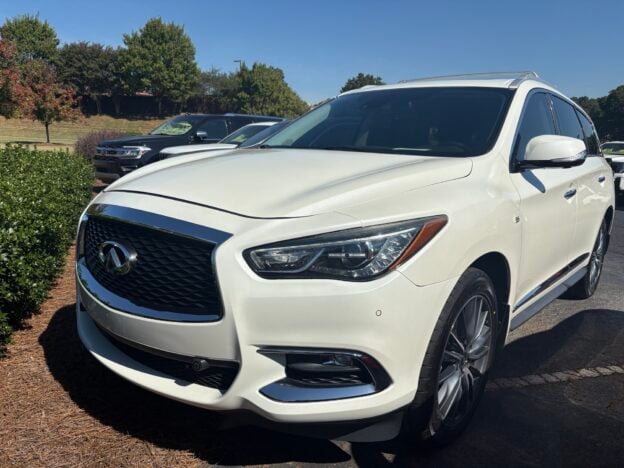
TL;DR: Some banks and credit unions offer special financing on selected repossessed vehicles. Founders Federal Credit Union currently lists specific repos that qualify for 1% or 3% financing, subject to credit union approval. That is a vehicle-specific opportunity, not a rate every buyer or every repo will receive. Compare the written loan terms, vehicle price, condition, fees, and repair costs before deciding.
Borrowing costs are back in the headlines. Freddie Mac’s weekly survey put the average 30-year fixed mortgage rate at 7.28% on October 1, 2026, up from 7.03% the prior week. That is a mortgage benchmark, not an auto-loan quote, but it helps explain why buyers are scrutinizing financing costs. For a vehicle, one option is to look for a bank or credit union repo with a special financing offer attached to that specific listing.
Start by comparing repo cars for sale, then confirm the current price and financing terms with the lender selling the vehicle.
Can a bank or credit union repo come with low-interest financing?
Sometimes. A repossessed car is still a used vehicle, and its loan terms depend on the lender, vehicle, buyer, and offer. The selling institution may finance the purchase, or it may allow you to use another lender. Ask about purchase eligibility and loan eligibility separately; a lender may have different rules for buying a vehicle and borrowing from it.
Founders FCU is a useful example. Its current repossessions page currently shows selected vehicles with notes that they qualify for 1% or 3% financing, subject to credit union approval. Those notes appear on individual vehicle listings, so they should not be read as an offer for every Founders repo or every applicant. Founders also says viewings and test drives are by appointment, and some vehicle listings state that the vehicle is sold as-is with no warranty.
Founders’ general auto-loan rate information lists different APR ranges for ordinary new and used auto loans. Before relying on a special repo listing, ask Founders to confirm in writing whether the stated 1% or 3% is the APR, what term applies, which buyers and vehicles qualify, and whether membership or a down payment is required.
How much could a lower rate change the payment?
The interest rate can make a noticeable difference when the purchase price and loan term are the same. Here is a hypothetical example for $20,000 financed over 48 months with a fixed APR:
| Hypothetical APR | Estimated monthly payment | Estimated total interest |
|---|---|---|
| 1% | About $425 | About $411 |
| 3% | About $443 | About $1,249 |
| 8% | About $488 | About $3,436 |
Under those assumptions, financing $20,000 at 3% instead of 8% would reduce the payment by about $46 per month and the total interest by about $2,187. At 1%, the estimated difference would be about $63 per month and $3,025 in interest. This is an illustration, not a quote from Founders or any other lender. It assumes the listed percentage is a fixed APR and excludes taxes, title, registration, lender fees, insurance, transportation, and repairs. Get the actual APR and term before comparing offers.
Compare the whole deal, not just the advertised rate
A low rate helps only if the vehicle and total purchase cost make sense. Before making an offer, compare:
| What to compare | What to verify |
|---|---|
| Vehicle price | Compare the asking price with similar year, make, model, mileage, and condition in your area. A repo is not automatically below market. |
| Financing | Confirm APR, term, payment, amount financed, down payment, fees, approval requirements, and offer expiration. |
| Condition and title | Ask whether an inspection or test drive is allowed, review title status, and check the vehicle history when available. |
| Sale terms | Confirm whether the vehicle is sold as-is, the payment deadline, accepted payment methods, taxes and fees, and pickup or transport rules. |
Ask the lender: Is this vehicle still available? Does the low-rate offer apply to this VIN? Is the quoted percentage an APR, and for how many months? Do I need to be a member to buy or finance it? Can I use outside financing? Can I arrange an independent inspection before committing?
Founders currently requires appointments for vehicle viewings and test drives. Confirm that process before traveling. Use RepoFinder’s buyer’s checklist for repossessed vehicles to keep inspection, title, payment, and pickup questions organized.
Where can you find bank repo cars with financing offers?
RepoFinder helps shoppers locate current listings and lender sale pages, but the selling bank or credit union sets the price, availability, and loan requirements. Search the RepoFinder search tool for current inventory, browse the directory of banks and credit unions that sell repo cars, or start with repo cars near you.
Because Founders serves buyers in the Carolinas, shoppers can also browse South Carolina repo listings and North Carolina repo listings. For more background on the lender, see our guide to Founders Federal Credit Union repos. Inventory may appear on the lender’s page, on RepoFinder, or in both places, so check the original listing for the latest terms.
Frequently asked questions
Can anyone get 1% or 3% financing on a repo car?
No. A listing’s financing note is subject to the lender’s approval and may apply only to a particular vehicle, borrower, loan amount, or term. Ask the lender for a written quote.
Does a low-rate repo automatically cost less than a dealer car?
No. Compare the vehicle’s price, condition, fees, and likely repair costs as well as the interest. A low payment can still accompany a poor overall deal if the vehicle costs too much or needs major work.
Can I use financing from another bank or credit union?
Possibly, but the seller sets its payment and closing rules. Ask whether outside financing is accepted and whether the funds can arrive by the lender’s deadline.
Are repo cars sold with a warranty?
Some are sold as-is, and terms vary by listing. Founders’ page marks some vehicles as-is with no warranty. Confirm the terms for the exact vehicle and arrange an inspection when permitted.
Start with the listing, then confirm the loan
A bank or credit union repo can be a way to find a vehicle with a special financing offer, but the rate alone does not prove it is the best deal. Compare the full cost, inspect the vehicle, and get the lender’s exact APR, term, and eligibility rules in writing before you commit.