

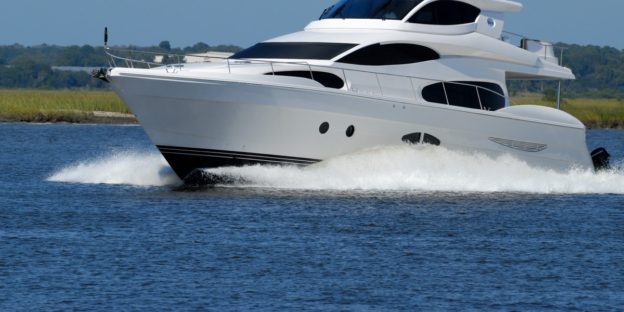
Buying a repossessed boat can be an affordable way to get on the water, but the lowest advertised price does not always equal the best deal. Bank-owned boats are commonly sold as-is, which means the buyer may be responsible for repairs, transportation, registration, storage, and other expenses after the sale.
The key is to evaluate the entire purchase rather than focusing only on the lender’s asking price. Before making an offer, research the boat’s value, inspect its condition, review the seller’s terms, and calculate what it will cost to make the boat safe and usable.
Use the following five tips to reduce your risk when buying a repossessed boat.
Browse recently added repo boats
or
search repo boats nationwide.
1. Start with Banks and Credit Unions Selling Repo Boats
Repossessed boats may be sold by banks, credit unions, auction companies, dealers, and liquidation services. Whenever possible, determine who actually owns the boat and who controls the transaction.
Buying directly from the lender can reduce confusion because you can review the institution’s original sale terms, contact information, bidding procedure, payment requirements, and removal deadline. Some lenders sell repos at a fixed price, while others request sealed bids or use an auction company.
Do not assume every listing advertised as a “bank repo” is being sold directly by a bank. Some websites copy lender inventory, add buyer fees, or redirect users through another marketplace. Confirm the identity of the seller before sending money or submitting personal information.
RepoFinder helps buyers locate property advertised by financial institutions and other sellers. Start with the current repo boat listings or read where to find bank repo boats.
Questions to ask the seller
- Is the boat owned by the bank or being sold for another party?
- Is the sale fixed-price, negotiable, sealed-bid, or auction-based?
- Are there buyer fees, documentation fees, storage fees, or taxes?
- Is a deposit required?
- What payment methods are accepted?
- How quickly must the boat be removed after purchase?
- Are the trailer, engine, keys, electronics, and accessories included?
2. Be Prepared to Act Quickly, but Do Not Rush Your Due Diligence
Desirable boats can attract multiple buyers, especially when the price appears lower than comparable dealer inventory. However, urgency should never replace careful research.
Before submitting an offer, have your financing, inspection plan, transportation options, and maximum purchase price ready. That allows you to move efficiently without making an emotional decision.
Avoid increasing your bid simply because other buyers appear interested. A repo boat can stop being a bargain once the purchase price, repairs, taxes, fees, and transportation exceed its realistic market value.
Prepare before bidding
- Know how much cash or financing you have available.
- Confirm whether the lender requires certified funds or a wire transfer.
- Arrange an inspection or marine survey in advance.
- Estimate transportation and storage costs.
- Determine your maximum total budget.
- Read the seller’s bid instructions carefully.
There will be other boats. Walking away from a questionable purchase is usually less expensive than inheriting a major structural or mechanical problem.
3. Research the Boat’s Actual Market Value
Do not assume a boat is underpriced simply because it has been repossessed. Research comparable boats with the same or similar year, manufacturer, model, engine, operating hours, equipment, and condition.
Online valuation tools can provide a starting point, but they may not reflect regional demand, upgraded electronics, trailer condition, deferred maintenance, engine problems, or recent repair costs. Local dealer listings and private-party listings can also help establish a realistic price range.
Include the complete cost of ownership
Your estimated purchase cost should include more than the winning bid or advertised price:
- Immediate mechanical repairs
- Hull, transom, deck, or upholstery repairs
- Battery, fuel-system, or electrical work
- Trailer repairs, tires, bearings, lights, or brakes
- Transportation or professional hauling
- Sales tax, title, and registration expenses
- Launch, marina, storage, or winterization costs
- Buyer premiums or auction fees, when applicable
- Missing covers, keys, electronics, or safety equipment
For example, a boat priced several thousand dollars below comparable inventory may not be a bargain if it requires major engine work, a replacement trailer, and long-distance transportation.
Set a maximum offer
Establish your maximum offer before bidding. A practical approach is to begin with the boat’s realistic value in good operating condition, then subtract expected repairs, transportation, fees, and a reasonable allowance for unknown problems.
4. Expect Cleaning, Maintenance, and Possible Repairs
A repossessed boat is not necessarily damaged or neglected. Some borrowers maintained their boats properly but experienced financial hardship. Others may have delayed maintenance before the repossession, and the boat may have remained unused or exposed to weather while awaiting sale.
Even a mechanically sound boat may need cleaning, fluid changes, fresh fuel, batteries, upholstery work, trailer service, or replacement safety equipment.
Look for signs of prolonged storage
- Old fuel or fuel-system contamination
- Dead batteries
- Corrosion on wiring and electrical connections
- Mold, mildew, water staining, or odors
- Weathered upholstery and cracked vinyl
- Dry seals, hoses, belts, and impellers
- Flat-spotted or weather-cracked trailer tires
- Rust on trailer components
- Rodent or insect damage
Ask how long the boat has been stored, whether it was winterized, whether the engine has been started recently, and whether maintenance records are available.
Remember that cosmetic problems and mechanical problems are not equal. Dirty carpet and faded upholstery may be manageable. A rotten transom, saturated stringers, cracked engine block, or damaged lower unit can make the purchase far more expensive.
5. Request an Inspection, Marine Survey, and Sea Trial
Whenever possible, inspect the boat before submitting a final offer. For larger or more expensive vessels, consider hiring a qualified marine surveyor. A marine mechanic may also be needed to evaluate the engine, drive system, and onboard equipment.
A survey examines the vessel’s overall condition and can identify structural, mechanical, electrical, and safety concerns. The exact scope varies, so ask the surveyor what will be inspected before hiring them.
Inspect the hull and structure
- Cracks, impact damage, blisters, gouges, or previous repairs
- Soft spots in the deck
- Transom movement or deterioration
- Signs of water intrusion
- Damaged rub rails, cleats, fittings, or through-hull components
- Missing drain plugs or damaged bilge components
Inspect the engine and propulsion system
- Engine hours, when available
- Oil condition and visible leaks
- Cooling-system condition
- Corrosion or freeze damage
- Propeller, lower unit, outdrive, shaft, or jet-pump damage
- Steering and throttle operation
- Maintenance records
- Starting and operating condition
Diesel-powered vessels may require a technician familiar with marine diesel engines. A general boat inspection may not be sufficient to evaluate fuel injectors, turbochargers, cooling systems, generators, and other diesel-specific components.
Inspect the electrical and onboard systems
- Batteries and battery switches
- Bilge pumps and blowers
- Navigation and interior lights
- Gauges and engine alarms
- Chartplotters, fish finders, radios, and other electronics
- Freshwater, waste, and plumbing systems
- Shore power and charging systems, when equipped
Inspect the trailer
- Frame condition and corrosion
- Tires and wheel bearings
- Brakes and brake actuator
- Lights and wiring
- Bunks, rollers, winch, jack, and safety chains
- Vehicle identification number
- Title or registration documents
Ask about a sea trial
A sea trial can reveal problems that are difficult to identify on land, including overheating, vibration, steering issues, poor acceleration, trim problems, leaks, and electrical failures.
Not every lender permits a sea trial. The boat may be winterized, stored away from the water, nonoperational, or uninsured for testing. When a sea trial is not available, increase your allowance for uncertainty and avoid assuming that “it ran when parked” means it is currently water-ready.
Additional Repo Boat Buying Tips
Verify the title and ownership documents
Ask what documents the seller will provide. Depending on the state and the type of boat, you may need a vessel title, transferable registration, lien release, bill of sale, trailer title, or trailer registration.
The boat and trailer may require separate paperwork. Confirm both before paying.
Confirm exactly what is included
Do not rely only on photographs. Ask whether the sale includes:
- The trailer
- Outboard or inboard engine
- Keys
- Batteries
- Boat cover
- Electronics
- Seats and cushions
- Life jackets and safety equipment
- Manuals and maintenance records
- Other accessories visible in the listing
Watch for scams
Be cautious when a supposed seller demands payment before allowing an inspection, refuses to identify the financial institution, uses an unrelated email address, requests payment through gift cards or cryptocurrency, or claims the boat will be shipped immediately after payment.
Confirm the lender’s contact information independently before sending money. Do not rely solely on a phone number or payment instructions contained in an unsolicited message.
Understand the meaning of “as-is”
An as-is sale generally means the seller is not promising that the boat is mechanically sound, seaworthy, complete, or free from defects. Review the actual purchase agreement because the seller’s written terms control the transaction.
Read more about buying repossessed property as-is.
Frequently Asked Questions About Buying Repo Boats
Are repossessed boats always cheaper?
No. Some are priced below comparable dealer inventory, while others are priced close to market value. The true value depends on condition, location, equipment, title status, repairs, fees, and transportation costs.
Can I finance a repossessed boat?
Possibly. Some buyers arrange financing through their own bank, credit union, or marine lender. The institution selling the repossession may or may not offer financing. Ask before bidding and secure approval early when possible.
Do repo boats include warranties?
Most are sold as-is without a warranty unless the seller states otherwise in writing. Buyers should inspect the boat and review all sale terms before completing the purchase.
Can I negotiate with the bank?
That depends on the sale method. Some lenders accept direct offers, while others require sealed bids, fixed-price purchases, or auction participation.
Do I need a dealer license?
Many bank and credit union repo boats are available to ordinary buyers without a dealer license. However, individual auction companies and sellers may establish their own participation rules.
Should I hire a marine surveyor?
A professional survey is especially valuable for larger, older, more complex, or expensive boats. The cost of a survey may be small compared with the expense of hidden structural or mechanical problems.
Find Repossessed Boats for Sale
RepoFinder helps buyers locate repossessed boats advertised by banks, credit unions, and other sellers across the United States. RepoFinder does not own most of the boats shown, set the selling price, approve offers, or guarantee condition. Buyers work directly with the institution or seller handling each transaction.
View current repo boat listings
or
search all repo boats nationwide.