

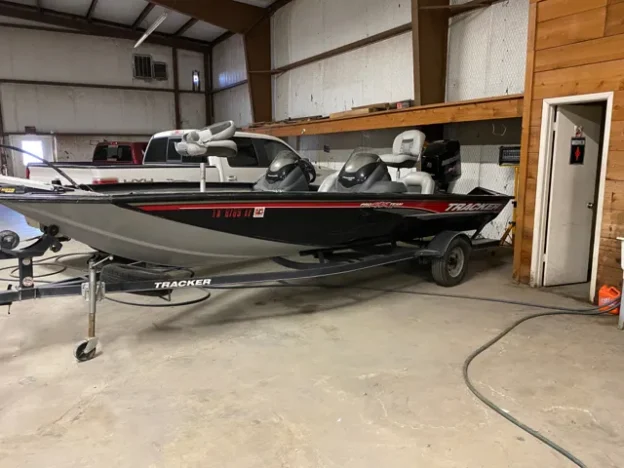
Finding bank repo boats for sale can be difficult because there is no single national marketplace where every bank and credit union publishes its repossessions. Some lenders maintain dedicated repo pages, some use auction companies, and others advertise boats through local classified listings or third-party sales platforms.
RepoFinder helps simplify that search by connecting buyers with repossessed boats advertised by banks, credit unions, and other sellers across the United States.
Browse recently added repo boats
or
search bank-owned boats nationwide.
What Is a Bank Repo Boat?
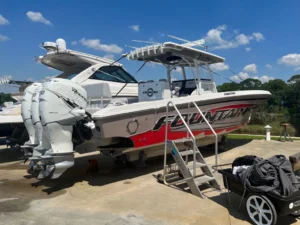
A bank repo boat is a vessel recovered by a lender after the borrower defaults on the loan or voluntarily surrenders the collateral. The lender then sells the boat and applies the proceeds toward the unpaid balance and recovery expenses.
Bank and credit union repossessions may include:
- Bass boats and fishing boats
- Pontoon and tritoon boats
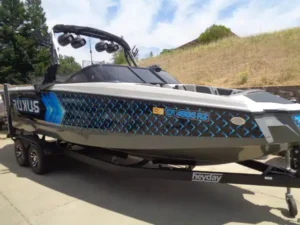
- Wake boats and ski boats
- Bowriders and deck boats
- Center-console boats
- Cabin cruisers
- Jet boats
- Personal watercraft
- Boat trailers
Some boats are sold directly by the financial institution. Others are transferred to an auction company, dealer, recovery contractor, or liquidation service.
Why Buyers Look for Bank-Owned Boats
Potentially Lower Purchase Costs
A lender generally wants to recover money rather than keep, store, insure, and maintain a repossessed boat. This can create opportunities for buyers, especially when the institution accepts bids or negotiates offers.
However, a repossessed boat is not automatically below market value. Buyers should compare its condition, equipment, engine hours, title status, repair needs, transportation costs, and sale fees with similar boats.
Direct Access to the Seller
Some financial institutions allow buyers to contact them directly, ask questions, inspect the boat, and submit an offer without going through a traditional boat dealer.
Direct access can make it easier to understand:
- Who owns the boat
- How the sale will be conducted
- Whether the price is fixed or negotiable
- When bids are due
- What payment methods are accepted
- Which documents will be provided
Nationwide Inventory
Banks and credit unions throughout the country repossess boats. Buyers who search outside their immediate area may find more brands, boat types, price ranges, and sale formats.
Before pursuing a long-distance purchase, calculate the cost of travel, marine inspection, storage, trailer repairs, and professional transportation.
Where to Find Bank Repo Boats for Sale
1. Search Bank and Credit Union Websites
Some banks and credit unions publish repossessed property on their own websites. These sections may be labeled:
- Repossessed property
- Bank-owned assets
- Credit union repos
- Vehicles for sale
- Collateral for sale
- Foreclosed assets
- Other property for sale
Unfortunately, lender websites are inconsistent. Repo pages may be difficult to find, and some institutions only have one or two listings available at a time.
Searching every bank and credit union individually can require significant time, especially when looking across multiple states.
2. Use RepoFinder
RepoFinder organizes repossessed property and helps buyers locate listings connected to banks, credit unions, and other sellers.
You can begin with the boat listing page, which displays recently added repo boats, or use the nationwide repo boat search to review available inventory.
RepoFinder does not own most of the boats shown and does not determine the selling price. Once you find a boat, review the listing and follow the seller’s instructions to ask questions, arrange an inspection, or submit an offer.
3. Contact Local Banks and Credit Unions
Not every repossessed boat is heavily promoted online. Smaller financial institutions may rely on signs, local classified advertisements, social media posts, branch notices, or word of mouth.
You can contact banks and credit unions in areas with strong boating activity and ask whether they maintain a list of repossessed property for sale.
Useful questions include:
- Do you currently have any repossessed boats or watercraft?
- Where do you publish your repossessed property?
- Can buyers join an email notification list?
- Do you accept offers directly?
- Do you use an auction company?
- Are sales open to the public?
4. Search Public and Online Auctions
Some banks send repossessed boats to local, regional, or online auctions. Auctions can provide access to additional inventory, but buyers should review the rules carefully.
Before bidding, confirm:
- Whether the auction is open to the public
- Whether registration or a deposit is required
- The amount of any buyer premium
- Documentation and processing fees
- Payment deadlines
- Removal and storage deadlines
- Whether an inspection is allowed
- Whether the trailer is included
An auction boat with a low winning bid can become expensive after buyer fees, repairs, transportation, taxes, and storage charges are added.
5. Check Government and Municipal Auctions
Government agencies occasionally sell seized, abandoned, surplus, or forfeited boats. These are not always traditional bank repossessions, but they can be another source of discounted watercraft.
Municipalities, counties, law-enforcement agencies, port authorities, and federal agencies may use public auction platforms or contracted auction companies.
6. Search Marine Recovery and Liquidation Companies
Lenders sometimes hire marine recovery companies to repossess, store, transport, and sell boats. These companies may advertise inventory on behalf of multiple financial institutions.
Always determine whether the company owns the boat, represents the lender, or is acting as an auction intermediary. Review all fees and sale terms before submitting payment.
7. Watch Local Classified Listings
Some institutions and recovery companies advertise boats through regional classifieds, newspapers, and online marketplaces. These listings can be useful, but they also require additional verification.
Do not assume a listing is lender-owned merely because the advertisement uses the words “repo,” “bank-owned,” or “repossessed.” Confirm the seller’s identity independently.
How RepoFinder Makes the Search Easier
Without a centralized resource, buyers may need to search hundreds of individual bank and credit union websites. RepoFinder helps reduce that workload by organizing lender-related repossession opportunities in one place.
Search by Vehicle Type
The repo boat page focuses specifically on boats and watercraft instead of mixing them with cars, trucks, RVs, and equipment.
Search Nationwide
The RepoFinder search tool allows buyers to search available boat inventory and compare listings from different areas.
Connect with the Actual Seller
RepoFinder listings generally direct buyers to the institution, auction, or seller handling the transaction. Buyers can then confirm the sale terms with the source rather than relying only on a copied advertisement.
Check Frequently
Repo inventory changes as boats are recovered, listed, sold, withdrawn, or transferred to another sales channel. A state with no available boats today may have new inventory later.
How to Verify a Bank Repo Boat Listing
Fraudulent advertisements sometimes use stolen photographs or pretend to represent a bank. Before sending money, verify both the boat and the seller.
Confirm the Financial Institution
Locate the bank or credit union’s official website independently. Call the published telephone number and ask whether the institution owns the boat or authorized the sale.
Verify the Contact Information
Be cautious when the seller uses a free email address, refuses telephone contact, communicates only through text messages, or provides payment instructions that do not match the financial institution.
Request Identification Information
Ask for the boat’s:
- Year
- Manufacturer
- Model
- Hull identification number
- Engine information
- Engine hours, when available
- Trailer identification number
- Title or registration status
Inspect Before Paying
Whenever possible, inspect the boat or hire a qualified marine surveyor. Avoid sellers who refuse reasonable inspection requests while demanding immediate payment.
Use Safe Payment Procedures
Follow the bank, credit union, or established auction company’s written payment instructions. Be suspicious of requests involving gift cards, cryptocurrency, wire transfers to unrelated individuals, or urgent payment to an overseas account.
What to Ask Before Buying a Repossessed Boat
- Who currently owns the boat?
- Is the sale being handled directly or through an auction?
- Is the price fixed, negotiable, or subject to bidding?
- Are there buyer premiums or documentation fees?
- Is the boat sold as-is?
- Can the boat be inspected?
- Is a sea trial permitted?
- Does the engine run?
- How long has the boat been stored?
- Was the boat winterized?
- Is the trailer included?
- What paperwork will be provided?
- When must the boat be removed?
- Are storage fees charged after the sale?
Tips for Buying a Bank Repo Boat
Set a Total Budget
Include more than the advertised price. Your total budget may need to cover:
- Buyer fees
- Sales tax
- Title and registration
- Marine survey
- Mechanical inspection
- Engine repairs
- Hull or upholstery work
- Trailer repairs
- Transportation
- Storage
- Safety equipment
Research Market Value
Compare boats with similar years, models, engines, operating hours, equipment, and condition. Dealer asking prices can provide context, but they may include preparation, warranty coverage, or dealer services that are absent from an as-is repo sale.
Inspect the Boat
Repo boats are commonly sold as-is. Inspect the hull, deck, transom, engine, electrical system, steering, electronics, upholstery, and trailer.
For a more detailed checklist, read 5 Tips for Buying a Repossessed Boat.
Review the Paperwork
Ask whether the seller will provide a title, transferable registration, lien release, bill of sale, trailer title, or other documents required by your state.
The boat and trailer may have separate ownership documents.
Know Your Maximum Offer
Set your maximum price before bidding. Subtract expected repairs, fees, transportation, and an allowance for unknown defects from the boat’s realistic market value.
Be Ready, but Avoid Pressure
A good listing may attract multiple buyers. Prepare financing and inspection arrangements in advance, but do not let urgency cause you to skip due diligence or exceed your budget.
Browse current repo boat listings:
View recently added repo boats
or use the
nationwide boat search.
Frequently Asked Questions
Where do banks sell repossessed boats?
Banks may sell repossessed boats through their own websites, direct offers, sealed bids, local auctions, online auctions, recovery companies, dealers, or classified advertisements.
Can anyone buy a bank repo boat?
Many bank and credit union repo sales are open to the public. However, auction companies and individual sellers may impose registration, deposit, or eligibility requirements.
Are bank repo boats cheaper?
Some are priced below comparable retail inventory, but not all repossessions are bargains. Buyers should calculate the total cost after repairs, fees, taxes, transportation, and missing equipment.
Do I need a dealer license?
Most direct bank and credit union sales do not require a dealer license. Certain wholesale auctions may restrict participation, so review the seller’s rules.
Can I finance a repossessed boat?
Possibly. The institution selling the boat may offer financing, but many lenders do not finance their own repossessions. Buyers can also seek financing through another bank, credit union, or marine lender.
Do repo boats come with warranties?
Most are sold as-is unless the seller provides a written warranty or guarantee. Buyers should inspect the boat and review the purchase agreement carefully.
Can I negotiate the price?
That depends on the seller. Some banks accept direct offers or negotiate after an unsuccessful sale. Others use fixed prices, sealed bids, or auctions.
Start Your Search for Bank Repo Boats
Finding bank repo boats requires knowing where lenders advertise recovered property and how each institution handles the sale. Buyers can search individual bank websites, contact local credit unions, attend auctions, or use RepoFinder to review listings from across the country.
Browse current repo boats for sale
or
search repossessed boats nationwide.