

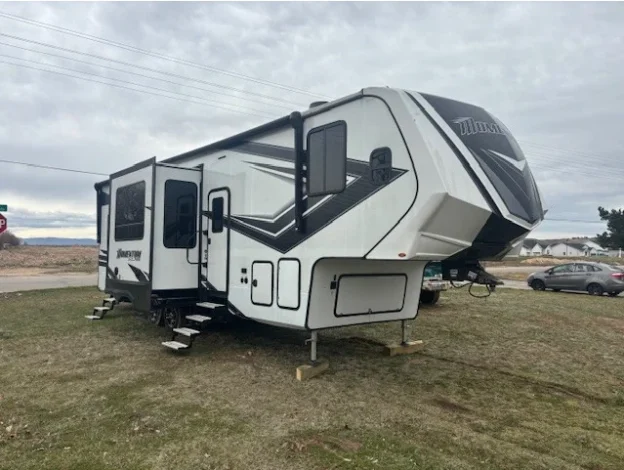
A repo RV buying checklist helps you turn an interesting listing into an informed decision. Before making an offer on a repossessed motorhome, travel trailer or fifth wheel, get clear answers about the price, condition, paperwork and pickup arrangements.
Start by browsing bank repo RVs for sale. Once you find an RV that fits your plans, use these ten questions when you contact the selling bank or credit union.
1. Is the RV still available, and who handles the sale?
Give the lender the listing number, year, model and VIN when available. Ask whether the RV is still accepting offers, already under contract or waiting for a buyer to complete payment.
Also confirm who handles inspections, offers and paperwork. If a lender uses an auction company or another sales partner, ask which organization’s instructions you need to follow.
Before arranging travel, get a current contact name and confirmation that you can view the RV.
2. Is the advertised amount an asking price or a minimum bid?
Ask the seller to explain exactly what the displayed number means. Is it a firm price, a starting bid, a minimum acceptable offer or an invitation to negotiate?
If bidding is involved, confirm the deadline and whether the seller can reject offers. America First Credit Union, for example, reserves the right to reject offers in its repossession sales terms.
For help evaluating the amount, read our bank repo RV price guide. Compare the same model, year and floor plan before deciding what to offer.
3. Can I inspect the RV before submitting a binding offer?
Ask whether you can bring an independent RV inspector and how much time the appointment allows. For a motorhome, ask separately about a road test and a chassis inspection.
Viewing access does not necessarily include permission to drive. For example, America First’s repossession FAQ encourages inspections but says test drives are not allowed.
If access is limited, ask for the missing photos, records or inspection information before deciding whether to proceed. Bring our buyer’s checklist for repossessed vehicles to keep track of what you still need to verify.
4. What is known about leaks, water damage and storage?
Ask about roof leaks, plumbing leaks, soft flooring, previous repairs and how the RV was stored. If it was kept somewhere with freezing temperatures, ask whether there are winterization records.
Request close-up photos of any stains, damaged seals or repaired areas. Ask your inspector to investigate concerns that the photos cannot resolve.
Write down whether an answer comes from a service record, an inspection or simply an absence of reported problems. An unknown history deserves further checking.
5. Which appliances and systems have actually been tested?
Ask for a list of tested systems and the date they were checked. Your questions should cover the air conditioner, refrigerator, furnace, water heater, plumbing, batteries, slide-outs and leveling equipment. For a motorhome, include the engine and generator.
Confirm whether electricity and water will be available during your inspection. Ask a qualified inspector to assess propane and electrical equipment.
Record untested items separately from working items so your budget reflects what remains uncertain.
6. What title and ownership documents will I receive?
Request confirmation of the title status and compare the VIN on the documents with the RV itself. Ask who will sign the transfer paperwork and when the documents will be available.
Repossession alone does not mean a title is branded. Still, verify the paperwork for the specific RV before paying. A clean title also does not replace a condition inspection.
If you are buying across state lines, check with your state’s motor vehicle agency about the documents needed to register it at home.
7. What costs will I owe beyond the purchase price?
Ask for an itemized breakdown of charges payable to the seller or its sales partner. Confirm whether there are buyer fees, document charges, storage costs or other required payments.
Then add your own expenses, including inspection, transportation, taxes, registration and immediate repairs. Use the complete amount when comparing RVs.
For example, a hypothetical $25,000 total budget with $4,000 reserved for those expenses leaves $21,000 for the purchase itself. Use quotes and estimates for the RV you are considering to build your own budget.
Compare our guides to repo RVs under $25,000 and repo RVs under $50,000 as you narrow your price range.
8. What payment methods and financing arrangements are accepted?
Confirm the payment deadline, accepted payment methods and whether outside financing is allowed. If the selling lender offers financing, ask about qualification requirements and arrange approval before committing to a purchase you cannot otherwise fund.
America First’s published sales terms, for example, limit its repo financing to qualified members. Check the terms of the institution selling your RV rather than assuming the same arrangement applies everywhere.
Also ask what happens if financing is delayed or declined after an offer is accepted.
9. When does my offer become binding, and is the deposit refundable?
Before sending money, ask for the written deposit and cancellation terms. Confirm when a bid or offer becomes a commitment and whether the seller permits conditions for inspection or financing.
Get any agreed conditions in writing. If the sale is final and as-is, complete the checks you need before that commitment takes effect.
Keep the listing, accepted offer, sale terms and payment receipt together so you can refer to the exact agreement.
10. Where is the RV, and how quickly must I remove it?
Confirm the RV’s physical location, release requirements and pickup deadline. Ask about access hours, required appointments and any storage charges after the deadline.
For a travel trailer or fifth wheel, confirm the towing requirements with your inspector or transport provider. Arrange suitable transport before payment is due.
To plan a regional search, use our guides to repo RVs in Texas and repo RVs in California, or use the RepoFinder search tool to explore listings by state and vehicle type. Verify each RV’s location with the seller before planning the trip.
Keep the lender’s answers with your offer
Use this repo RV buying checklist to create a short record for each RV you consider. Save the seller’s answers, inspection findings, estimated total cost and the maximum amount you are willing to offer.
For your first message to the lender, you can start with:
I’m interested in the RV in listing [number]. Is it still available? Please confirm the sale method, inspection access, title status, required fees, payment deadline and pickup deadline. May I arrange an independent inspection before submitting a binding offer?
Once you understand the terms, you can decide whether the RV fits both your budget and your plans.
Ready to start comparing? Browse repo RVs from banks and credit unions and take these questions to the seller.