

TL;DR: Sailboat repos may include daysailers, trailerable sailboats, cruising sailboats, racing boats, catamarans, and larger liveaboard vessels sold by banks and credit unions. Before buying, inspect the hull, keel, rudder, standing rigging, running rigging, mast, sails, auxiliary engine, electrical system, plumbing, cabin, trailer, and ownership documents. Most repossessed sailboats are sold as-is, so calculate repairs, transportation, haul-out costs, taxes, registration, insurance, marina fees, and storage before making an offer.
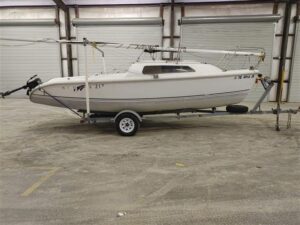 Sailboats appeal to buyers who enjoy day sailing, racing, coastal cruising, offshore travel, or living aboard. They range from compact trailerable boats to large cruising yachts with private cabins, galleys, marine heads, navigation systems, diesel engines, generators, and extensive onboard equipment.
New and late-model sailboats can be expensive, especially when equipped with premium sails, modern electronics, upgraded rigging, air conditioning, solar systems, watermakers, and auxiliary engines. Buyers looking for another option may consider sailboat repos offered by banks, credit unions, and other financial institutions.
When a borrower stops making payments on a marine loan, the lender may recover the vessel and offer it for sale. RepoFinder helps buyers locate repossessed boats offered directly by banks and credit unions across the United States.
What Is a Sailboat Repo?
A sailboat repo is a vessel recovered by a lender after the borrower defaulted on the loan. The lender may advertise the sailboat directly, request written offers, accept sealed bids, consign it to a marine dealer, or send it to auction.
The lender generally wants to sell the boat and recover part of the unpaid loan balance. It usually does not want to continue paying for dockage, storage, insurance, maintenance, or haul-out expenses.
Some repossessed sailboats are well maintained and ready to sail. Others may have damaged sails, expired rigging, neglected engines, leaking deck hardware, water intrusion, outdated electronics, missing equipment, or unpaid marina charges.
Most lender-owned sailboats are sold as-is and without warranties. Buyers should inspect the vessel carefully and confirm what equipment and ownership documents are included.
Why Buy a Repossessed Sailboat?
- Potential savings compared with marine dealership inventory
- Access to cruising, racing, and liveaboard sailboats
- Opportunity to purchase directly from banks and credit unions
- Some sales may avoid traditional auction buyer premiums
- Inventory may include trailers, sails, electronics, and cruising equipment
- Some lenders accept offers below the advertised price
- The selling lender may offer financing in certain situations
- Buyers may find late-model boats with substantial upgrades
A low asking price does not automatically make a sailboat a good value. Rigging replacement, sail replacement, bottom repairs, engine work, transportation, marina fees, and deferred maintenance can quickly exceed the apparent savings.
Types of Sailboat Repos
Daysailers
Daysailers are generally smaller sailboats intended for short recreational trips rather than extended overnight cruising. Some have open cockpits, while others include compact cabins.
Common features include:
- Simple sail plans
- Shallow drafts
- Centerboards or fixed keels
- Small outboards
- Trailerable designs
- Basic cockpit seating
Trailerable Sailboats
Trailerable sailboats can be transported by road and stored away from a marina. Some use retractable centerboards, swing keels, water ballast, or lifting keels to reduce draft and trailer height.
Before buying, confirm the tow vehicle can handle the combined weight of the boat, trailer, fuel, batteries, equipment, and supplies.
Cruising Sailboats
Cruising sailboats are designed for overnight or extended travel. They commonly include sleeping accommodations, a galley, freshwater storage, a marine head, navigation equipment, and an auxiliary engine.
Coastal Cruisers
Coastal cruisers are intended for protected waters and nearshore sailing. They may provide comfortable accommodations without the heavier construction, tank capacity, or equipment found on offshore passagemakers.
Bluewater Sailboats
Bluewater sailboats are designed for offshore passages and extended cruising. They may include heavier rigging, larger fuel and water tanks, self-steering systems, storm sails, generators, solar panels, watermakers, radar, and extensive safety equipment.
Racing Sailboats
Racing sailboats prioritize speed, sail-handling efficiency, low weight, and competitive performance. They may use advanced sail materials, specialized rigging, deep keels, carbon components, and minimal cruising amenities.
Catamarans
Sailing catamarans use two hulls and generally provide greater beam, deck space, and interior volume than similarly sized monohulls. Larger catamarans may include multiple cabins, twin engines, large electrical systems, and extensive cruising equipment.
Liveaboard Sailboats
Liveaboard sailboats are equipped for extended occupancy. They may include large cabins, refrigeration, air conditioning, generators, solar panels, inverters, watermakers, holding tanks, and extensive storage.
Popular Sailboat Brands
Bank and credit union inventory changes frequently, but repossessed sailboats may include models from brands such as:
- Catalina
- Hunter
- Beneteau
- Jeanneau
- Hanse
- Bavaria
- Island Packet
- Pacific Seacraft
- Tartan
- Sabre
- J/Boats
- O’Day
- MacGregor
- Precision
- Com-Pac
- Cal
- Pearson
- Ericson
- Hallberg-Rassy
- Lagoon
- Leopard
- Fountaine Pajot
- Gemini
- Prout
The brand alone does not determine value. Buyers should consider the exact model, year, hull material, rigging age, sail inventory, keel design, engine condition, electronics, maintenance history, and local market demand.
Monohull vs. Catamaran Sailboats
| Feature | Monohull | Catamaran |
|---|---|---|
| Hull Design | One hull | Two hulls |
| Sailing Motion | Typically heels under sail | Usually sails more level |
| Interior Space | Generally narrower | Greater beam and living space |
| Dockage | Fits standard slips more easily | May require wider and more expensive slips |
| Mechanical Systems | Often one engine | Larger models often have twin engines |
How Much Do Repo Sailboats Cost?
| Sailboat Type | General Used or Repo Price Range |
|---|---|
| Small Daysailer | $2,000-$20,000+ |
| Trailerable Sailboat | $5,000-$35,000+ |
| Coastal Cruising Sailboat | $15,000-$100,000+ |
| Large Cruising Sailboat | $75,000-$400,000+ |
| Cruising Catamaran | $150,000-$1,000,000+ |
These are broad examples rather than guaranteed repo prices. Actual value depends on size, age, condition, rigging, sails, engine, electronics, equipment, trailer, and location.
What Determines a Sailboat’s Value?
Hull Condition
Structural integrity is critical. Damage to the hull, deck, keel, bulkheads, stringers, or chainplate areas can require expensive repairs.
Rigging Age
Standing rigging has a finite service life. Insurance companies, surveyors, and offshore sailors may recommend replacement based on age, material, climate, usage, and inspection findings.
Sail Inventory
A complete sail inventory may include a mainsail, genoa, jib, staysail, spinnaker, storm jib, and spare sails. Replacing multiple sails can be expensive.
Auxiliary Engine
The engine is important for docking, charging batteries, navigating without wind, and operating in emergencies. Condition, hours, maintenance, corrosion, and access all affect value.
Keel and Rudder
Grounding damage, loose keel bolts, water intrusion, corrosion, rudder delamination, and steering problems can significantly reduce value.
Electronics
Chart plotters, radar, autopilot, wind instruments, depth sounders, VHF radios, AIS systems, and satellite communication equipment may add substantial value.
Cabin and Cruising Equipment
Refrigeration, air conditioning, generators, solar panels, inverters, watermakers, heaters, and upgraded plumbing systems can affect value and repair exposure.
Trailer or Cradle
Smaller boats may include trailers, while larger sailboats may come with storage cradles. Confirm what is included and whether the paperwork is transferable.
What to Inspect Before Buying a Repo Sailboat
Most repossessed sailboats are sold as-is. A professional marine survey can help identify structural, mechanical, electrical, rigging, and moisture-related problems.
Hull Exterior
- Inspect the bow, hull sides, keel, transom, and waterline
- Look for cracks, gouges, impact damage, and prior repairs
- Check for mismatched paint or gelcoat
- Inspect through-hull fittings
- Look for osmotic blistering
- Check the hull identification number
- Inspect for storm or collision damage
- Look for signs of grounding
Bottom and Antifouling Paint
- Inspect the condition of bottom paint
- Look for peeling or excessive buildup
- Check for blisters
- Inspect through-hulls and seacocks
- Check zinc or aluminum anodes
- Look for marine growth
- Inspect propeller and shaft areas
Keel
The keel provides stability and may contain lead, iron, or other ballast material.
- Look for impact damage
- Inspect the keel-to-hull joint
- Check for cracking or separation
- Inspect keel bolts when accessible
- Look for rust on iron keels
- Check for water intrusion
- Inspect retractable or swing-keel mechanisms
Rudder and Steering
- Inspect the rudder for cracks and delamination
- Check for excessive play
- Inspect the rudder shaft
- Test wheel or tiller movement
- Inspect steering cables, chains, quadrants, or hydraulics
- Look for leaks
- Check emergency tiller equipment
- Inspect autopilot connections
Deck and Cabin Top
- Walk across the deck and cabin top
- Look for soft or springy areas
- Inspect around stanchions, cleats, winches, and chainplates
- Look for cracks around hardware
- Check deck drains
- Inspect hatches and portlights
- Look for water intrusion
- Inspect nonskid surfaces
Bulkheads and Structural Supports
- Inspect bulkheads for cracks or separation
- Look for water stains
- Check tabbing and bonding
- Inspect chainplate attachment areas
- Look for rot in wood components
- Check cabin sole supports
- Inspect areas around the keel and mast step
Mast
- Inspect for bends, dents, cracks, and corrosion
- Check spreaders and attachment points
- Inspect masthead fittings
- Look for damaged tracks
- Check internal wiring
- Inspect mast steps
- Look for corrosion near dissimilar metals
- Inspect the mast base and compression post
Standing Rigging
Standing rigging supports the mast and commonly includes shrouds, stays, terminals, turnbuckles, chainplates, and fittings.
- Inspect wire strands for cracking or corrosion
- Check swaged terminals
- Inspect turnbuckles
- Look for bent or damaged fittings
- Inspect chainplates
- Check toggles and clevis pins
- Look for hidden corrosion
- Determine the rigging age
- Review replacement records
Running Rigging
Running rigging includes halyards, sheets, control lines, reefing lines, and other ropes used to control the sails.
- Inspect for chafe
- Check line stiffness and UV damage
- Inspect blocks and pulleys
- Test clutches and cleats
- Check halyard sheaves
- Inspect furling lines
- Confirm all essential lines are included
Chainplates
Chainplates transfer rigging loads into the hull. Failure can lead to mast loss.
- Inspect for corrosion
- Look for deck leaks
- Check surrounding bulkheads
- Inspect mounting bolts
- Look for cracks or distortion
- Check hidden areas when accessible
Winches
- Rotate every winch
- Check self-tailing jaws
- Listen for grinding
- Inspect bases and mounting hardware
- Look for corrosion
- Test electric winches when equipped
- Confirm winch handles are included
Sails
Sails should be removed, unfolded, and inspected whenever possible.
- Look for tears and repairs
- Inspect stitching
- Check UV covers
- Look for stretched or distorted sail shape
- Inspect bolt ropes and slides
- Check battens and batten pockets
- Inspect reef points
- Look for mildew
- Confirm all listed sails are included
Roller Furling Systems
- Deploy and furl the sail
- Inspect the drum and bearings
- Check the foil
- Inspect furling lines
- Look for corrosion
- Check swivel operation
- Inspect forestay connections
Boom and Sail Controls
- Inspect the boom for damage
- Check gooseneck fittings
- Inspect the vang
- Test reefing systems
- Check mainsheet travelers
- Inspect preventers and boom brakes
- Look for corrosion or cracks
Auxiliary Engine
Many cruising sailboats use compact diesel engines, while smaller boats may use gasoline outboards.
- Request a cold start
- Check oil and coolant
- Inspect belts and hoses
- Look for fuel, oil, coolant, and water leaks
- Inspect engine mounts
- Check exhaust components
- Test charging output
- Listen for unusual noises
- Review engine hours
- Request maintenance records
- Check for corrosion
- Inspect access for future repairs
Fuel System
- Inspect the fuel tank when accessible
- Look for leaks or fuel odor
- Check fuel lines
- Inspect filters and water separators
- Check fill and vent hoses
- Look for contaminated diesel fuel
- Inspect shutoff valves
- Ask how long the boat has been stored
Transmission, Shaft, and Propeller
- Check transmission fluid
- Inspect the shaft coupling
- Look for alignment problems
- Inspect the shaft seal or stuffing box
- Check the propeller
- Inspect cutlass bearings
- Look for vibration
- Check folding or feathering propellers
Electrical System
- Inspect battery banks
- Check battery age and condition
- Inspect switches and breakers
- Look for corroded wiring
- Test cabin and navigation lights
- Check shore-power connections
- Test battery chargers
- Inspect inverters
- Check alternator output
- Look for amateur wiring modifications
Solar Panels and Wind Generators
- Inspect panel surfaces
- Check mounting hardware
- Inspect controllers
- Verify charging output
- Check wiring and connectors
- Inspect wind-generator blades
- Check tower or pole mounts
Navigation Electronics
- Power on chart plotters
- Test radar
- Check wind instruments
- Test depth and speed displays
- Inspect VHF radios
- Test AIS equipment
- Check autopilot operation
- Inspect antennas
- Confirm mapping cards are included
- Check software support
Plumbing and Freshwater System
- Inspect freshwater tanks
- Test pressure pumps
- Check sinks and showers
- Inspect hoses and fittings
- Look for leaks
- Test water heaters
- Inspect deck fills
- Look for freeze damage
Marine Head and Holding Tank
- Test toilet operation
- Inspect holding tanks
- Check sanitation hoses
- Look for leaks and odors
- Test macerator pumps when legal and equipped
- Inspect deck pump-out fittings
- Check seacocks
Bilge and Pumps
- Inspect the bilge for standing water
- Look for oil or fuel
- Test automatic and manual bilge pumps
- Inspect float switches
- Check hoses and clamps
- Look for corroded wiring
- Inspect keel-bolt areas
- Check manual emergency pumps
Cabin Interior
- Look for water stains and mildew
- Inspect headliners
- Check cabin soles
- Inspect mattresses and cushions
- Look for wood rot
- Check lockers and storage spaces
- Inspect windows, hatches, and portlights
- Look for pest damage
- Check ventilation
Galley
- Test refrigeration
- Inspect stoves and ovens
- Check propane systems
- Test sinks and pumps
- Inspect cabinets
- Look for water damage
- Check ventilation
- Inspect fuel shutoffs and detectors
Generator, Air Conditioning, and Heating
- Cold-start the generator
- Run it under load
- Test air conditioning
- Inspect seawater pumps
- Check heaters
- Inspect fuel and exhaust systems
- Check maintenance records
- Look for corrosion and leaks
Safety Equipment
- Inspect life jackets
- Check fire extinguishers
- Inspect flares and expiration dates
- Check life rafts
- Inspect emergency beacons
- Check harnesses and jacklines
- Inspect throwable flotation devices
- Confirm safety equipment shown is included
Water Intrusion and Moisture Problems
Sailboats have many deck fittings, hatches, chainplates, windows, stanchions, and rigging attachments that can allow water into the hull or deck core.
Look for:
- Soft decks
- Discolored headliners
- Water stains
- Musty odors
- Corroded hardware
- Rotten bulkheads
- Loose chainplates
- Delaminated fiberglass
- Wet cabin soles
- Mold and mildew
Inspect the Sailboat Trailer
Smaller sailboats may include trailers. Confirm the trailer is rated for the boat’s total weight and that it can accommodate the keel or centerboard design.
- Verify the trailer identification number
- Confirm title or registration documents
- Inspect the frame
- Look for rust or corrosion
- Check keel supports
- Inspect bunks and rollers
- Check the winch and bow stop
- Inspect the coupler
- Check safety chains
- Test lights and wiring
- Inspect tires and date codes
- Check wheel bearings
- Inspect axles and suspension
- Test trailer brakes
- Confirm mast-support equipment is included
Common Sailboat Repairs
| Common Repair | Why It Matters |
|---|---|
| Standing Rigging Replacement | Aging or damaged rigging can lead to mast failure. |
| Sail Replacement | A complete sail inventory can be expensive to replace. |
| Deck-Core Repair | Water intrusion can cause widespread structural damage. |
| Keel Repair | Grounding damage or loose keel bolts may require major work. |
| Engine Repair | Small marine diesels can be costly and difficult to access. |
| Rudder Repair | Delamination, corrosion, or impact damage can affect steering. |
| Electronics Replacement | Radar, autopilot, instruments, and chart plotters can be expensive. |
| Plumbing Repair | Old sanitation and freshwater systems may require extensive work. |
Does a Repo Sailboat Have a Title?
Boat ownership requirements vary by state. The lender may provide a vessel title, transferable registration, certificate of documentation, lien release, bill of sale, or another ownership document.
Federally documented vessels may require additional paperwork through the appropriate federal process. Trailers may require separate titles or registrations.
Before making an offer, ask:
- What ownership documents will be provided?
- Will every lien be released?
- Does the hull identification number match the paperwork?
- Is the vessel state-titled or federally documented?
- Can the boat be registered in your state?
- Does the trailer have valid paperwork?
- Are taxes, dockage, or storage fees owed?
- Will the lender provide a bill of sale?
Confirm What Is Included
Do not assume every item visible in listing photographs is included. Sails, electronics, anchors, dinghies, generators, solar panels, safety equipment, and other accessories may have been removed.
Confirm whether the sale includes:
- The hull
- The mast and boom
- Standing rigging
- Running rigging
- Mainsail
- Headsails
- Spinnakers
- Sail covers
- Winch handles
- Auxiliary engine
- Propeller
- Chart plotters
- Radar
- Autopilot
- VHF radio
- AIS equipment
- Batteries
- Solar panels
- Generator
- Dinghy and outboard
- Anchors and ground tackle
- Safety equipment
- Trailer or cradle
- Keys and manuals
How to Research a Repo Sailboat’s Value
Compare the repossessed sailboat with similar boats listed by dealers and private sellers. Use the same manufacturer, model, year, length, keel type, engine, rig, equipment package, and location whenever possible.
Evaluate:
- Hull condition
- Deck moisture
- Keel and rudder condition
- Mast and rigging age
- Sail inventory
- Engine hours and maintenance
- Electrical system
- Navigation electronics
- Plumbing and sanitation systems
- Cabin condition
- Generator and climate-control systems
- Trailer or cradle condition
- Marina and transportation expenses
- Immediate repair needs
Calculate the Total Purchase Cost
Potential expenses include:
- Marine survey
- Rigging inspection
- Haul-out and launch fees
- Bottom cleaning and paint
- Keel or rudder repairs
- Standing rigging replacement
- Running rigging replacement
- New sails
- Engine service
- Fuel-system cleaning
- Battery replacement
- Electronics replacement
- Plumbing repairs
- Cabin repairs
- Transportation
- Mast stepping or unstepping
- Title and registration fees
- Insurance
- Marina or storage fees
- Required safety equipment
Bank Repo vs. Dealer vs. Auction Sailboats
| Buying Source | Potential Advantages | Potential Disadvantages |
|---|---|---|
| Marine Dealer or Broker | Possible inspections, documentation assistance, and financing | Higher retail pricing or commissions |
| Boat Auction | Competitive bidding and varied inventory | Buyer fees and limited inspection opportunities |
| Bank or Credit Union Repo | Direct access and potentially competitive pricing | Usually sold as-is |
| Private Seller | Potential negotiation and ownership-history information | Condition and paperwork vary |
Can You Finance a Repo Sailboat?
Financing depends on the selling institution. Some banks and credit unions may finance repossessed sailboats they own, while others require cash, certified funds, wire transfer, or outside financing.
Ask about:
- Available loan terms
- Interest rates
- Required down payment
- Minimum loan amounts
- Boat-age restrictions
- Marine survey requirements
- Insurance requirements
- Documentation requirements
- Payment deadlines
How to Make an Offer on a Repo Sailboat
- Review the listing and all available photographs.
- Contact the bank or credit union to confirm availability.
- Ask exactly what equipment is included.
- Confirm the ownership documents and lien-release process.
- Arrange a professional marine survey.
- Arrange an out-of-water hull inspection.
- Have the rigging inspected.
- Inspect and inventory all sails.
- Request a cold engine start.
- Test onboard electrical, plumbing, and navigation systems.
- Request a sea trial when permitted.
- Research comparable sailboats.
- Estimate repair, haul-out, transportation, and storage expenses.
- Submit an offer according to the lender’s instructions.
- Confirm payment and removal deadlines.
Questions to Ask the Selling Lender
- Is the sailboat still available?
- Can the boat be inspected?
- Can it be hauled out?
- Is a sea trial allowed?
- When was the rigging last replaced?
- What sails are included?
- What condition are the sails in?
- Does the auxiliary engine start and run?
- Are engine hours available?
- Are maintenance records available?
- Are there known hull, keel, or rudder problems?
- Has the boat experienced grounding or storm damage?
- Are electronics included?
- Is the dinghy included?
- Are the anchors and safety equipment included?
- Is a trailer or cradle included?
- Are storage or marina fees owed?
- What ownership documents are provided?
- Will all liens be released?
- Is the price fixed or negotiable?
- Are sealed bids required?
- What forms of payment are accepted?
- How quickly must the boat be removed?
Where to Find Bank Repo Sailboats
Banks and credit unions advertise repossessed sailboats through hundreds of separate websites. Some maintain dedicated repossession pages, while others list boats alongside vehicles, RVs, motorcycles, and equipment.
RepoFinder organizes links to lender-owned inventory so buyers can locate sailboats offered directly by financial institutions.
Start by browsing current boat repos offered by banks and credit unions.
Related RepoFinder guides include:
- Cabin Cruiser Repos for Sale
- Center Console Boat Repos for Sale
- Fishing Boat Repos for Sale
- Bass Boat Repos for Sale
- Wake Boat Repos for Sale
- Repo Boats for Sale
- Repo Boats for Sale by Banks
- 5 Tips for Buying a Repossessed Boat
- Where to Find Bank Repo Boats
Frequently Asked Questions
Are sailboat repos cheaper than dealer boats?
They can be, but buyers should compare the asking price with the condition of the hull, rigging, sails, engine, electronics, cabin, trailer, and required repairs.
What types of repossessed sailboats are available?
Inventory may include daysailers, trailerable sailboats, coastal cruisers, bluewater boats, racing sailboats, catamarans, and liveaboard vessels.
Can anyone buy a repo sailboat?
Most lender-owned sailboats are available to individuals and businesses. Each lender establishes its own inspection, bidding, payment, and removal requirements.
Do repo sailboats come with warranties?
Most are sold as-is without warranties. Buyers should obtain a marine survey and inspect the rigging, sails, engine, electronics, and ownership documents.
Should I hire a marine surveyor?
A professional survey is especially valuable for larger sailboats, offshore boats, older vessels, and boats with unknown maintenance histories.
Should the rigging be inspected separately?
Yes. A qualified rigger can inspect the mast, standing rigging, chainplates, terminals, furling equipment, and running rigging.
How old is too old for standing rigging?
There is no universal age limit. Material, climate, saltwater exposure, usage, maintenance, insurance requirements, and inspection findings all matter.
Can I test sail a repo sailboat?
Policies vary. Some lenders permit a sea trial, while others allow only dockside or storage-yard inspections.
Does the trailer come with the sailboat?
Only when the lender specifically includes it. Confirm the trailer and its paperwork before submitting an offer.
Are all the sails included?
Not necessarily. Ask the lender for a written inventory of every sail and accessory included in the sale.
Can I finance a repossessed sailboat?
Some lenders may finance their own repo sailboats, while others require outside financing or full payment.
Can I negotiate the asking price?
Some banks and credit unions accept offers, while others use fixed prices, sealed bids, or auctions.
Does RepoFinder sell sailboats?
No. RepoFinder helps buyers locate sailboats offered by banks, credit unions, and other financial institutions. Buyers complete the purchase directly with the selling lender.
Final Thoughts
Sailboat repos can provide opportunities for buyers seeking affordable daysailers, cruising boats, racing sailboats, catamarans, and liveaboard vessels. However, sailboats contain structural, mechanical, electrical, and rigging systems that require careful evaluation.
Inspect the hull, deck, keel, rudder, mast, standing rigging, running rigging, sails, engine, electronics, plumbing, cabin, trailer, and ownership documents. Research comparable boats and calculate all immediate expenses before submitting an offer.
Browse sailboats and other repossessed boats offered directly by banks and credit unions.