

TL;DR: Bass boat repos may offer buyers an opportunity to purchase fiberglass or aluminum fishing boats directly from banks and credit unions. Inventory may include tournament-style boats equipped with high-horsepower outboards, trolling motors, fish finders, livewells, batteries, chargers, and trailers. Before buying, inspect the hull, transom, engine, lower unit, steering, deck, wiring, electronics, trolling motor, livewell systems, trailer, and ownership documents. Most bank-owned bass boats are sold as-is, so include repairs, transportation, registration, taxes, and missing equipment in the total cost.
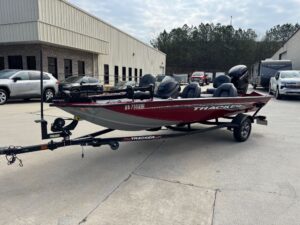 Bass boats are among the most specialized freshwater fishing boats on the market. They are designed for speed, shallow-water access, casting efficiency, equipment storage, and precise boat positioning. Tournament-ready models may include large outboard engines, multiple fish finders, GPS-guided trolling motors, lithium batteries, onboard chargers, livewells, hydraulic jack plates, shallow-water anchors, and tandem-axle trailers.
That equipment can make new and late-model bass boats expensive. Buyers searching for a lower-cost alternative may consider bass boat repos offered by banks, credit unions, and other financial institutions.
When a borrower defaults on a boat loan, the lender may recover the boat and offer it for sale. The lender generally wants to dispose of the asset and recover part of the unpaid balance rather than store, maintain, or operate fishing boats.
RepoFinder helps shoppers locate repossessed boats for sale by banks and credit unions throughout the United States. Available inventory may include fiberglass bass boats, aluminum bass boats, tournament packages, compact fishing boats, high-performance models, and complete boat-and-trailer combinations.
What Is a Bass Boat Repo?
A bass boat repo is a fishing boat that has been recovered by a lender after the borrower failed to make the required loan payments. After repossession, the lender may sell the boat directly, request written offers, use sealed bidding, consign it to a dealer, or send it to an auction.
The lender is usually not trying to operate as a marine dealership. It may have limited information about how the boat was used, serviced, stored, or maintained. Most repossessed bass boats are sold as-is and without a warranty.
Condition can vary considerably. One boat may be a clean late-model tournament rig with low engine hours, while another may have been left outdoors, stored with stale fuel, operated in shallow water, damaged during towing, or stripped of valuable electronics before repossession.
A bank-owned bass boat should be evaluated like any other used boat. Buyers should inspect it carefully and calculate the total cost before making an offer.
Why Buy a Repossessed Bass Boat?
Buying directly from a bank or credit union may provide several potential advantages:
- Possible savings compared with marine dealership inventory
- Access to late-model fiberglass and aluminum bass boats
- Potentially lower markup than traditional retail channels
- Opportunity to buy directly from the selling lender
- Some boats may include engines, trailers, trolling motors, and electronics
- Some lenders accept reasonable offers
- Financing may be available from the selling institution
- Direct lender sales may avoid traditional auction buyer premiums
However, repossession does not automatically mean the boat is priced below market value. The asking price must be compared with the boat’s actual condition, equipment, engine hours, trailer condition, repair needs, and local market value.
Types of Bass Boat Repos
Fiberglass Bass Boats
Fiberglass bass boats dominate the high-performance tournament market. They generally offer smooth hull shapes, stable casting platforms, large storage compartments, high horsepower ratings, and premium fit and finish.
Common features include:
- Large front and rear casting decks
- High-capacity livewells
- Rod lockers
- Integrated tackle storage
- Hydraulic steering
- Hydraulic jack plates
- Multiple fish-finder displays
- GPS-guided trolling motors
- High-horsepower outboards
- Tandem-axle trailers
Fiberglass boats should be inspected for gelcoat cracks, hull damage, delamination, impact repairs, water intrusion, soft deck areas, transom damage, and structural problems around the stringers and engine mounts.
Aluminum Bass Boats
Aluminum bass boats are often lighter, easier to tow, and less expensive than comparable fiberglass models. They may also perform well in shallow water and can be practical for buyers with smaller tow vehicles.
Aluminum models range from compact entry-level boats to premium tournament rigs with large outboards, advanced electronics, and wide casting decks.
Inspect aluminum hulls for:
- Cracked welds
- Loose or leaking rivets
- Dents
- Distorted hull panels
- Corrosion
- Pitting
- Improper repairs
- Damage around the transom
- Leaks near seams and fittings
Tournament Bass Boats
Tournament bass boats are built for speed, range, fishing efficiency, and equipment capacity. They may carry expensive electronics, multiple batteries, large fuel tanks, hydraulic jack plates, high-output outboards, and sophisticated livewell systems.
A tournament boat may appear valuable because of the amount of installed equipment, but buyers should confirm that every pictured accessory is included in the sale.
Compact Bass Boats
Compact bass boats are usually shorter and lighter than full-size tournament models. They may be easier to store, tow, launch, and operate on smaller lakes.
These boats often appeal to first-time buyers, solo anglers, and buyers who do not need the speed or storage of a larger tournament rig.
Modified-V Aluminum Bass Boats
Modified-V hulls combine some of the shallow-water capability of flat-bottom boats with improved handling in light chop. They are common among aluminum fishing and bass boats.
Inspect the keel, chines, welds, transom, and bottom panels carefully for damage caused by rocks, stumps, shallow-water operation, or improper trailering.
Dual-Purpose Bass and Family Boats
Some bass boats include additional seating, removable cushions, boarding ladders, ski-tow equipment, or family-oriented layouts. These boats may sacrifice some tournament-focused deck space in exchange for greater recreational flexibility.
Popular Bass Boat Brands
Bank-owned bass boat inventory changes constantly, but available models may come from manufacturers such as:
- Ranger
- Nitro
- Skeeter
- Bass Cat
- Phoenix
- Triton
- Champion
- Stratos
- Vexus
- Caymas
- Falcon
- Legend
- Blazer
- Bullet
- Allison
- Lowe
- Tracker
- Xpress
- G3
- Crestliner
- Lund
- Alumacraft
- SeaArk
- War Eagle
The brand name alone does not establish value. Buyers should also evaluate the exact model, hull length, model year, engine package, engine hours, electronics, trailer, maintenance history, structural condition, and local demand.
Common Bass Boat Outboard Brands
Bass boats may be equipped with outboard engines from manufacturers including:
- Mercury
- Yamaha
- Suzuki
- Honda
- Evinrude
- Johnson
- Tohatsu
High-performance bass boats commonly use engines ranging from approximately 150 to 250 horsepower, although smaller aluminum models may use much less power.
The outboard engine can represent a substantial portion of the boat’s total value. A serious engine problem can quickly eliminate any apparent savings in the purchase price.
How Much Do Repo Bass Boats Cost?
| Bass Boat Type | General Used or Repo Price Range |
|---|---|
| Small Aluminum Bass Boat | $4,000-$18,000+ |
| Mid-Size Aluminum Bass Boat | $10,000-$35,000+ |
| Older Fiberglass Bass Boat | $6,000-$25,000+ |
| Late-Model Fiberglass Bass Boat | $25,000-$75,000+ |
| Premium Tournament Bass Boat | $45,000-$100,000+ |
These ranges are general examples and not guaranteed repo prices. Actual value depends on age, brand, engine, engine hours, condition, electronics, trolling motor, batteries, trailer, location, and demand.
What Determines a Bass Boat’s Value?
Model Year
Newer boats typically have higher values, but condition and maintenance can matter more than age alone. A well-maintained older bass boat may be a better purchase than a newer boat with structural or mechanical damage.
Hull Material
Fiberglass and aluminum bass boats have different pricing, repair, towing, handling, and maintenance characteristics.
Engine Horsepower
Higher-horsepower engines usually increase value, but they also increase fuel consumption, insurance costs, maintenance expenses, and repair risk.
Engine Hours
Engine hours are useful but should not be considered in isolation. Maintenance, storage, overheating, corrosion, fuel quality, and operating conditions also affect engine life.
Electronics
Modern bass boats may carry several thousand dollars in marine electronics. Large fish-finder displays, side-imaging sonar, forward-facing sonar, GPS chart plotters, networking components, and transducers can significantly affect value.
Trolling Motor
Premium trolling motors may include GPS anchoring, wireless remotes, integrated sonar, automatic deployment, and network integration.
Battery System
Bass boats may use three, four, or more batteries for starting, trolling, electronics, and accessories. Lithium battery systems can add value, but replacement costs can be substantial.
Trailer
A roadworthy tandem-axle trailer with functioning brakes, good tires, sound bearings, proper paperwork, and minimal corrosion adds value.
Storage and Maintenance History
Indoor storage, regular servicing, proper winterization, and complete maintenance records generally support higher value.
What to Inspect Before Buying a Repo Bass Boat
Most repossessed bass boats are sold as-is. Buyers should inspect the entire package, including the hull, engine, trolling motor, electronics, batteries, trailer, and paperwork.
Hull Exterior
- Inspect the bow, sides, keel, chines, pad, and transom
- Look for cracks, gouges, chips, dents, blistering, or corrosion
- Check for mismatched gelcoat or paint
- Look for signs of previous impact repairs
- Inspect around the drain plug
- Check through-hull fittings
- Inspect strakes and hull steps
- Look for trailer-related damage
- Inspect the hull identification number
Fiberglass Bass Boat Hulls
Fiberglass bass boats often operate at high speed and in shallow water, making hull inspection especially important.
- Look for stress cracks around the transom
- Inspect the hull pad for impact damage
- Check the keel for gouges
- Look for delamination
- Inspect for osmotic blistering
- Check repaired gelcoat
- Look for soft deck areas
- Inspect engine-mounting areas
- Check the jack-plate mounting points
Aluminum Bass Boat Hulls
- Inspect welded seams
- Look for cracked welds
- Check rivets for leakage
- Inspect the keel and bottom panels
- Look for corrosion and pitting
- Check for distorted hull panels
- Inspect the transom
- Look for improper repairs
- Check around accessory mounting holes
Transom
The transom supports the outboard and absorbs significant forces during acceleration, high-speed operation, trailering, and rough-water use.
- Look for cracks around engine bolts
- Check for flex or movement
- Inspect the jack-plate mounting area
- Look for water intrusion
- Check aluminum welds
- Inspect for rot in older composite or wood-core transoms
- Look for compressed mounting surfaces
- Inspect previous repairs
A weakened transom can require extensive structural repair and may make the boat unsafe.
Deck and Flooring
- Walk across the front and rear casting decks
- Check for soft or springy areas
- Inspect seat bases
- Open every storage compartment
- Inspect rod lockers
- Look for trapped water
- Check carpet or deck covering
- Inspect hinges, latches, and gas struts
- Look for mildew and odor
Outboard Engine
- Request a cold start
- Inspect the cowling
- Look for corrosion
- Check engine oil on four-stroke models
- Inspect fuel, water, and oil lines
- Listen for knocking, rattling, or ticking
- Check the cooling-water indicator
- Confirm warning alarms operate
- Inspect wiring and connectors
- Check engine mounts
- Review engine-hour reports
- Request diagnostic history
- Review maintenance records
A warmed engine may conceal hard-starting, weak compression, fuel-delivery problems, or excessive smoke. Ask the seller not to start the engine before the inspection when practical.
Compression and Leak-Down Tests
Compression testing can identify internal engine problems. Cylinder readings should generally be reasonably consistent, although acceptable results vary by manufacturer and engine design.
A leak-down test may provide additional information about piston rings, valves, cylinder walls, and internal sealing. Have testing interpreted according to the engine manufacturer’s specifications.
Engine Computer Diagnostics
Many modern outboards can provide electronic diagnostic information, including:
- Total engine hours
- Hours by RPM range
- Overheat events
- Fault codes
- Low-oil alarms
- Sensor failures
- Service history
A diagnostic printout may reveal operation patterns that are not obvious during a short inspection.
Lower Unit
- Inspect the skeg for damage
- Look for cracks in the gearcase
- Check for fishing line around the propeller shaft
- Inspect the propeller
- Check lower-unit lubricant
- Look for water intrusion
- Look for metal particles
- Test forward, neutral, and reverse
- Inspect seals for leakage
Propeller
Performance bass boats may use stainless-steel propellers that are expensive to replace. A damaged propeller can also indicate lower-unit or propeller-shaft damage.
- Inspect all blades
- Look for bends, cracks, or chips
- Check the hub
- Inspect the propeller shaft
- Look for vibration
- Confirm the propeller is included
- Confirm it is appropriate for the engine and hull
Hydraulic Jack Plate
Many high-performance bass boats use hydraulic jack plates to adjust engine height while operating.
- Test full upward and downward movement
- Listen for abnormal pump noise
- Inspect hydraulic lines
- Look for leaks
- Check wiring and switches
- Inspect mounting bolts
- Look for cracks around the mounting area
Steering System
- Turn the steering fully in both directions
- Check for excessive play
- Inspect hydraulic hoses
- Look for fluid leaks
- Check steering-cylinder seals
- Inspect the engine steering arm
- Check for corrosion
- Confirm smooth operation under load
Loose or leaking steering components are a serious safety concern on high-speed bass boats.
Throttle and Shift Controls
- Test throttle movement
- Check forward, neutral, and reverse engagement
- Inspect control cables
- Test trim and tilt switches
- Check the emergency-stop lanyard
- Inspect the hot-foot throttle when equipped
- Check return spring operation
Fuel System
- Inspect the fuel tank
- Look for leaks or fuel odor
- Check fuel hoses
- Inspect primer bulbs
- Check filters and water separators
- Ask how long the boat has been stored
- Look for stale or contaminated fuel
- Inspect the fill and vent systems
- Check for ethanol-related deterioration
Electrical System
- Inspect battery terminals
- Check wiring for corrosion
- Inspect fuse panels and breakers
- Test gauges
- Test navigation lights
- Test the horn
- Check bilge pumps
- Test livewell pumps
- Inspect accessory switches
- Look for amateur wiring modifications
- Check onboard chargers
- Test master battery switches
Batteries
Bass boats may use separate batteries for the engine, trolling motor, electronics, and accessories.
- Check battery age
- Confirm battery type
- Inspect terminals
- Test resting voltage
- Perform a load test
- Inspect battery trays and hold-downs
- Check charger compatibility
- Verify lithium batteries have appropriate management systems
- Confirm all batteries shown are included
Trolling Motor
- Deploy and stow the motor
- Inspect the shaft for bends
- Check the propeller
- Test steering
- Test foot-pedal controls
- Test wireless remotes
- Confirm GPS anchoring functions
- Inspect wiring and plugs
- Check the mounting bracket
- Listen for bearing or motor noise
- Verify the correct voltage system
Fish Finders and Sonar
Electronics can represent a large portion of a modern bass boat’s value.
- Power on each unit
- Inspect displays for damage
- Test touchscreens and buttons
- Check GPS reception
- Confirm mapping cards are included
- Inspect transducers
- Test side-imaging sonar
- Test down-imaging sonar
- Test forward-facing sonar when equipped
- Inspect network connections
- Check power wiring
- Confirm software support
- Verify all pictured units are included
Forward-Facing Sonar
Forward-facing sonar systems can be expensive and may include a display, specialized transducer, mounting pole, black box, networking cables, and power connections.
Confirm that all system components are included and functioning. A display alone may not provide full forward-facing sonar capability without the correct transducer and processing equipment.
Livewells
- Test fill pumps
- Test recirculation pumps
- Check aerators
- Inspect drain valves
- Check timers and controls
- Inspect hoses and clamps
- Look for leaks
- Check lids and seals
- Inspect for freeze damage
Bilge Area
- Open the rear compartments
- Check for standing water
- Inspect pumps
- Look for oil or fuel
- Check wiring and battery installation
- Inspect transom mounting points
- Look for damaged hoses
- Check drain systems
Seats and Upholstery
- Look for sun damage
- Check stitching
- Inspect seat bases
- Check pedestal seats
- Look for mildew
- Confirm removable seats are included
- Inspect storage under seats
Inspect the Bass Boat Trailer
A bass boat trailer should be inspected as carefully as the boat. High-performance bass boats are often transported long distances, and trailer failure can cause serious damage or injury.
- Confirm the trailer is included
- Verify the trailer identification number
- Confirm title or registration documents
- Inspect the frame and crossmembers
- Look for rust or corrosion
- Inspect welds
- Check bunk boards and carpet
- Inspect the winch and strap
- Check the bow stop
- Inspect the coupler
- Check the jack
- Inspect safety chains
- Test trailer lights
- Inspect wiring
- Check tire condition
- Read tire date codes
- Inspect wheels and lug nuts
- Check wheel bearings
- Inspect springs, torsion axles, and suspension hardware
- Test trailer brakes
- Inspect brake lines and surge-brake components
- Check the spare tire
Single-Axle vs. Tandem-Axle Bass Boat Trailers
| Feature | Single-Axle Trailer | Tandem-Axle Trailer |
|---|---|---|
| Typical Boat Size | Smaller and lighter boats | Larger and heavier boats |
| Maneuverability | Generally easier to move by hand | More difficult to maneuver manually |
| Stability | Adequate for lighter loads | Usually more stable at highway speed |
| Maintenance | Fewer tires, hubs, and bearings | More components to maintain |
| Load Capacity | Lower | Higher |
Common Bass Boat Repairs
| Common Repair | Why It Matters |
|---|---|
| Battery Replacement | Bass boats may require several expensive batteries. |
| Trolling-Motor Repair | Steering, GPS, shafts, mounts, and control systems may fail. |
| Fish-Finder Replacement | Modern displays and sonar systems can be costly. |
| Lower-Unit Repair | Shallow-water impact can damage gears, shafts, and housings. |
| Propeller Repair | High-performance stainless propellers may be expensive. |
| Transom Repair | Structural failure can make the boat unsafe. |
| Livewell Pump Repair | Tournament anglers depend on reliable livewell systems. |
| Trailer Tires and Bearings | Neglected trailer components can fail during transport. |
| Carpet or Deck Covering | Replacement may require extensive labor and compartment disassembly. |
Does a Repo Bass Boat Have a Title?
Boat ownership paperwork varies by state. The lender may provide a vessel title, transferable registration, certificate of origin, lien release, bill of sale, or another ownership document.
The trailer may have separate paperwork. The outboard may also require separate documentation in some states.
Before making an offer, ask:
- What ownership document will be provided?
- Will all liens be released?
- Does the hull identification number match the paperwork?
- Can the boat be registered in your state?
- Is the engine documented separately?
- Does the trailer have a title or registration?
- Are any taxes or fees owed?
- Will the lender provide a bill of sale?
Confirm What Is Included in the Sale
Do not assume that everything visible in photographs is included. Valuable electronics, batteries, trolling motors, propellers, covers, and accessories may have been removed.
Ask the lender to confirm whether the sale includes:
- The boat hull
- The outboard engine
- The propeller
- The hydraulic jack plate
- The trolling motor
- Fish finders
- Forward-facing sonar equipment
- Transducers
- Batteries
- Onboard chargers
- Pedestal seats
- Boat cover
- Trailer
- Spare tire
- Keys
- Remotes
- Mapping cards
- Safety equipment
How to Research a Repo Bass Boat’s Value
Compare the boat with similar models offered by dealers and private sellers. Use the same year, manufacturer, model, hull length, engine, horsepower, engine hours, and equipment package whenever possible.
Evaluate:
- Boat year and model
- Fiberglass or aluminum construction
- Hull condition
- Engine manufacturer and horsepower
- Engine year
- Engine hours
- Compression and diagnostic results
- Electronics
- Trolling motor
- Battery type and age
- Trailer condition
- Maintenance records
- Cosmetic condition
- Regional demand
- Transportation costs
- Immediate repairs
Do not compare by length alone. Two bass boats of the same length can have dramatically different values based on engine size, electronics, condition, and tournament equipment.
Calculate the Total Purchase Cost
Possible expenses after the purchase include:
- Transportation
- Trailer repair
- Engine diagnostic service
- Compression testing
- Oil and filter service
- Water-pump replacement
- Lower-unit service
- Fuel-system cleaning
- Propeller repair
- Steering repair
- Battery replacement
- Trolling-motor repair
- Fish-finder replacement
- Transducer replacement
- Livewell repair
- Carpet or upholstery work
- Hull or transom repair
- Title and registration fees
- Insurance
- Required safety equipment
Bank Repo vs. Dealer vs. Auction Bass Boats
| Buying Source | Potential Advantages | Potential Disadvantages |
|---|---|---|
| Marine Dealer | Possible inspection, reconditioning, financing, and warranty | Higher retail pricing |
| Boat Auction | Large selection and competitive bidding | Buyer fees and limited inspection time |
| Bank or Credit Union Repo | Direct access and potentially competitive pricing | Usually sold as-is |
| Private Seller | Potential negotiation and ownership-history information | Condition and paperwork vary widely |
Can You Finance a Repo Bass Boat?
Financing policies vary by institution. Some banks and credit unions may finance repossessed boats they own, while others require full payment through cash, certified funds, a wire transfer, or outside financing.
Ask the lender about:
- Available loan terms
- Interest rates
- Minimum loan amounts
- Required down payment
- Credit requirements
- Boat-age restrictions
- Insurance requirements
- Trailer financing
- Payment deadlines
- Title procedures
Secure financing before submitting an offer when financing is necessary.
How to Make an Offer on a Repo Bass Boat
- Review the listing and all available photographs.
- Contact the bank or credit union to confirm availability.
- Ask exactly what equipment is included.
- Confirm the boat, engine, and trailer paperwork.
- Arrange an inspection.
- Request a cold engine start.
- Request engine diagnostics.
- Arrange compression or leak-down testing when appropriate.
- Request an in-water test when permitted.
- Research comparable bass boats.
- Estimate transportation and repair costs.
- Submit an offer according to the lender’s instructions.
- Confirm payment and pickup requirements.
Questions to Ask the Selling Lender
- Is the bass boat still available?
- Does the engine start and run?
- Can the boat be inspected?
- Can the engine be started cold?
- Is an in-water test allowed?
- Are there known mechanical problems?
- Are engine hours available?
- Can diagnostic reports be provided?
- Are maintenance records available?
- How long has the boat been stored?
- Was it winterized?
- Is the outboard included?
- Is the propeller included?
- Is the trolling motor included?
- Are the fish finders included?
- Are batteries included?
- Is the trailer included?
- What paperwork is provided?
- Will all liens be released?
- Is the price fixed or negotiable?
- Are sealed bids required?
- What forms of payment are accepted?
- How soon must the boat be removed?
Where to Find Bank Repo Bass Boats
Banks and credit unions advertise repossessed boats through hundreds of separate websites. Some maintain dedicated repossession pages, while others list bass boats alongside vehicles, RVs, equipment, and other recovered assets.
RepoFinder organizes links to lender-owned inventory so buyers can locate bass boats without depending only on marine dealerships, public auctions, or websites that charge access fees merely to view listings.
Start by browsing current boat repos offered by banks and credit unions.
Related RepoFinder guides include:
- Fishing Boat Repos for Sale
- Repo Boats for Sale
- 5 Tips for Buying a Repossessed Boat
- Where to Find Bank Repo Boats
- Repo Boats for Sale by Banks
- Bank Repo Pontoon Boats
- Jet Ski, WaveRunner, and PWC Repos
Frequently Asked Questions
Are bass boat repos cheaper than dealer boats?
They can be, but buyers must compare the asking price with the boat’s condition, engine hours, electronics, trailer, repair needs, transportation costs, and local market value.
What kinds of repossessed bass boats are available?
Inventory may include fiberglass tournament boats, aluminum bass boats, modified-V boats, compact fishing boats, and dual-purpose bass and family boats.
Can anyone buy a repossessed bass boat?
Most lender-owned boats are available to individuals and businesses. Each financial institution establishes its own bidding, payment, financing, and pickup rules.
Do repo bass boats come with warranties?
Most are sold as-is and without a warranty. Buyers should inspect the boat, outboard, electronics, trolling motor, batteries, trailer, and paperwork before purchasing.
Can I test a repo bass boat on the water?
Policies vary. Some lenders may allow a water test, while others permit only a visual inspection or engine start.
How many engine hours is too many?
There is no universal limit. Maintenance, corrosion, service history, operating conditions, overheating events, and diagnostic results matter in addition to total engine hours.
Is a fiberglass bass boat better than aluminum?
Fiberglass boats often provide heavier construction, refined hull shapes, and high-performance handling. Aluminum boats are usually lighter, easier to tow, and practical in shallow water. The best choice depends on intended use, towing capacity, budget, and water conditions.
Does a repo bass boat include the trailer?
Only when the lender specifically includes it. Confirm the trailer and its ownership documents before making an offer.
Are the fish finders included?
Not necessarily. Confirm all electronics directly with the lender. Items shown in photographs may have been removed before the sale.
Is the trolling motor included?
Only when specified. Confirm the motor, mount, foot pedal, remote, batteries, and charging system are part of the sale.
Can I finance a repossessed bass boat?
Some lenders finance their own repossessed boats, while others require outside financing or full payment.
Can I negotiate the asking price?
Some banks and credit unions accept offers, while others use fixed prices, sealed bids, or auction-style sales.
Does RepoFinder sell bass boats?
No. RepoFinder helps buyers locate boats being sold by banks, credit unions, and other financial institutions. The buyer completes the transaction directly with the selling lender.
Final Thoughts
Bass boat repos can provide opportunities for anglers seeking fiberglass tournament boats, aluminum bass boats, high-performance fishing packages, and complete boat-and-trailer combinations. However, the value of any repossessed bass boat depends on its actual condition and total purchase cost.
Inspect the hull, transom, deck, engine, lower unit, propeller, jack plate, steering, fuel system, electrical system, batteries, trolling motor, fish finders, livewells, trailer, and ownership paperwork. Research comparable boats and estimate all immediate expenses before making an offer.
Browse bass boats and other repossessed boats offered directly by banks and credit unions.